About this artwork
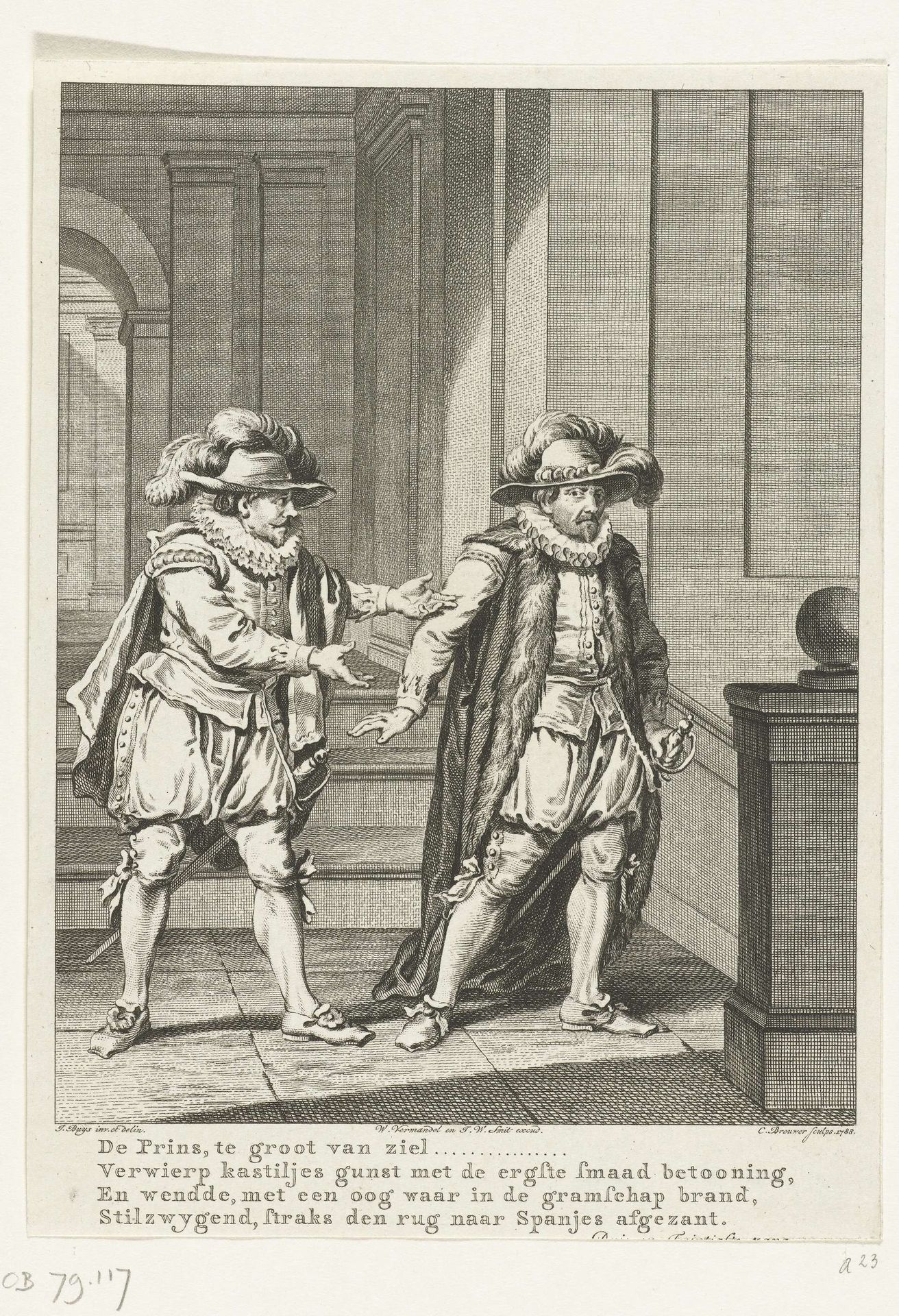
Cornelis Brouwer created this print around 1780, depicting a scene from about two centuries prior. It portrays Prince Willem of Orange rejecting proposals from a Spanish envoy. Consider this work within the context of the fraught relationship between the Netherlands and Spain during the 16th century, a period marked by religious conflict and the Dutch struggle for independence. Brouwer creates a narrative around the heroic figure of Willem of Orange, who embodies the spirit of resistance against Spanish rule. The print seeks to galvanize a sense of national identity around the rejection of foreign influence. The emotional tenor of the work is palpable, Willem's body language indicates defiance, while the envoy appears dejected. The print captures a moment of political theater laden with historical weight, asking viewers to reflect on the meaning of sovereignty, cultural identity, and the long shadow of colonial power. The image then, is about individual agency and self-determination on a national scale.
Oranje wijst verontwaardigd de voorstellen van de Spaanse gezant af, ca. 1580
1788

Cornelis Brouwer
1735 - 1803Location
RijksmuseumArtwork details
- Dimensions
- height 180 mm, width 135 mm
- Location
- Rijksmuseum
- Copyright
- Rijks Museum: Open Domain
Comments
Share your thoughts
About this artwork
Cornelis Brouwer created this print around 1780, depicting a scene from about two centuries prior. It portrays Prince Willem of Orange rejecting proposals from a Spanish envoy. Consider this work within the context of the fraught relationship between the Netherlands and Spain during the 16th century, a period marked by religious conflict and the Dutch struggle for independence. Brouwer creates a narrative around the heroic figure of Willem of Orange, who embodies the spirit of resistance against Spanish rule. The print seeks to galvanize a sense of national identity around the rejection of foreign influence. The emotional tenor of the work is palpable, Willem's body language indicates defiance, while the envoy appears dejected. The print captures a moment of political theater laden with historical weight, asking viewers to reflect on the meaning of sovereignty, cultural identity, and the long shadow of colonial power. The image then, is about individual agency and self-determination on a national scale.
Comments
Share your thoughts