About this artwork
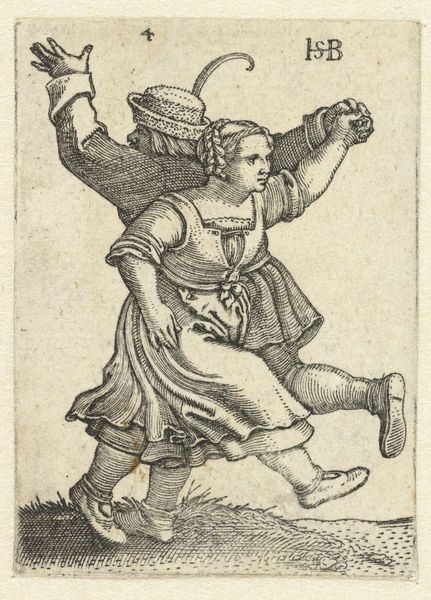
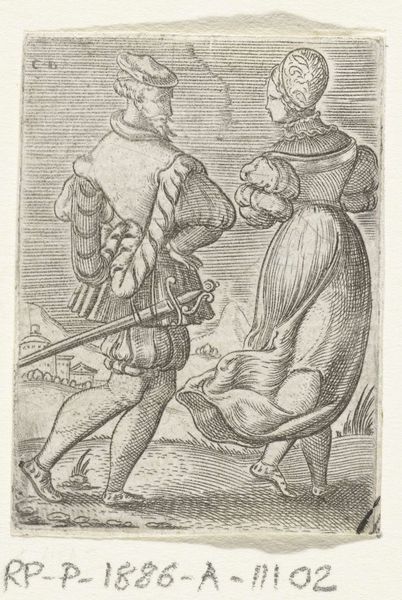
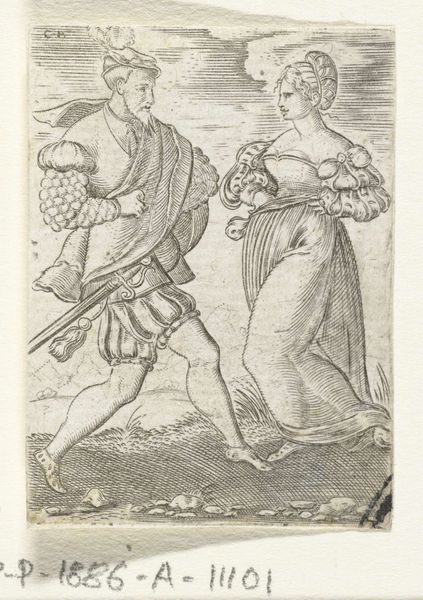
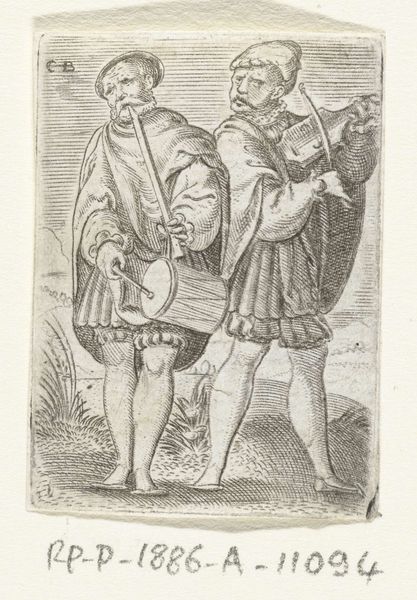
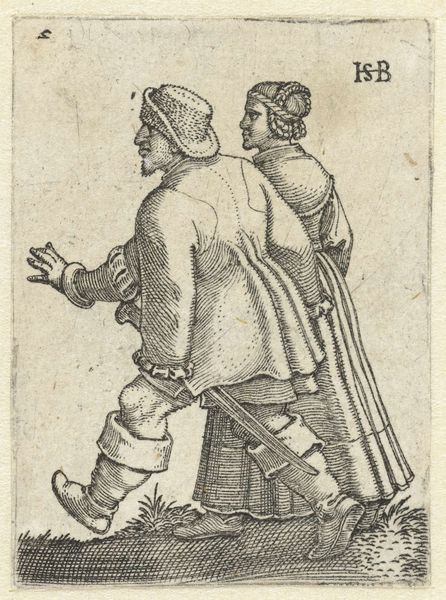
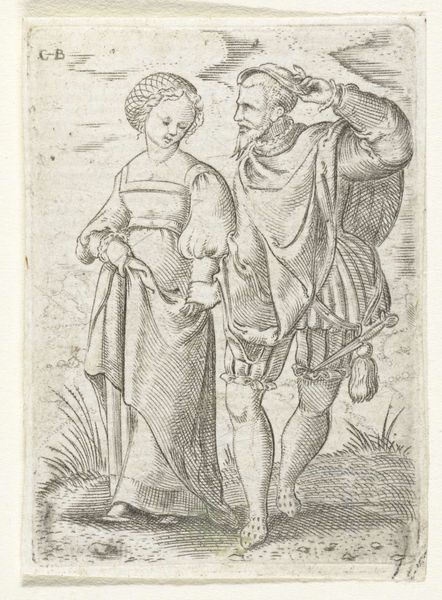
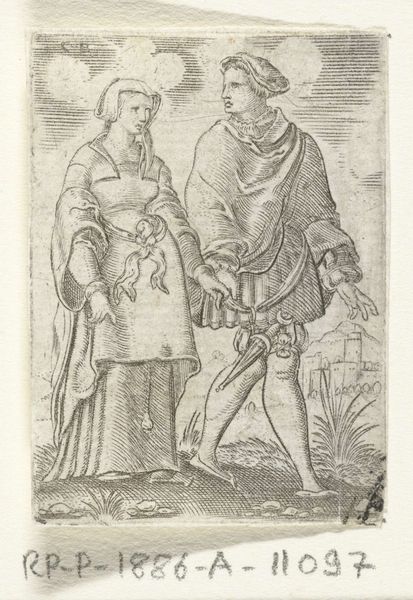
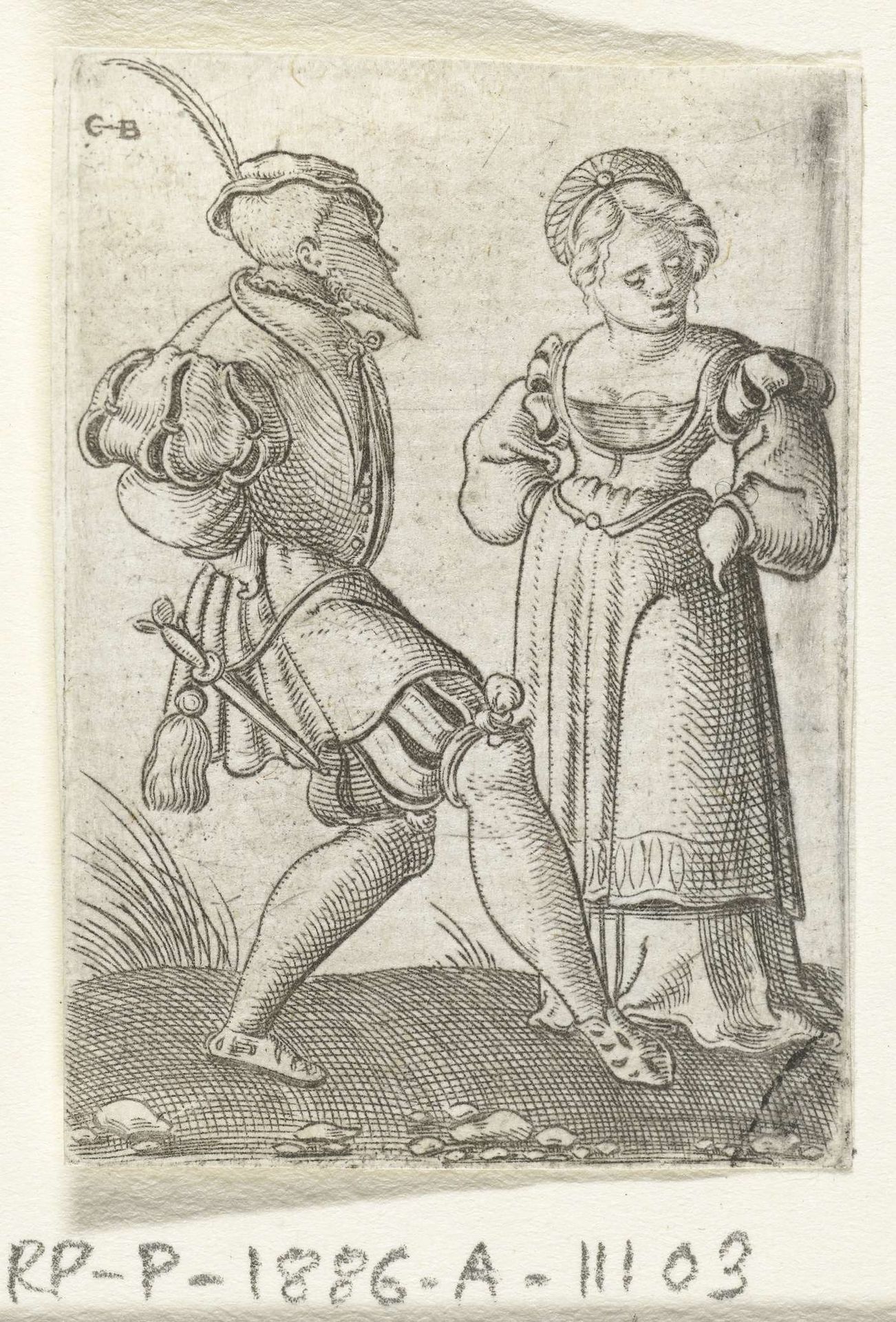
Editor: This engraving by Cornelis Bos, made around 1537-1555, is called "Dansend stel, de man draagt een hoed met een lange veer," which I believe translates to "Dancing Couple, the man wears a hat with a long feather." It's so detailed and feels incredibly theatrical. What can you tell me about it? Curator: This print offers a fascinating glimpse into the social fabric of the 16th century, doesn't it? Beyond just portraying a dancing couple, it reveals much about the materials available, the printmaking process, and the culture of consumption surrounding images at that time. Consider the paper itself – likely a relatively new commodity, playing a crucial role in the dissemination of ideas. Editor: That's interesting! I was so focused on the couple's outfits and how they were dancing that I didn't consider the significance of the paper itself. Curator: Exactly! And the engraving technique, too. How would the economics of engraving facilitate wider circulation? And also the clothing—reflect on how the very *making* of that clothing reflects the skills of specialized workshops, a burgeoning textile industry, and hierarchies of access. The "dance" becomes secondary to a deep dive into modes of production. What do you make of the fact that the inscription of "CB" the signature, takes prominent place alongside these dancing characters? Editor: So, instead of just seeing a lighthearted dancing scene, you're suggesting that the print prompts questions about 16th-century labor practices and the distribution of luxury items like textiles and printed materials. It's making me think about how even seemingly simple images can be incredibly dense with social and economic meaning. It feels more like a carefully designed artifact now. Curator: Precisely. Looking through a materialist lens opens doors to asking *how* things were made, *who* benefitted from their creation, and *why* this specific image was produced and circulated during that era. Editor: I'll never look at a print the same way again. Thanks, this new perspective has really changed my perception.
Dansend stel, de man draagt een hoed met een lange veer
c. 1537 - 1555

Cornelis Bos
1510 - 1556Location
RijksmuseumArtwork details
- Medium
- print, engraving
- Dimensions
- height 54 mm, width 40 mm
- Location
- Rijksmuseum
- Copyright
- Rijks Museum: Open Domain
Tags
portrait
comic strip sketch
quirky sketch
pen sketch
sketch book
mannerism
figuration
personal sketchbook
sketchwork
pen-ink sketch
sketchbook drawing
genre-painting
storyboard and sketchbook work
sketchbook art
engraving
Comments
Be the first to share your thoughts about this work.
About this artwork
Editor: This engraving by Cornelis Bos, made around 1537-1555, is called "Dansend stel, de man draagt een hoed met een lange veer," which I believe translates to "Dancing Couple, the man wears a hat with a long feather." It's so detailed and feels incredibly theatrical. What can you tell me about it? Curator: This print offers a fascinating glimpse into the social fabric of the 16th century, doesn't it? Beyond just portraying a dancing couple, it reveals much about the materials available, the printmaking process, and the culture of consumption surrounding images at that time. Consider the paper itself – likely a relatively new commodity, playing a crucial role in the dissemination of ideas. Editor: That's interesting! I was so focused on the couple's outfits and how they were dancing that I didn't consider the significance of the paper itself. Curator: Exactly! And the engraving technique, too. How would the economics of engraving facilitate wider circulation? And also the clothing—reflect on how the very *making* of that clothing reflects the skills of specialized workshops, a burgeoning textile industry, and hierarchies of access. The "dance" becomes secondary to a deep dive into modes of production. What do you make of the fact that the inscription of "CB" the signature, takes prominent place alongside these dancing characters? Editor: So, instead of just seeing a lighthearted dancing scene, you're suggesting that the print prompts questions about 16th-century labor practices and the distribution of luxury items like textiles and printed materials. It's making me think about how even seemingly simple images can be incredibly dense with social and economic meaning. It feels more like a carefully designed artifact now. Curator: Precisely. Looking through a materialist lens opens doors to asking *how* things were made, *who* benefitted from their creation, and *why* this specific image was produced and circulated during that era. Editor: I'll never look at a print the same way again. Thanks, this new perspective has really changed my perception.
Comments
Be the first to share your thoughts about this work.