About this artwork
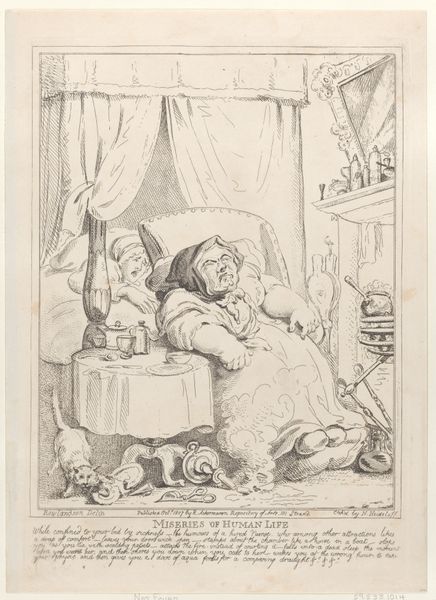
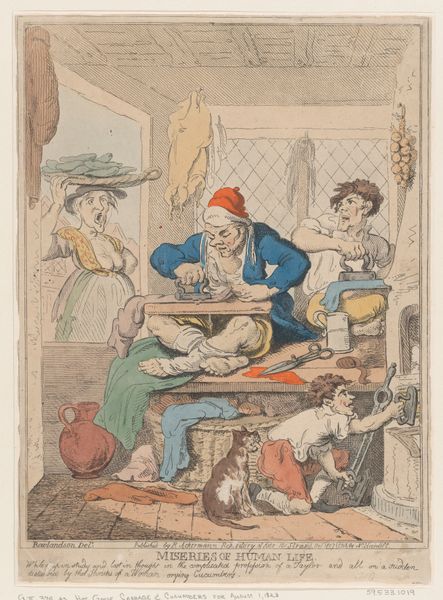
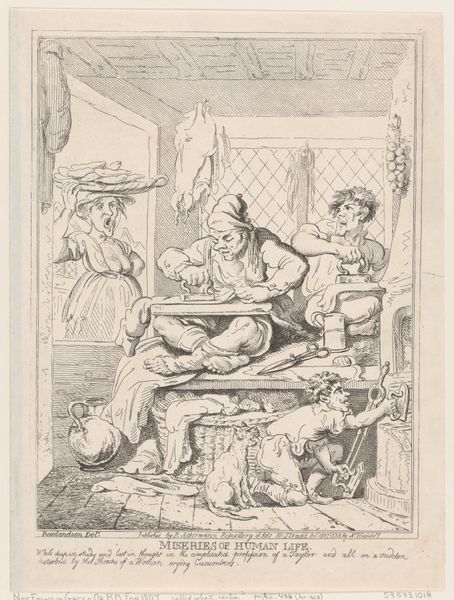
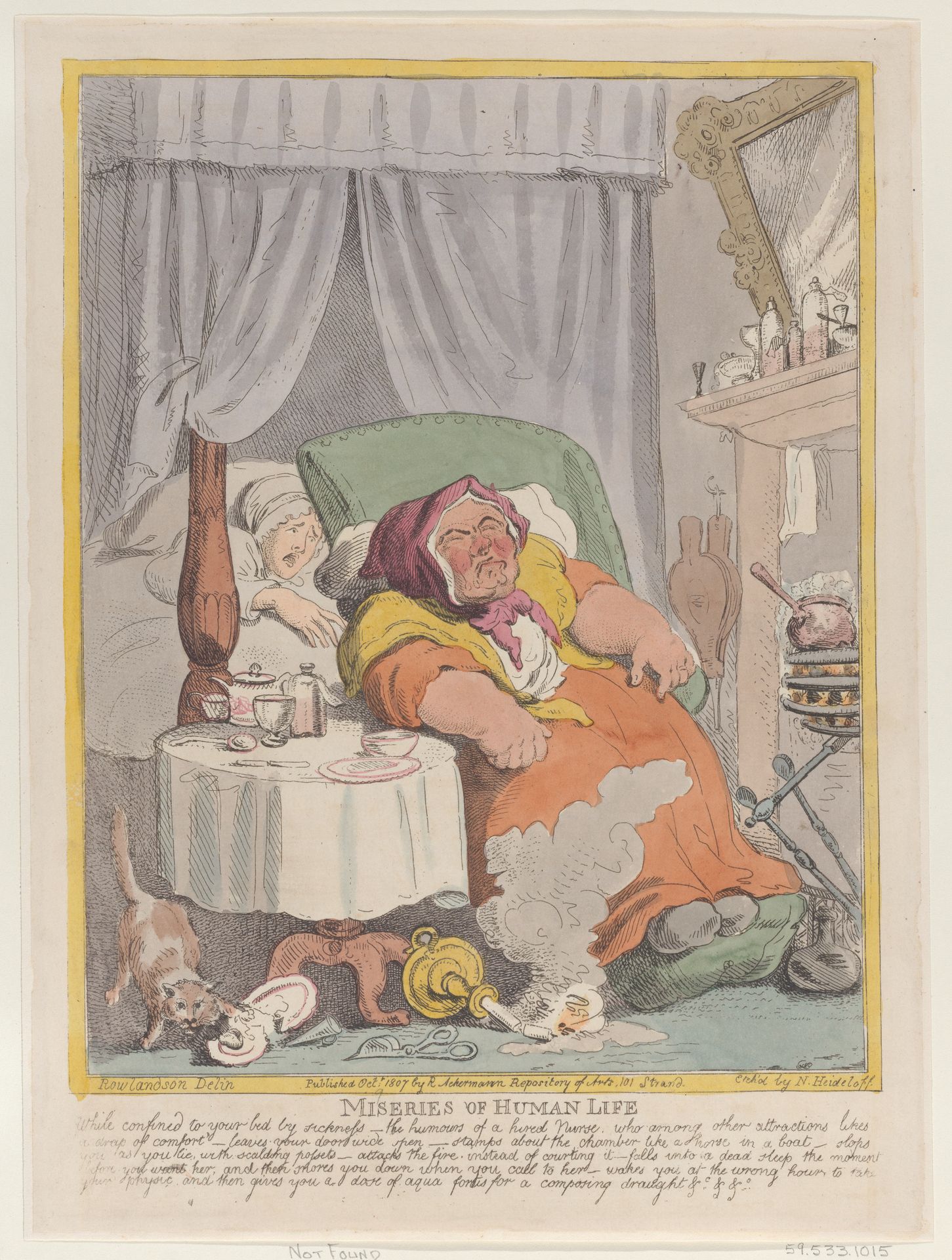
This etching by Nicolaus Heideloff illustrates the "Miseries of Human Life," presenting a scene dominated by the image of sickness and domestic chaos. Here, the central figure, an ailing woman, is surrounded by symbols of discomfort and disruption—a chamber pot, an overturned table, and a cat fighting with a rat. The motif of illness has echoed through art history, from medieval depictions of plague victims to Renaissance allegories of mortality. In Heideloff’s rendering, the sickbed becomes a stage for the drama of human frailty, reminiscent of similar scenes in Dutch genre paintings. The cat and rat fight beneath the table are significant as a metaphor for strife and disorder, mirroring the inner turmoil of the sick woman. Consider the visual language of despair—the slumped posture, the clenched face. These universal gestures transcend time, reappearing across cultures in various contexts, from religious depictions of suffering saints to contemporary portraits of anguish. These are all manifestations of a deep-seated fear and acknowledgment of our own vulnerability to the vagaries of life.
Miseries of Human Life: "While confined to your bed by sickness..."
1807


Artwork details
- Medium
- drawing, print, watercolor
- Dimensions
- Sheet: 13 1/4 × 9 3/4 in. (33.7 × 24.8 cm)
- Location
- Metropolitan Museum of Art, New York, NY
- Copyright
- Public Domain
Tags
Comments
Share your thoughts
About this artwork
This etching by Nicolaus Heideloff illustrates the "Miseries of Human Life," presenting a scene dominated by the image of sickness and domestic chaos. Here, the central figure, an ailing woman, is surrounded by symbols of discomfort and disruption—a chamber pot, an overturned table, and a cat fighting with a rat. The motif of illness has echoed through art history, from medieval depictions of plague victims to Renaissance allegories of mortality. In Heideloff’s rendering, the sickbed becomes a stage for the drama of human frailty, reminiscent of similar scenes in Dutch genre paintings. The cat and rat fight beneath the table are significant as a metaphor for strife and disorder, mirroring the inner turmoil of the sick woman. Consider the visual language of despair—the slumped posture, the clenched face. These universal gestures transcend time, reappearing across cultures in various contexts, from religious depictions of suffering saints to contemporary portraits of anguish. These are all manifestations of a deep-seated fear and acknowledgment of our own vulnerability to the vagaries of life.
Comments
Share your thoughts