architecture
#
medieval
#
landscape
#
historic architecture
#
romanesque
#
architecture
Copyright: Public domain
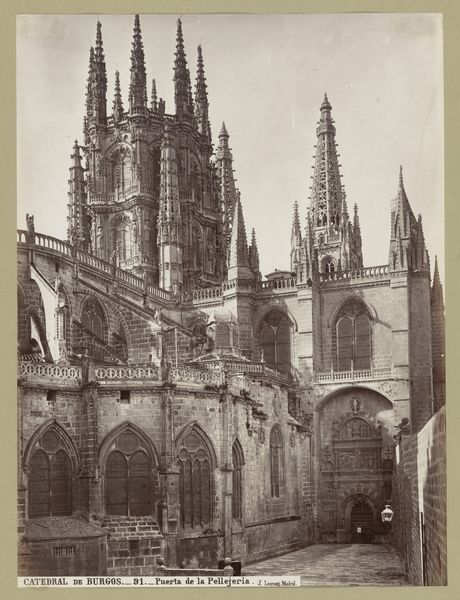
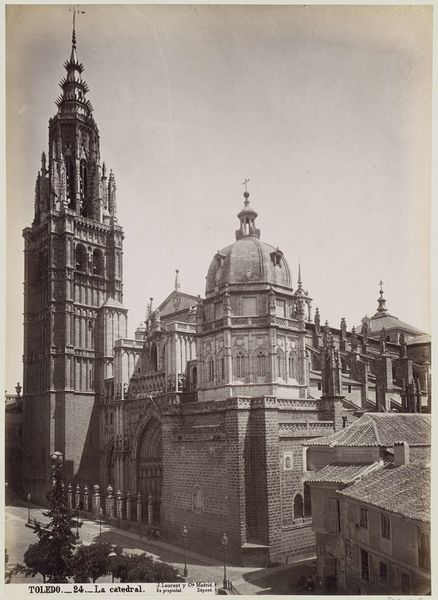
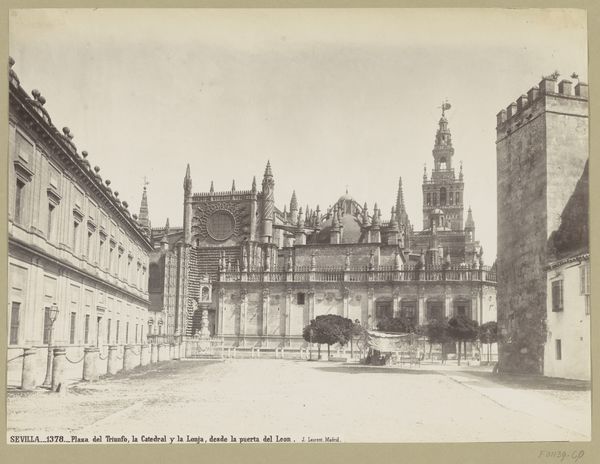
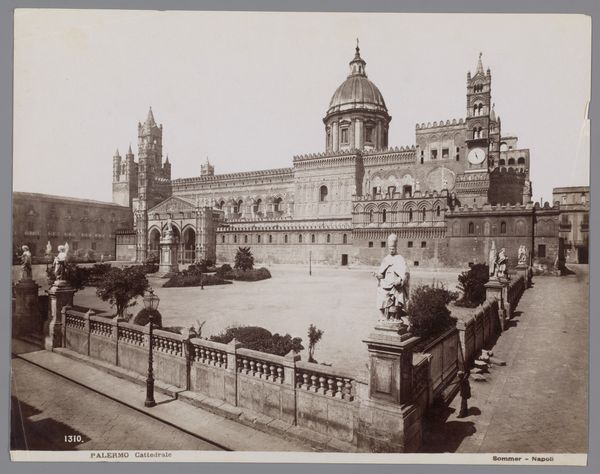
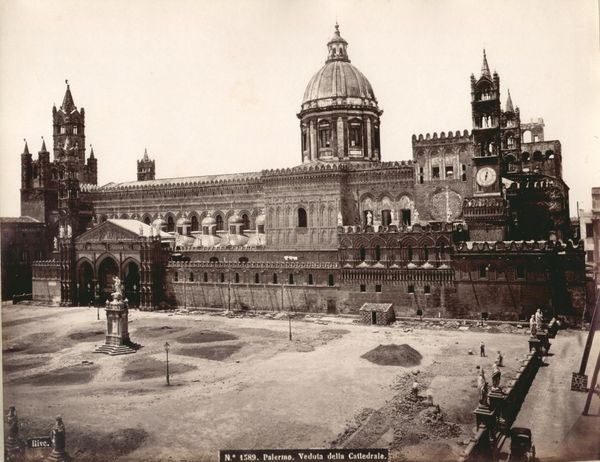
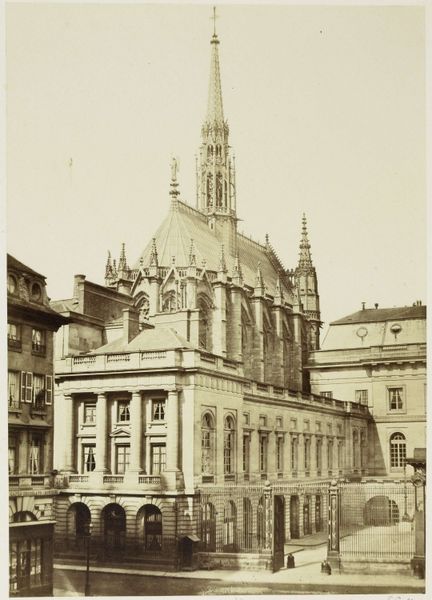
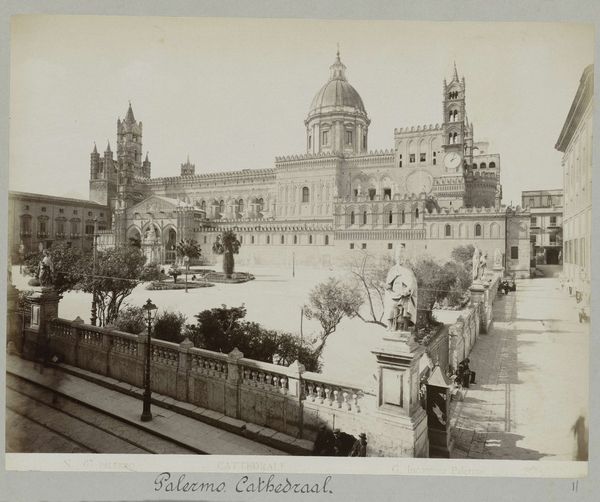
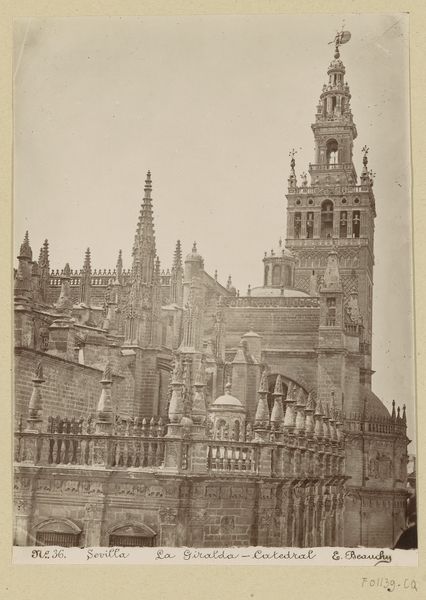
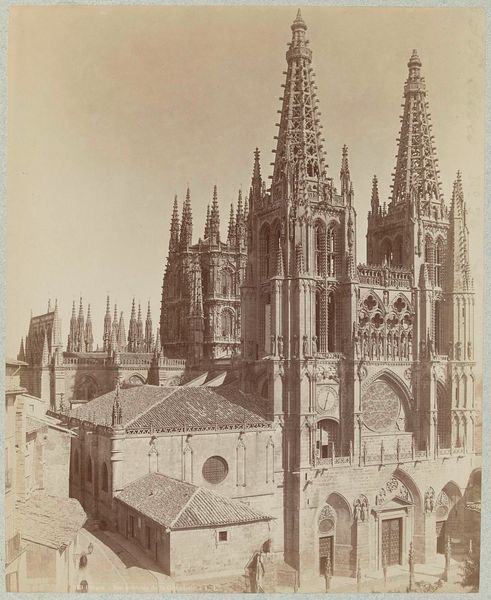
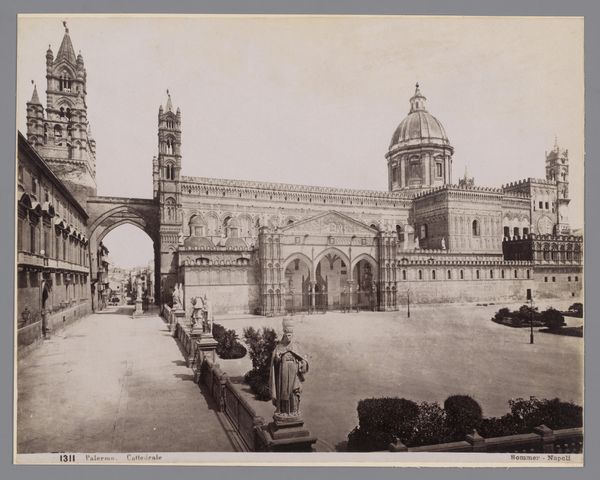
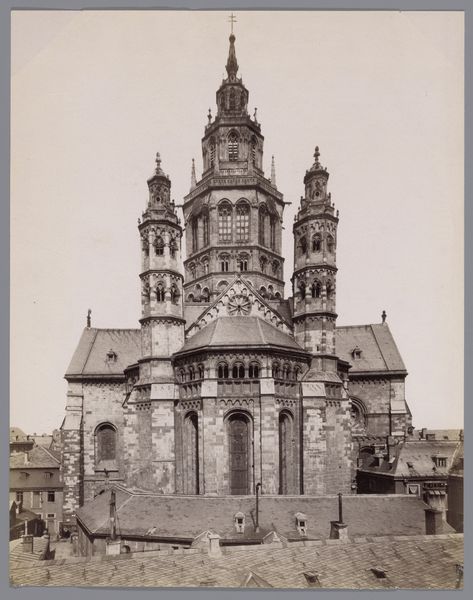
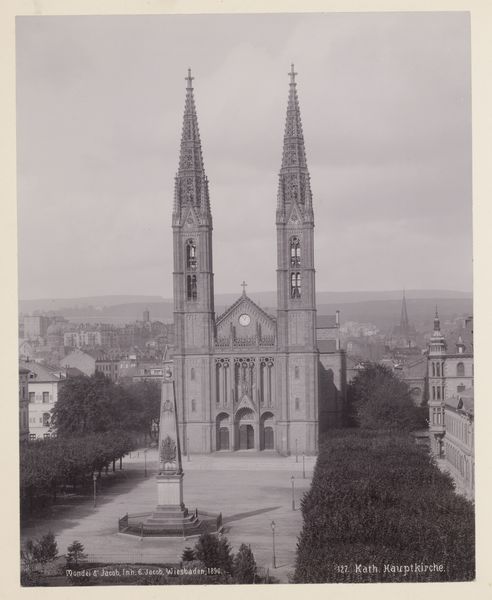
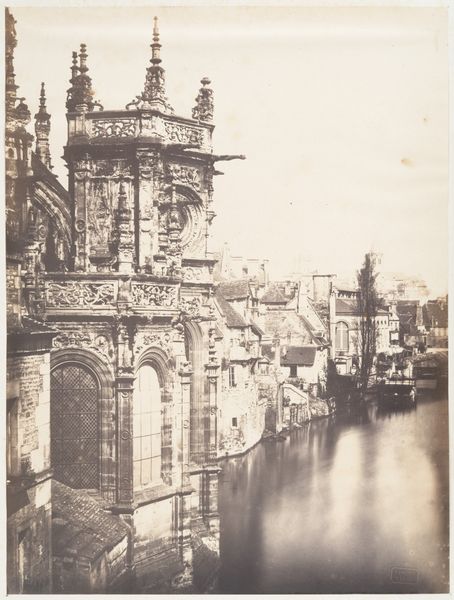
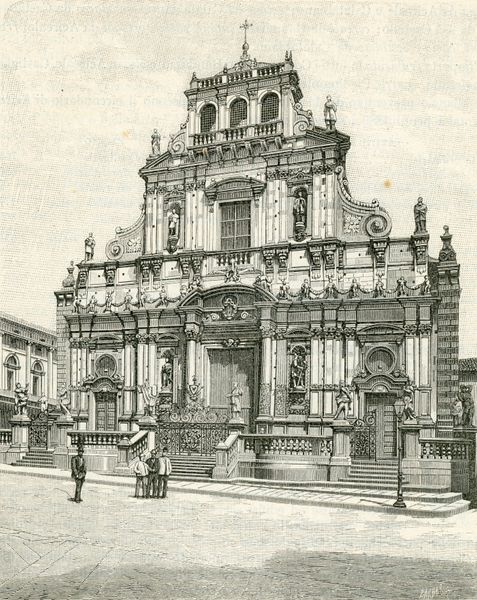
The Santiago de Compostela Cathedral, an example of Romanesque architecture begun around 1075, presents a captivating orchestration of stone and light. The towers dominate the skyline, their verticality drawing the eye upward in a powerful expression of faith and architectural ambition. Observe how the architect uses the linear elements of the structure to define a clear hierarchy. The cathedral's façade, with its intricate sculptural details, contrasts with the simpler geometric forms of the towers. This interplay between ornamentation and starkness destabilizes a singular meaning, pushing beyond the purely religious. Consider the cathedral as a semiotic system, where each architectural element acts as a signifier. The imposing scale signifies the power of the church, while the orientation toward the East connects it to notions of religious origin. The cumulative effect is not just aesthetic but a profound statement about cultural values. This architectural form invites ongoing dialogue and challenges fixed interpretations.
Comments
No comments
Be the first to comment and join the conversation on the ultimate creative platform.
 Collect
 React
React Comment
More like this