About this artwork
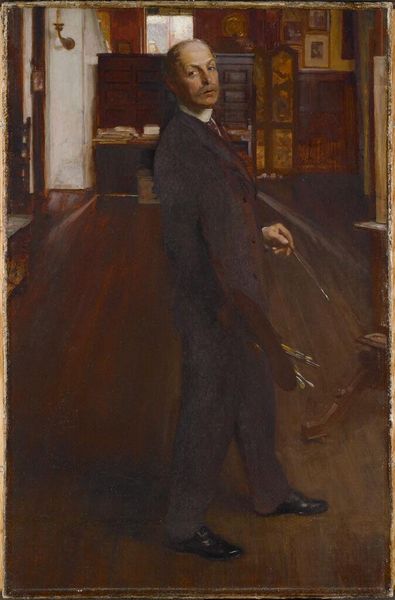
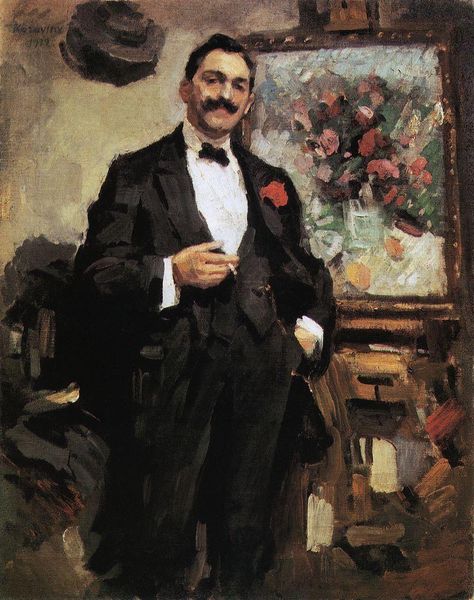
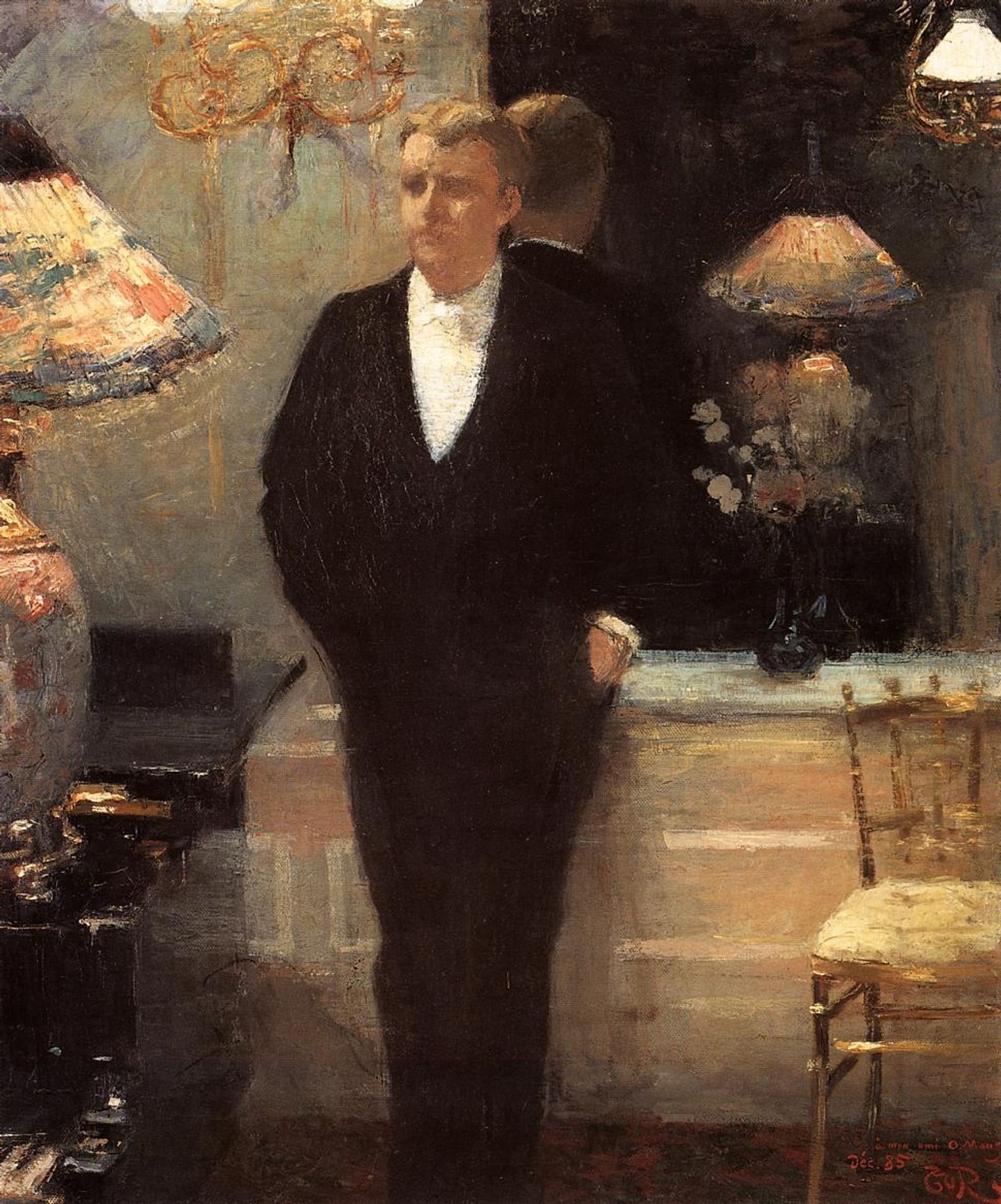
Theo van Rysselberghe painted this portrait of Octave Maus, an influential Belgian lawyer, writer, and art critic, using oil on canvas, sometime around 1885. Maus was a key figure in the Brussels art scene. As secretary of the Société Libre des Beaux-Arts and later as the founder of Les XX, he championed progressive artists and challenged the conservative Salon system. Les XX became a platform for avant-garde movements like Impressionism and Symbolism, shaping the cultural landscape of Belgium. Rysselberghe's portrait reflects Maus's prominent role, depicting him as a refined and intellectual figure within a domestic interior, surrounded by objects that connote taste and status. To fully understand this portrait, we can delve into the archives of Les XX, examining their exhibition catalogues, meeting minutes, and correspondence. Such resources can illuminate the complex network of artists, critics, and patrons that defined the Belgian art world at the turn of the century, revealing how Maus navigated and shaped its institutional structures.
Portrait of Octave Maus
1885

Theo van Rysselberghe
1862 - 1926Location
Royal Museums of Fine Arts of Belgium, Brussels, BelgiumArtwork details
- Medium
- oil-paint
- Dimensions
- 90 x 75.5 cm
- Location
- Royal Museums of Fine Arts of Belgium, Brussels, Belgium
- Copyright
- Public domain
Tags
Comments
Share your thoughts
About this artwork
Theo van Rysselberghe painted this portrait of Octave Maus, an influential Belgian lawyer, writer, and art critic, using oil on canvas, sometime around 1885. Maus was a key figure in the Brussels art scene. As secretary of the Société Libre des Beaux-Arts and later as the founder of Les XX, he championed progressive artists and challenged the conservative Salon system. Les XX became a platform for avant-garde movements like Impressionism and Symbolism, shaping the cultural landscape of Belgium. Rysselberghe's portrait reflects Maus's prominent role, depicting him as a refined and intellectual figure within a domestic interior, surrounded by objects that connote taste and status. To fully understand this portrait, we can delve into the archives of Les XX, examining their exhibition catalogues, meeting minutes, and correspondence. Such resources can illuminate the complex network of artists, critics, and patrons that defined the Belgian art world at the turn of the century, revealing how Maus navigated and shaped its institutional structures.
Comments
Share your thoughts