19th-20th century
Landscape


Listen to curator's interpretation
Curatorial notes
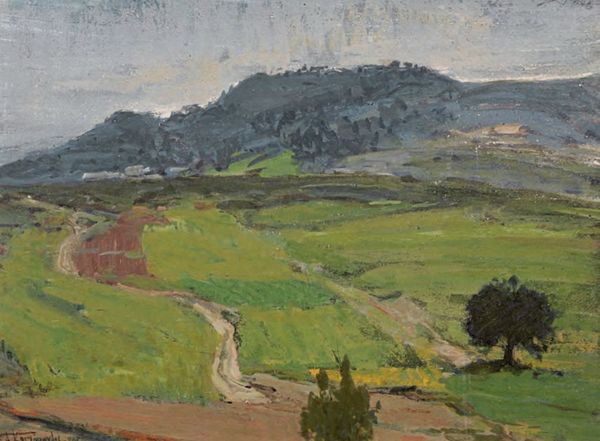
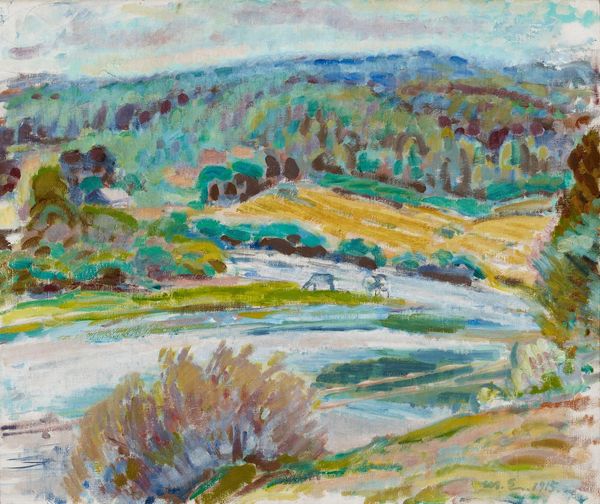
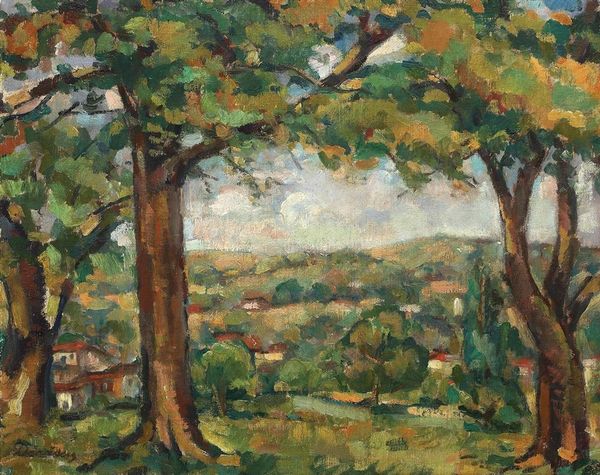
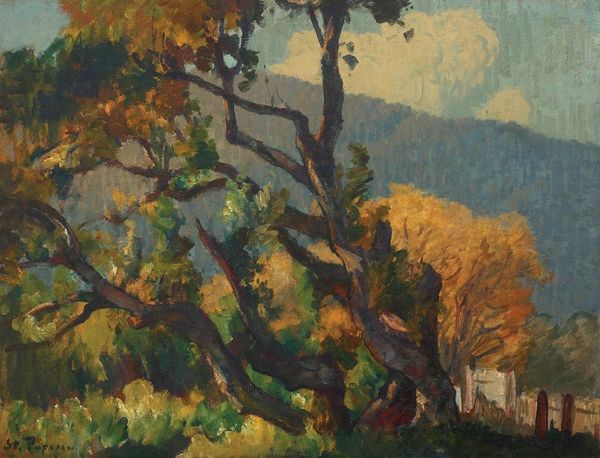
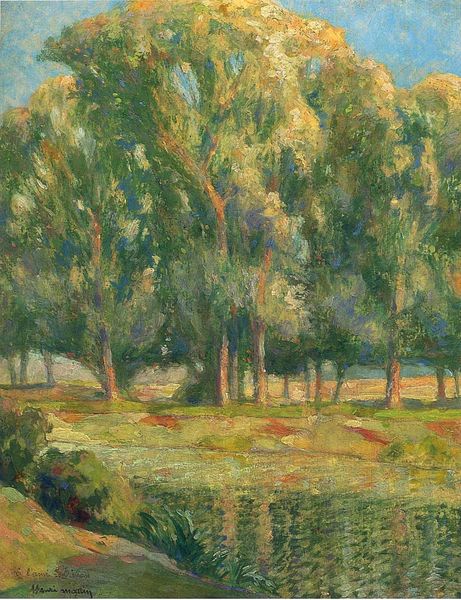
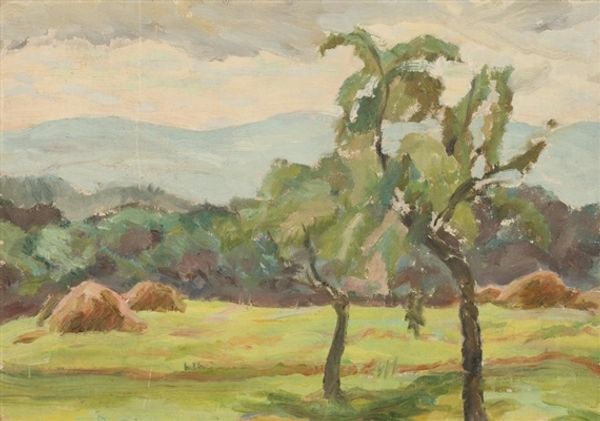
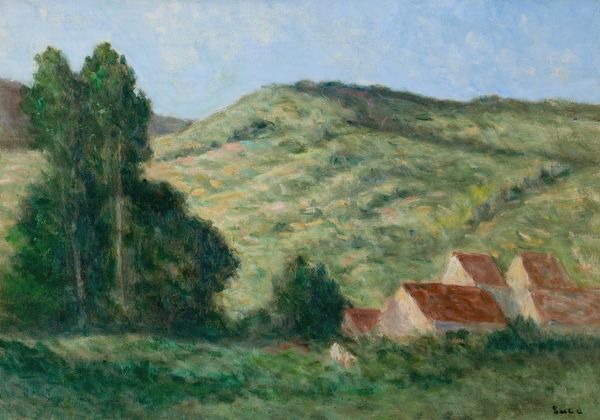
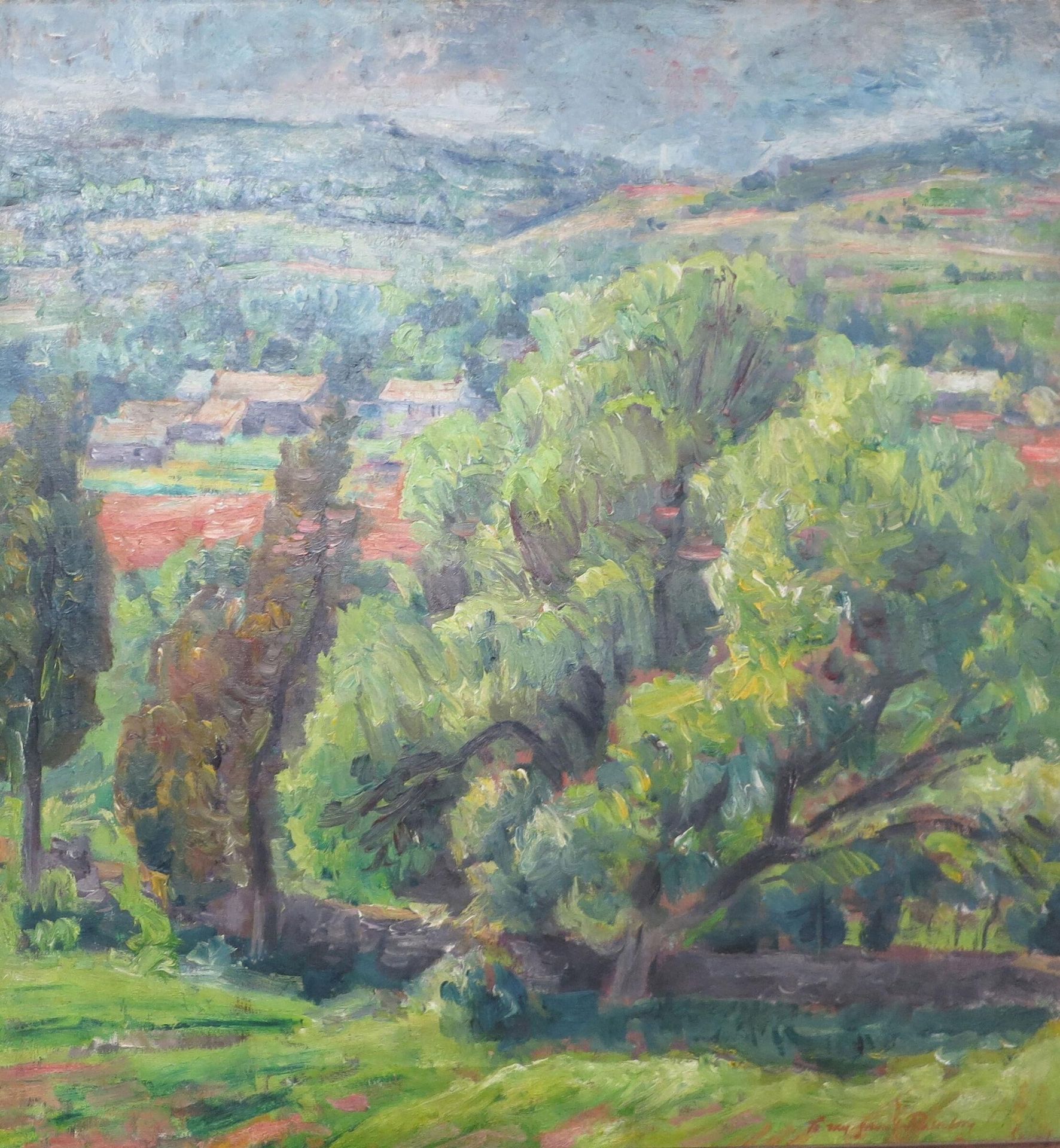
Curator: Eugene Speicher's "Landscape," now at the Harvard Art Museums, pulls you in with its hazy light. It's roughly 50 by 47 cm, a generous window onto… well, what do you see? Editor: Overwhelmingly verdant. Lush. It's a privileged view, almost obscuring the village nestled in the valley beyond. There's a sense of abundance, maybe even complacency. Curator: Speicher, working in the early 20th century, was fascinated by the interplay of light and form. Notice how the brushstrokes define volume, creating a palpable sense of depth. What materials did he employ to produce this work? Editor: We could explore this landscape as a reflection of its time. Who owned that land? Who worked it? The painting's beauty obscures those social relations. Curator: Perhaps, but the very act of representing the land—the visible labor in those brushstrokes—draws attention to its material reality. I appreciate how it asks us to contemplate the production of perception. Editor: True. It's a complex dance between aesthetics and the unseen power structures. This image and artist invite further analysis. Curator: Indeed, a landscape ripe for interpretation.