About this artwork
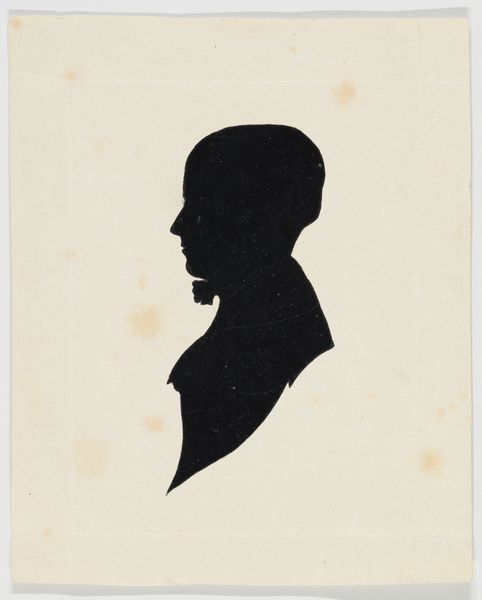
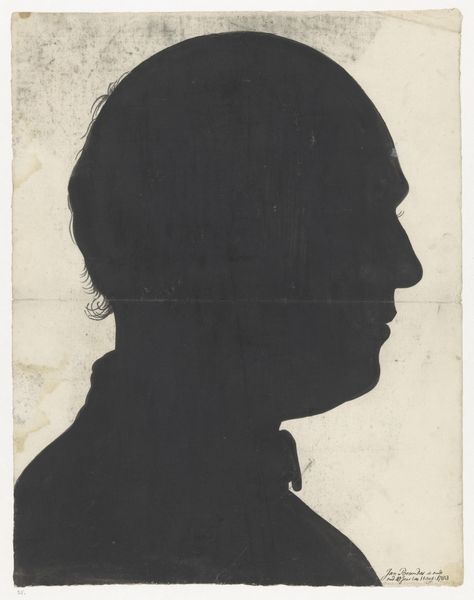
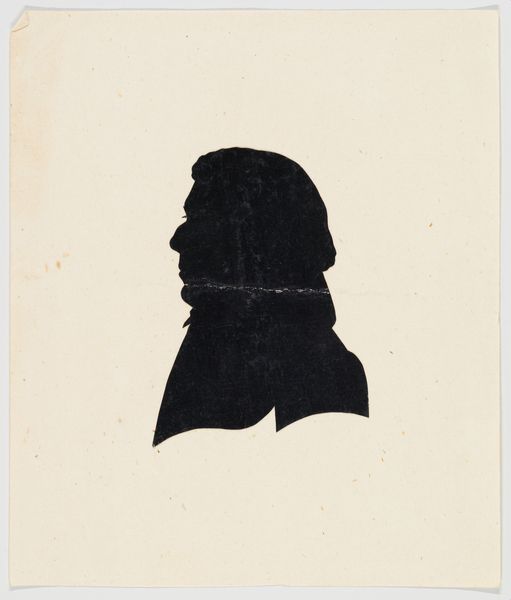
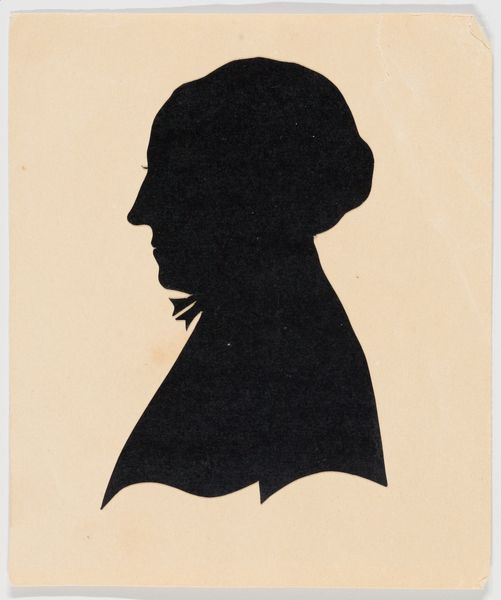
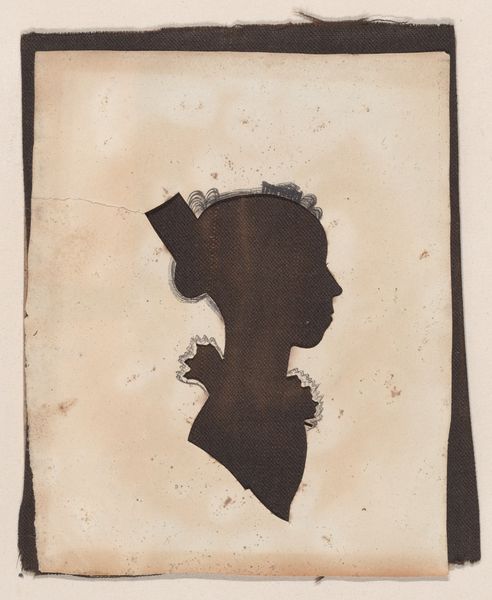
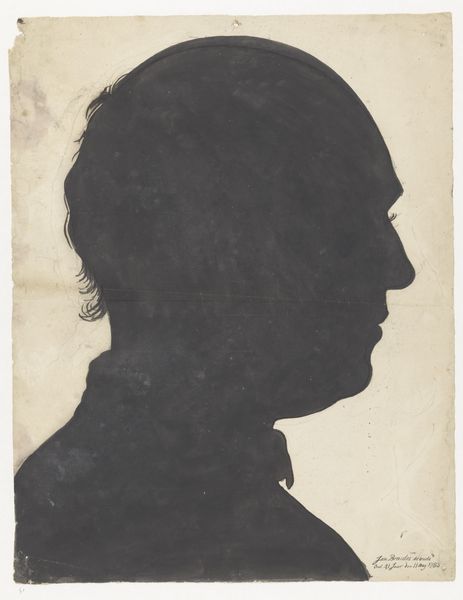
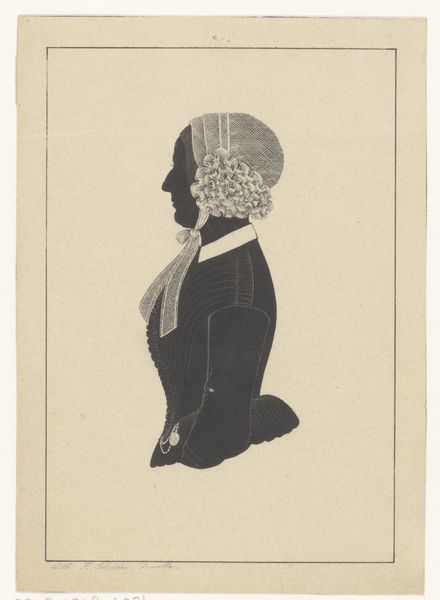
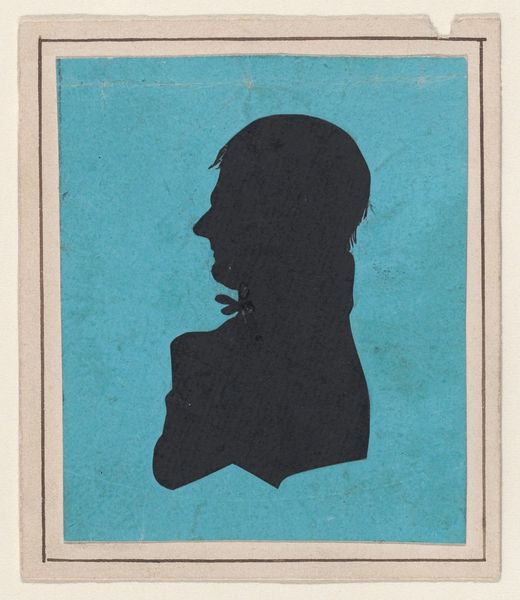
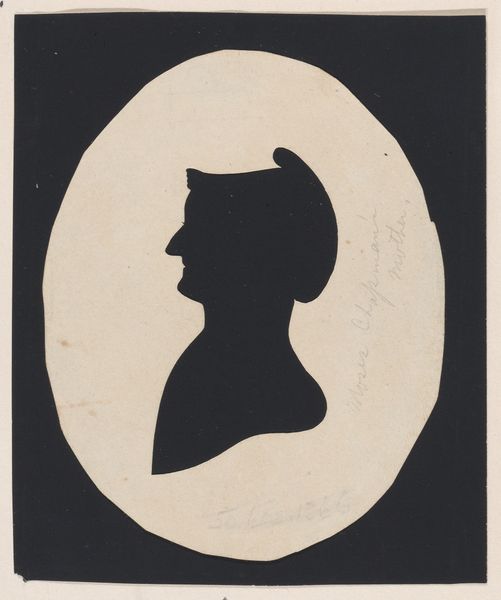
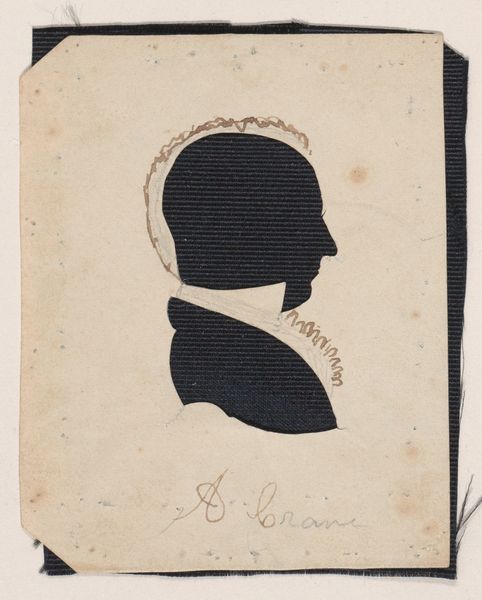
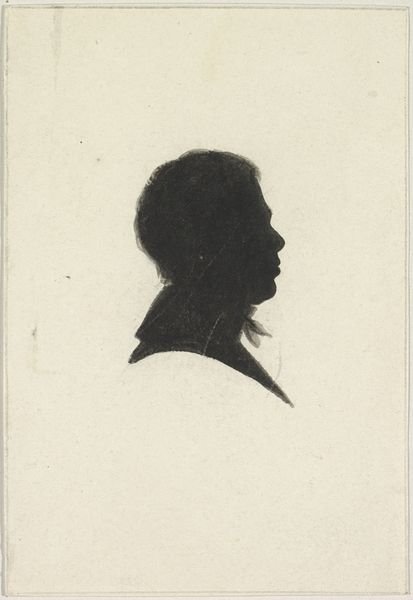
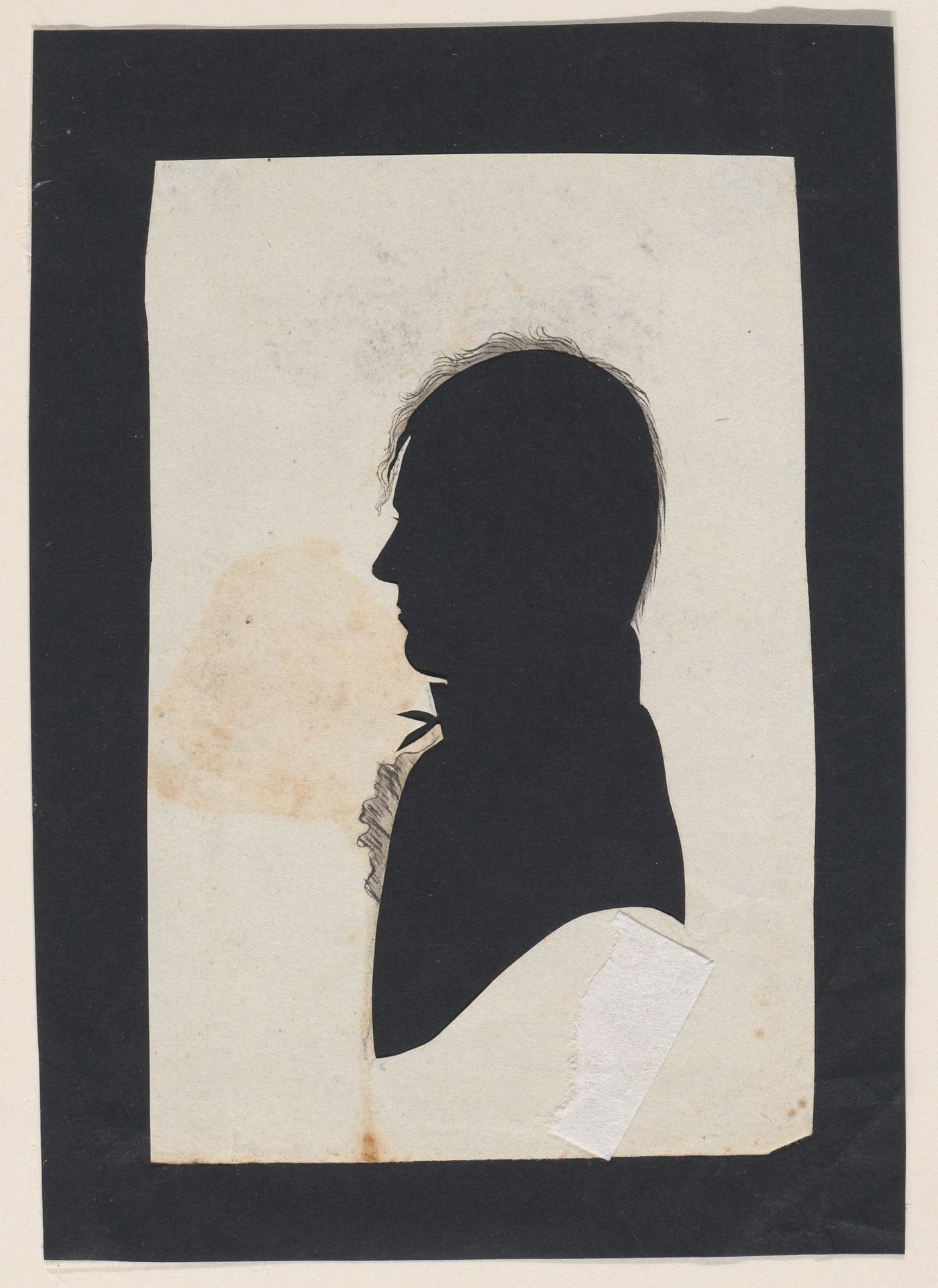
This silhouette of an unknown man was made by Moses Chapman in the early 19th century. The stark contrast between the black silhouette and the off-white paper immediately grabs your attention. The profile is meticulously cut, capturing the delicate curve of the nose and the soft undulation of the hair. The materiality of the paper adds another layer to the work. Its slight imperfections and discoloration suggest a history, an age that speaks to the passage of time. Consider the structural implications of the silhouette itself. It is an indexical sign, pointing directly to the presence of the sitter, yet it simultaneously abstracts and generalizes him. Stripped of detail, he becomes an emblem of masculinity, a representation of a certain social class and status. The interplay between presence and absence, between the particular and the general, is what makes this seemingly simple work so compelling. It invites us to reflect on the nature of representation and the complex relationship between image and reality.
Silhouette of an unknown man
1803 - 1821


Artwork details
- Medium
- drawing, print, paper
- Dimensions
- Sheet: 5 1/4 × 3 3/4 in. (13.4 × 9.5 cm)
- Location
- Metropolitan Museum of Art, New York, NY
- Copyright
- Public Domain
Tags
portrait
drawing
paper
romanticism
watercolor
Comments
Be the first to share your thoughts about this work.
About this artwork
This silhouette of an unknown man was made by Moses Chapman in the early 19th century. The stark contrast between the black silhouette and the off-white paper immediately grabs your attention. The profile is meticulously cut, capturing the delicate curve of the nose and the soft undulation of the hair. The materiality of the paper adds another layer to the work. Its slight imperfections and discoloration suggest a history, an age that speaks to the passage of time. Consider the structural implications of the silhouette itself. It is an indexical sign, pointing directly to the presence of the sitter, yet it simultaneously abstracts and generalizes him. Stripped of detail, he becomes an emblem of masculinity, a representation of a certain social class and status. The interplay between presence and absence, between the particular and the general, is what makes this seemingly simple work so compelling. It invites us to reflect on the nature of representation and the complex relationship between image and reality.
Comments
Be the first to share your thoughts about this work.