after 1645
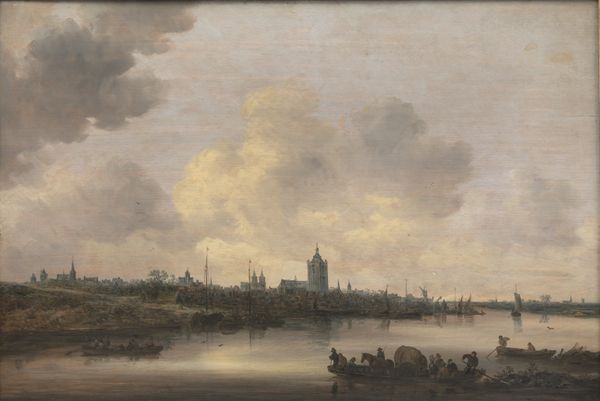
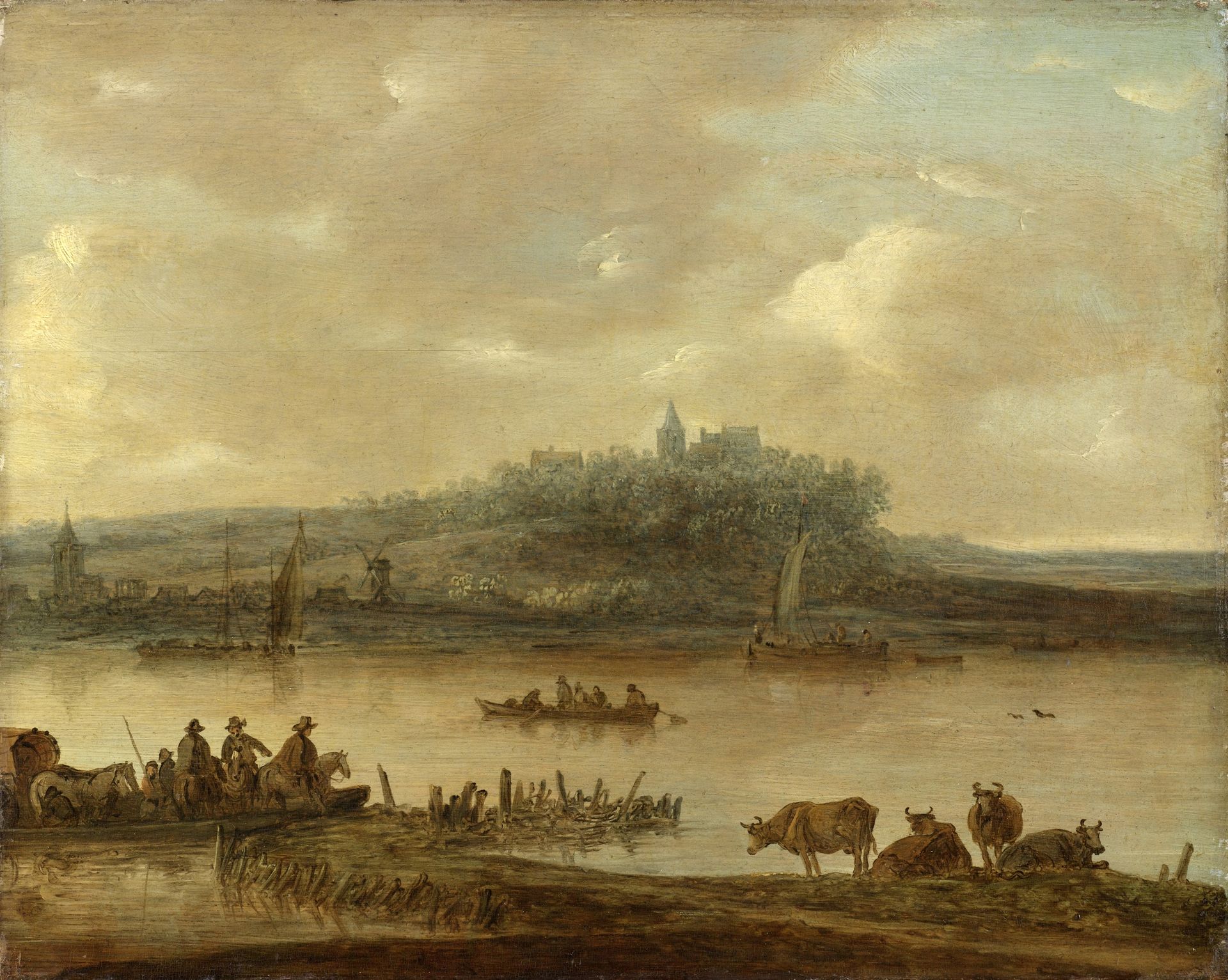
View of the Rhine and the Elterberg

Jan van Goyen
1596 - 1656Location
RijksmuseumListen to curator's interpretation
Curatorial notes
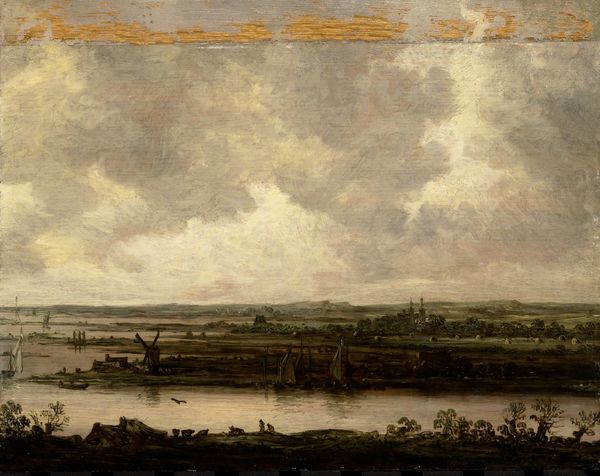
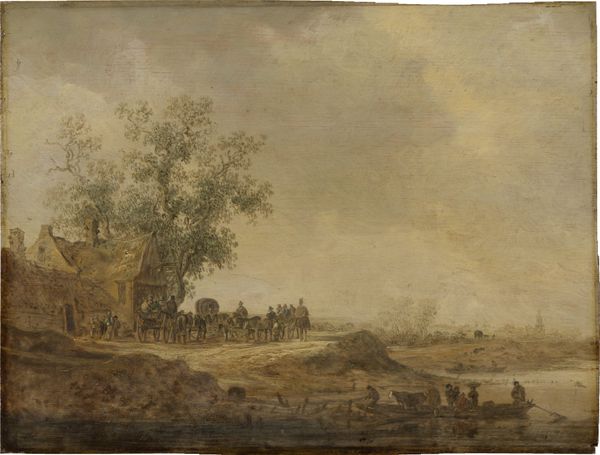
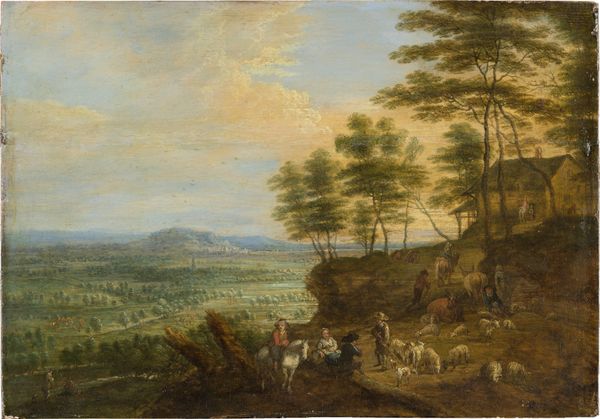
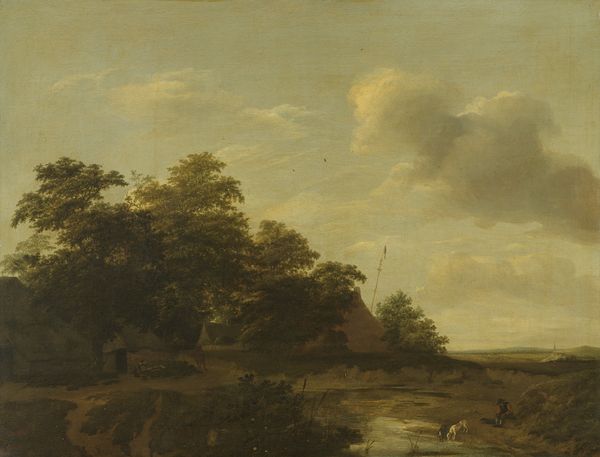
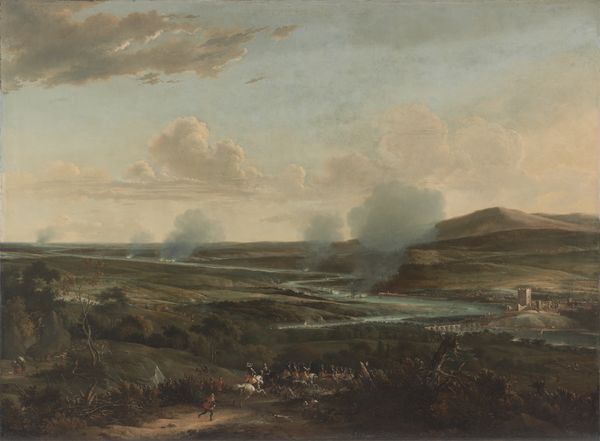
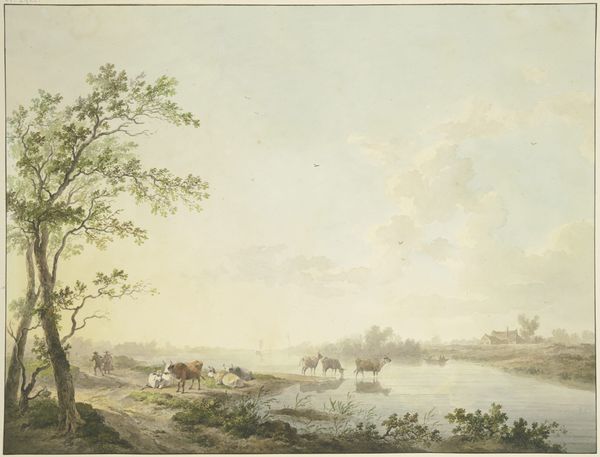
Editor: This is Jan van Goyen's "View of the Rhine and the Elterberg," painted after 1645. It's an oil on panel, currently residing here at the Rijksmuseum. It evokes such a sense of everyday life, but also almost feels staged, doesn't it? What do you see in this piece? Curator: It's interesting you mention staging. Think about the art market in the Dutch Golden Age. Paintings like these weren't just personal expressions, but commodities. Van Goyen and his contemporaries catered to a burgeoning middle class eager to decorate their homes with scenes reflecting their world. It's a genre painting. So how does the scene operate for you, and what elements speak to daily life at this period? Editor: I notice all the activity – boats on the river, people with their animals. There’s also a village in the background; all together, it feels quite bustling, yet peaceful at the same time. Curator: Exactly! It presents the Dutch Republic as a place of industry and trade, prosperity reflected in everyday detail. Look at the cows – symbols of Dutch agricultural wealth. And those boats aren't just randomly placed. The river, the Rhine, was a vital artery for commerce. It tells a story of economic power, carefully packaged for a buying public. Editor: So, van Goyen isn’t simply showing us a view. He’s also selling an idea of Dutch success? Curator: Precisely! It’s a curated snapshot. Now, consider the subdued palette – those muted tones. Is that just stylistic, or might it speak to something more about the time period's taste for realism? Editor: Maybe the limited colour palette contributes to the down-to-earth feeling; less extravagant, more relatable. It almost hides how calculated the whole composition is. Curator: Yes, and this focus also shifts away from dramatic historical events, drawing focus to mundane imagery. It is carefully mediated view made for Dutch consumption. I hadn't considered this element of deliberate composition as cleverly as this myself before our dialogue. Thank you. Editor: It has been so insightful to think about landscape as more than just pretty scenery. I’ll never look at Dutch Golden Age painting the same way again.