1836
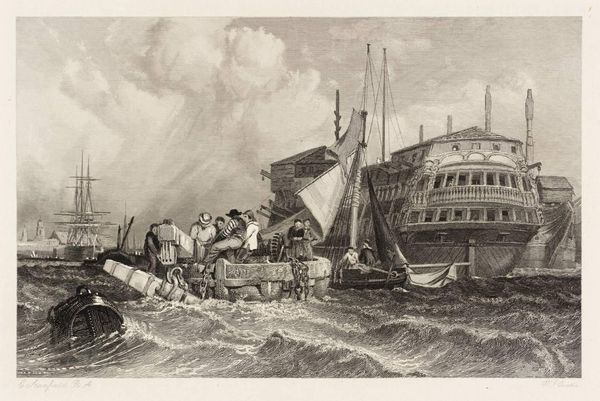
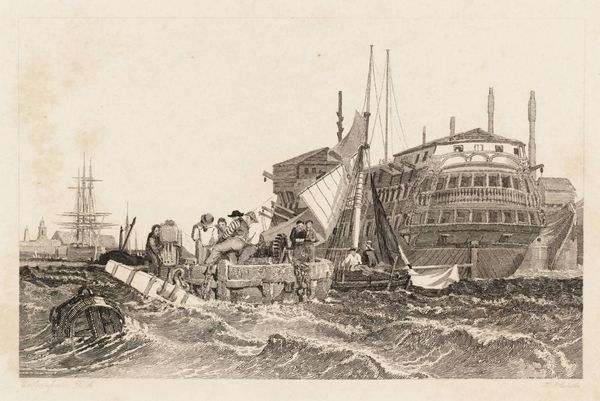
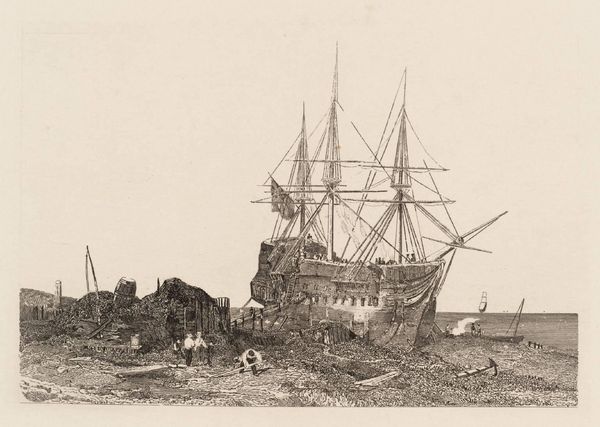
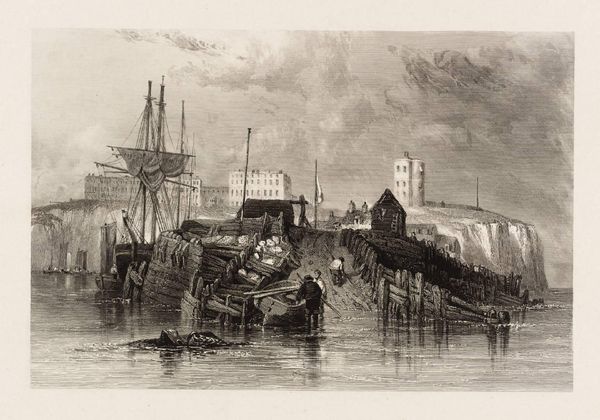
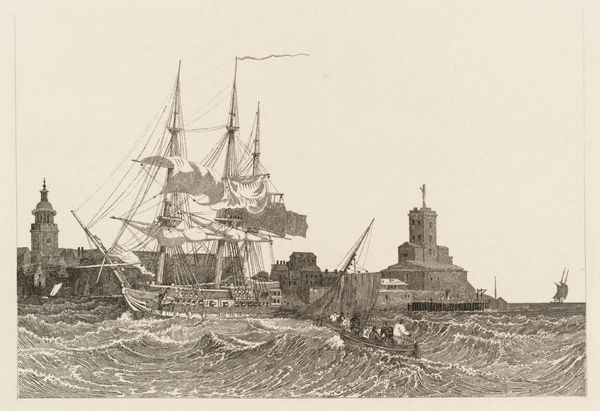
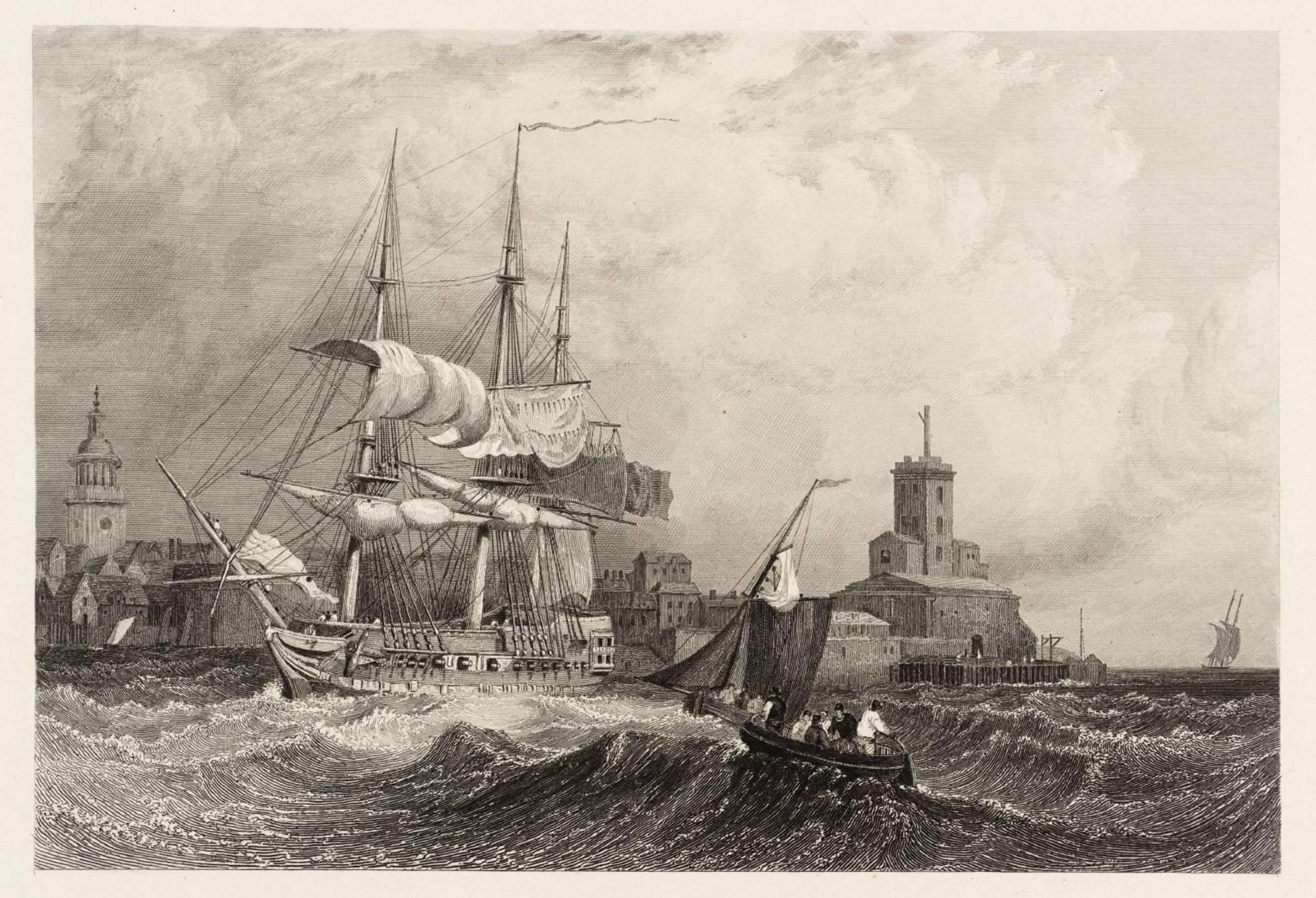
The Semaphore, Portsmouth, engraved by W. Finden


Listen to curator's interpretation
Curatorial notes
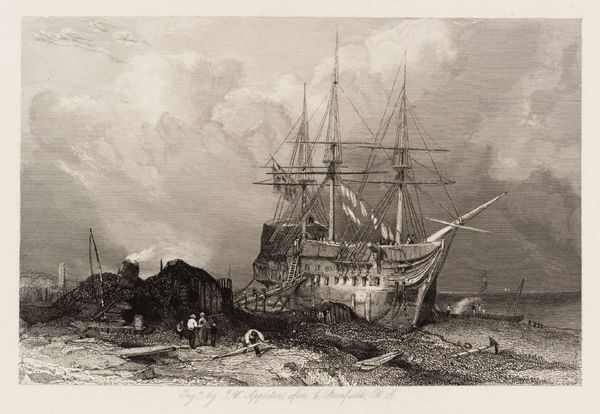
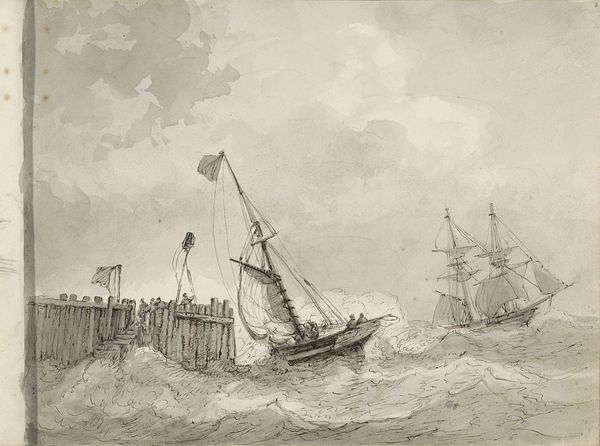
Editor: This is Clarkson Stanfield's "The Semaphore, Portsmouth," an engraving, currently residing at the Tate. The choppy waves give the piece a sense of urgency and movement. How do you interpret the social context of this maritime scene? Curator: It evokes Britain's naval power, doesn't it? But let's consider Portsmouth itself – a port city shaped by colonial expansion and trade. This isn't just a pretty picture; it’s a snapshot of a society built on global power dynamics. Editor: So, you're saying it reflects the political landscape of the time? Curator: Precisely. The semaphore tower itself symbolizes communication and control, tools crucial for maintaining an empire. It makes you think about who benefited from all this "progress," doesn't it? Editor: Definitely gives me a different perspective. Thanks! Curator: My pleasure. It's about seeing beyond the surface, questioning the narratives that art often silently upholds.