About this artwork
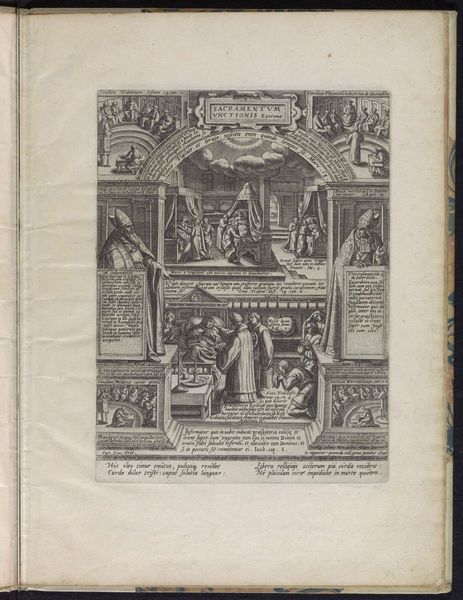
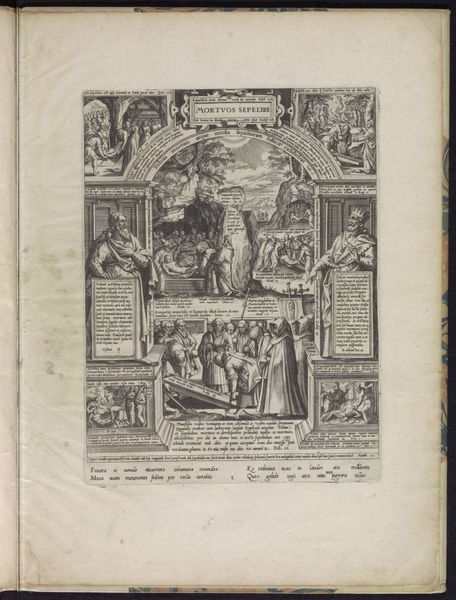
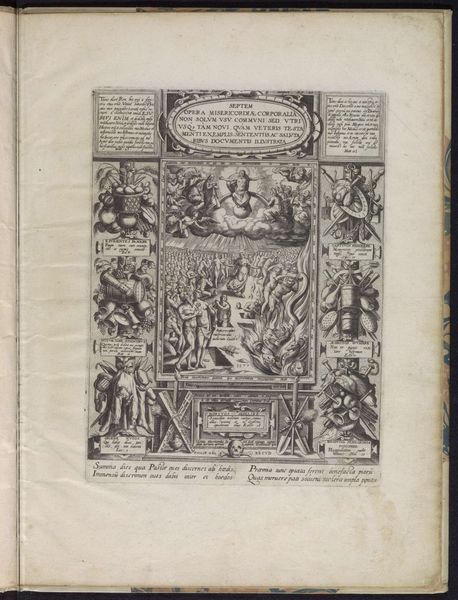
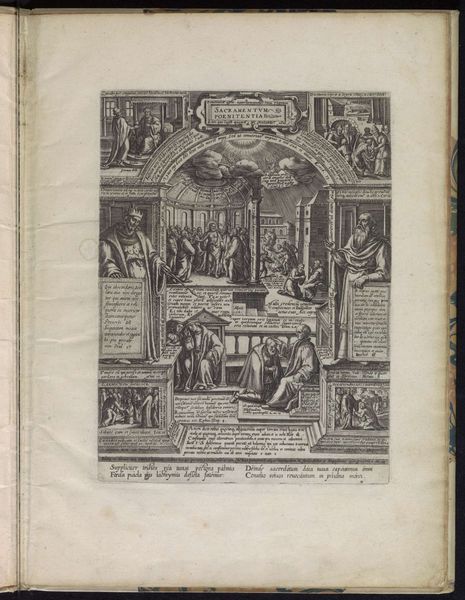
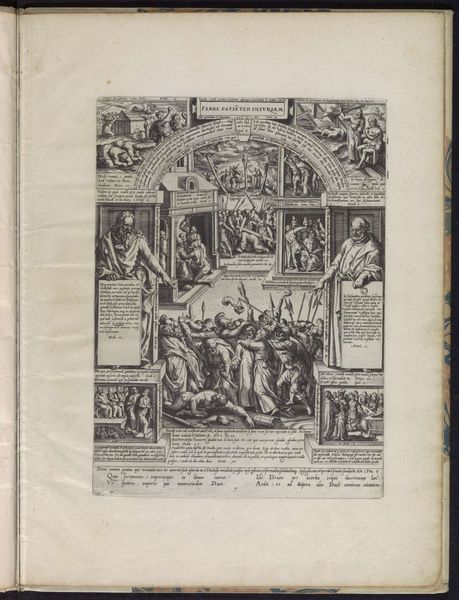
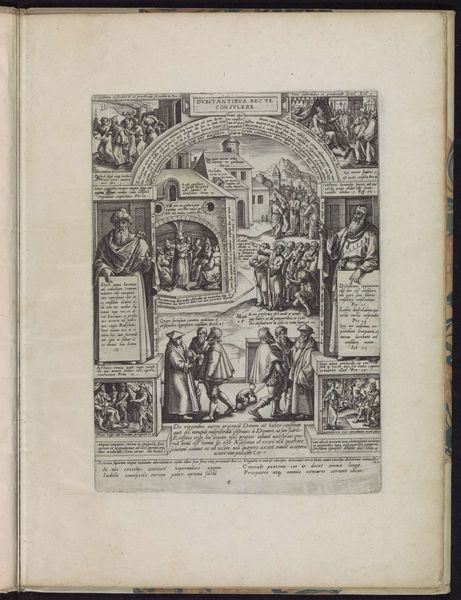
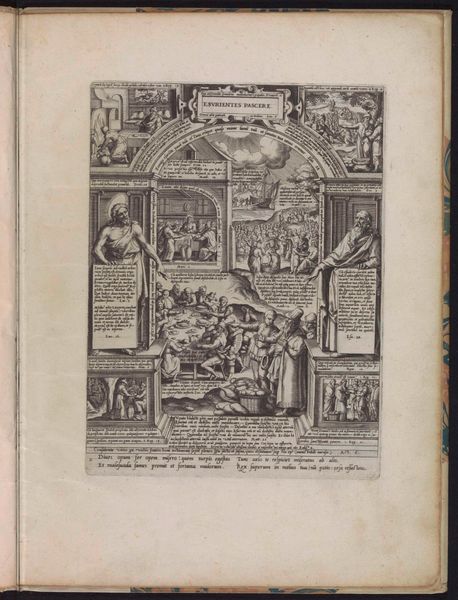
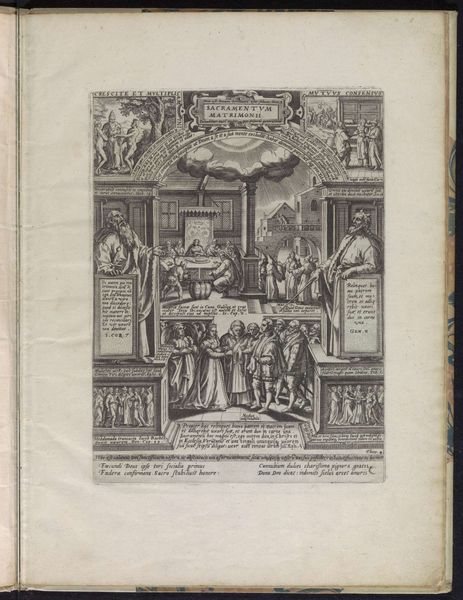
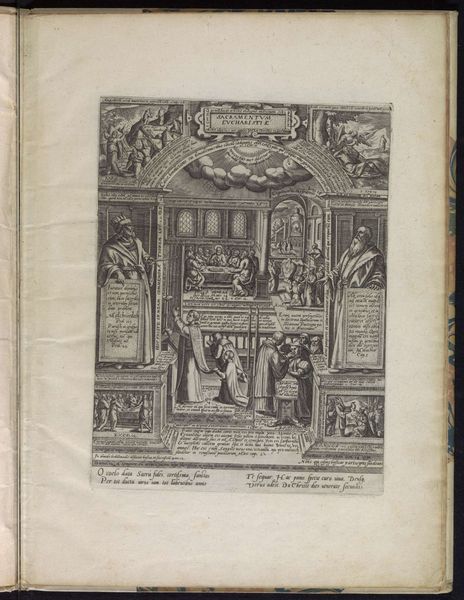
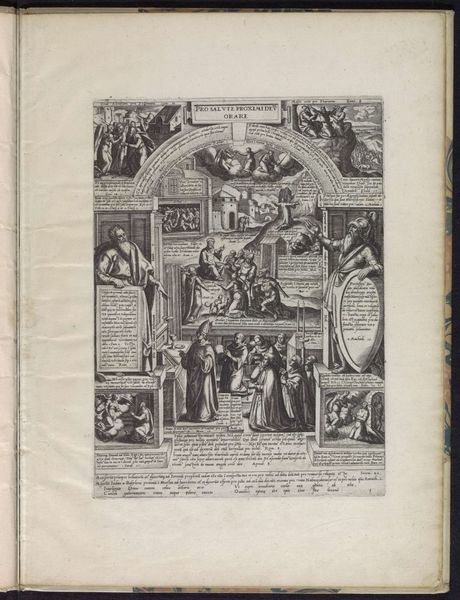
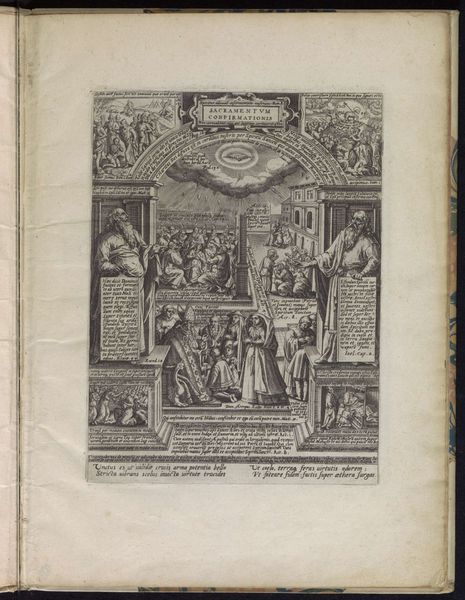
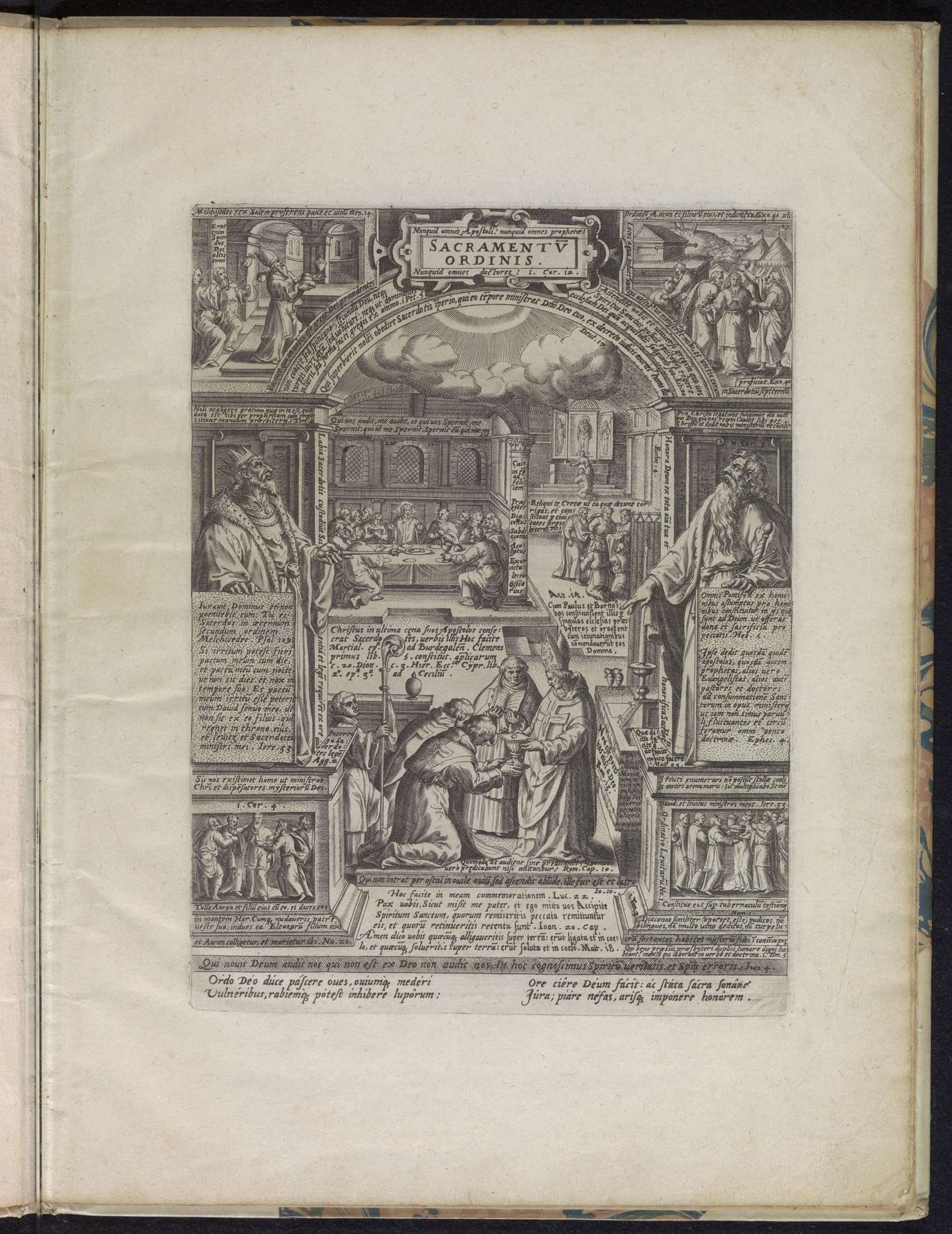
Curator: This engraving from 1576 by Philips Galle, entitled *Sacrament van priesterwijding,* or Sacrament of priestly ordination, presents a richly detailed narrative. Editor: The immediate impression is one of intricacy, almost overwhelmingly so. The composition feels very contained, very dense. Every millimeter seems covered with texture and pattern. Curator: The density speaks to the layering of symbolism prevalent during the Northern Renaissance. The central scene depicts the ordination, surrounded by related vignettes and figures like a visual encyclopedia of theological ideas. Look at the textual elements flanking the central image – they offer historical and theological context. Editor: Yes, but all those details compete. The eye struggles to find a focal point, doesn’t it? The textures—the lines that define the robes, the architectural details—while skillfully executed, create a certain flatness. It sacrifices depth for meticulousness. Curator: Consider it from a different angle. Each carefully rendered line is there to guide you towards grasping layers of cultural memory and scriptural teachings encoded into this image. The act of kneeling takes on a symbolic form of profound obedience and ritual cleansing. Editor: Perhaps. But visually, I am caught between the overall design and minute intricacies without being allowed a spatial position of repose. The light is also uniform—a rather diffuse glow, almost like even lighting throughout the image creates tension within the eye and emphasizes that visual competition. Curator: The flatness isn't a flaw but a deliberate choice, characteristic of Northern Renaissance prints intended for dissemination and teaching. It removes the illusionism that might distract the viewer from the core religious meaning and moral instruction. Each small scene contributes to understanding what this act symbolizes, echoing traditional, even Biblical references to sacrifice and divine selection. Editor: An interesting argument, connecting to a deeper symbolic reading which I admire! Despite my focus on form, I find your argument for intention and audience enriching. The interplay of symbol and structure—it really shows the period’s engagement with faith through rigorous pattern.

Artwork details
- Medium
- print, engraving
- Dimensions
- height 256 mm, width 190 mm, height 375 mm, width 275 mm
- Location
- Rijksmuseum
- Copyright
- Rijks Museum: Open Domain
Tags
Comments
Share your thoughts
About this artwork
Curator: This engraving from 1576 by Philips Galle, entitled *Sacrament van priesterwijding,* or Sacrament of priestly ordination, presents a richly detailed narrative. Editor: The immediate impression is one of intricacy, almost overwhelmingly so. The composition feels very contained, very dense. Every millimeter seems covered with texture and pattern. Curator: The density speaks to the layering of symbolism prevalent during the Northern Renaissance. The central scene depicts the ordination, surrounded by related vignettes and figures like a visual encyclopedia of theological ideas. Look at the textual elements flanking the central image – they offer historical and theological context. Editor: Yes, but all those details compete. The eye struggles to find a focal point, doesn’t it? The textures—the lines that define the robes, the architectural details—while skillfully executed, create a certain flatness. It sacrifices depth for meticulousness. Curator: Consider it from a different angle. Each carefully rendered line is there to guide you towards grasping layers of cultural memory and scriptural teachings encoded into this image. The act of kneeling takes on a symbolic form of profound obedience and ritual cleansing. Editor: Perhaps. But visually, I am caught between the overall design and minute intricacies without being allowed a spatial position of repose. The light is also uniform—a rather diffuse glow, almost like even lighting throughout the image creates tension within the eye and emphasizes that visual competition. Curator: The flatness isn't a flaw but a deliberate choice, characteristic of Northern Renaissance prints intended for dissemination and teaching. It removes the illusionism that might distract the viewer from the core religious meaning and moral instruction. Each small scene contributes to understanding what this act symbolizes, echoing traditional, even Biblical references to sacrifice and divine selection. Editor: An interesting argument, connecting to a deeper symbolic reading which I admire! Despite my focus on form, I find your argument for intention and audience enriching. The interplay of symbol and structure—it really shows the period’s engagement with faith through rigorous pattern.
Comments
Share your thoughts