About this artwork
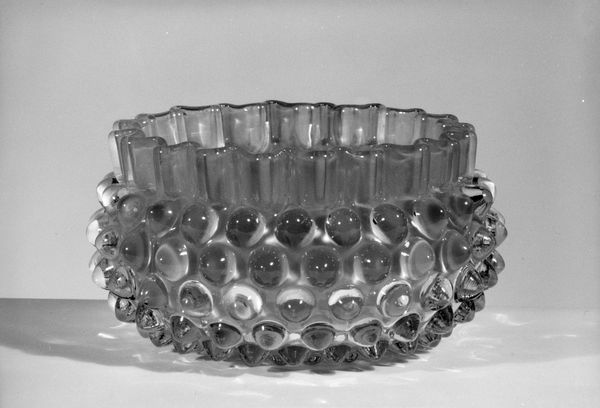
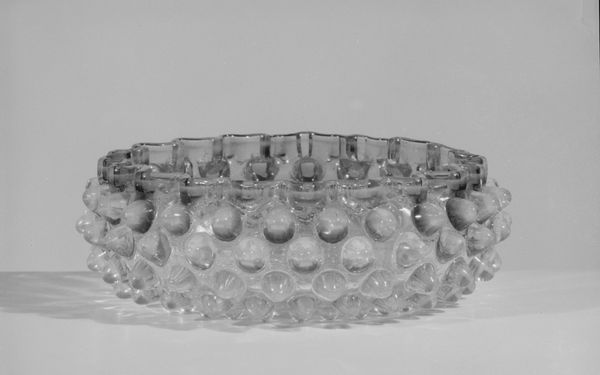
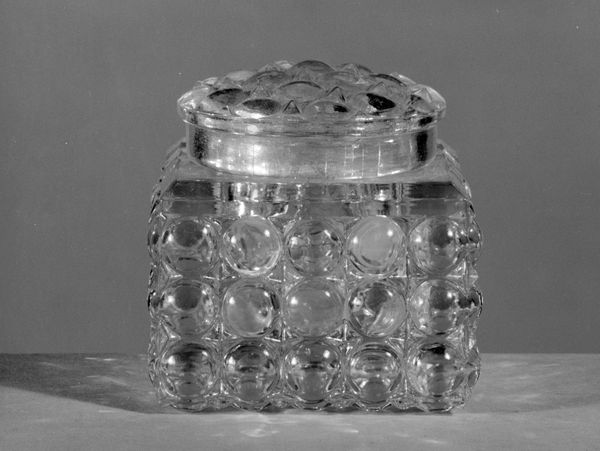
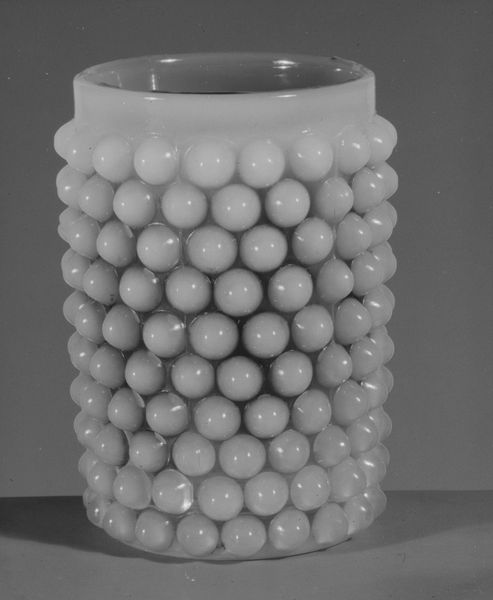
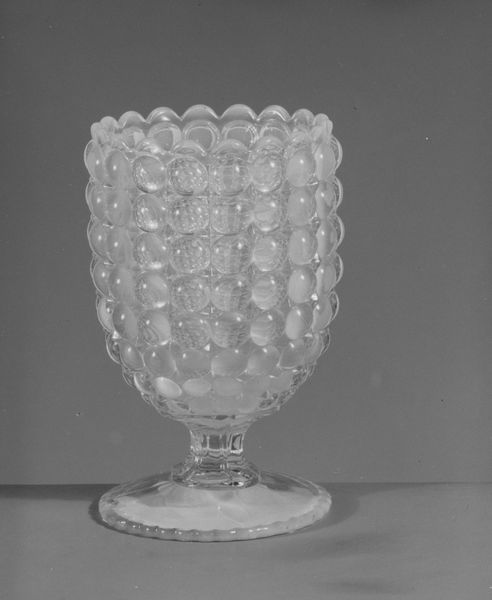
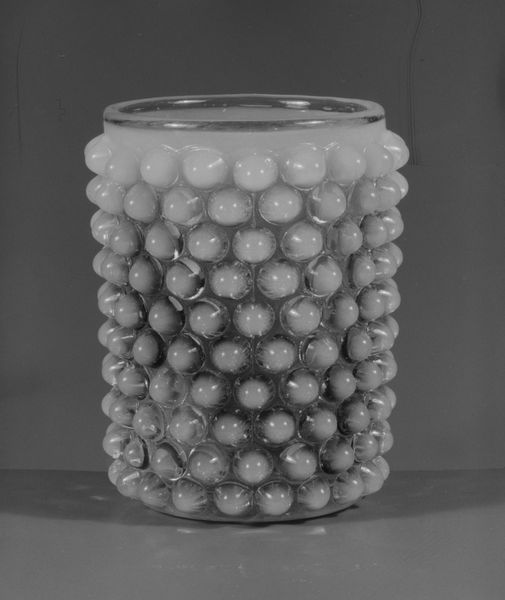
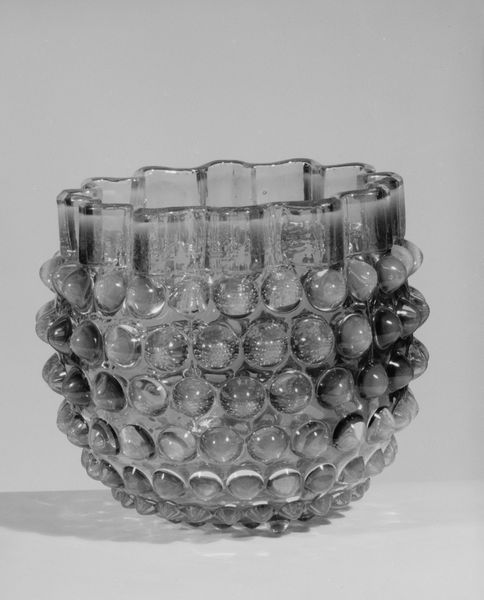
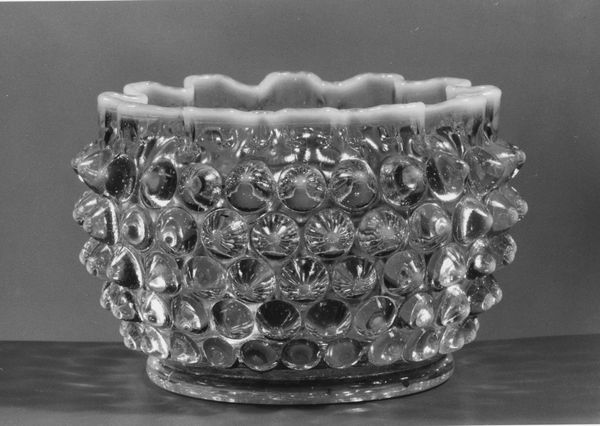
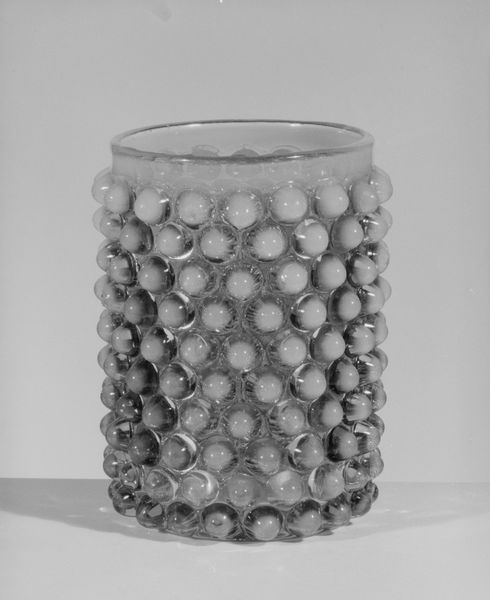
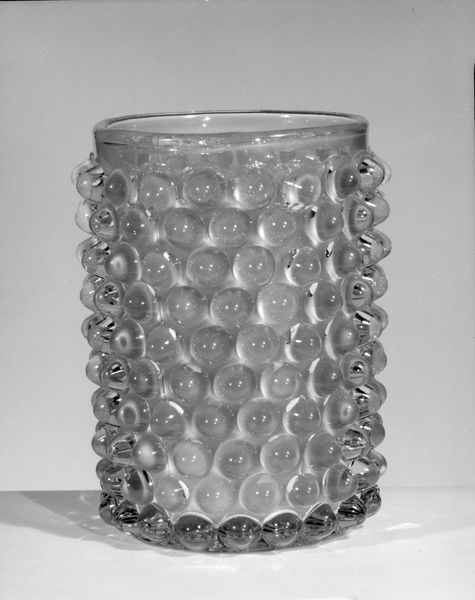
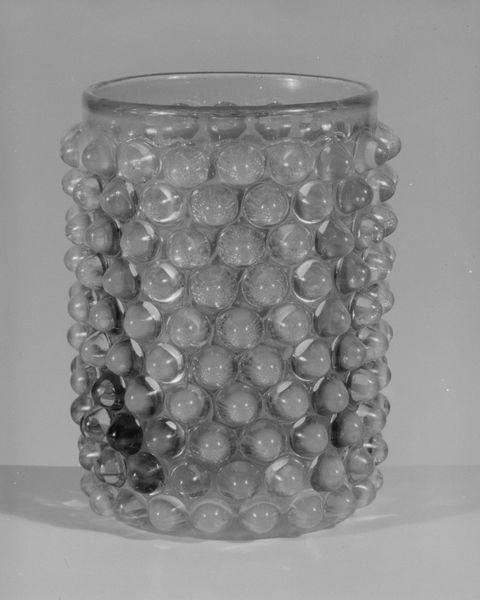
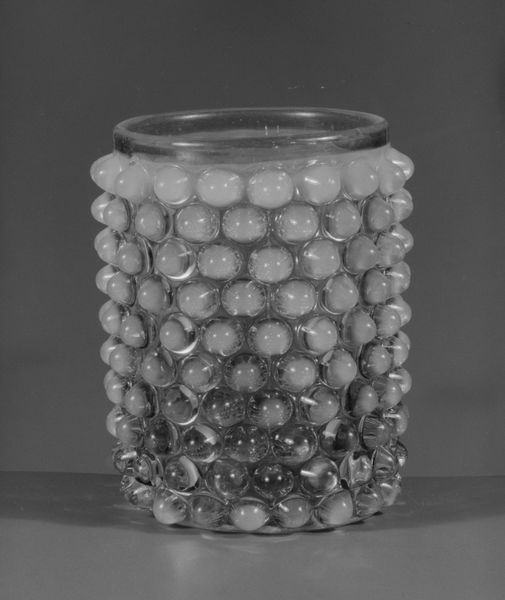
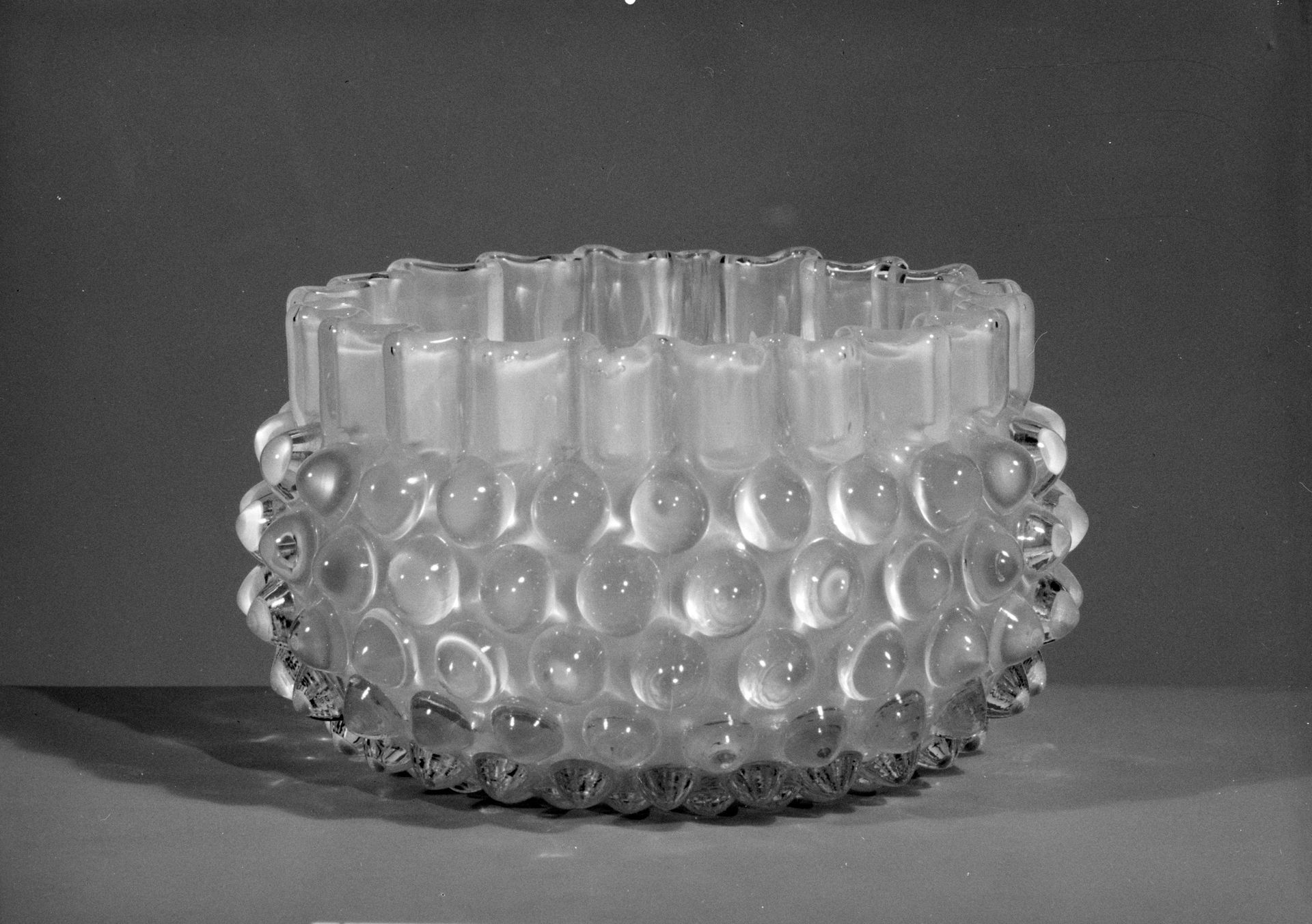
Editor: This is a glass bowl, a hobnail bowl, made by Hobbs, Brockunier and Company between 1887 and 1896. The uniform texture created by the hobnail design gives the bowl such an intriguing tactile quality. What do you see when you look at this object? Curator: Initially, the uniform texture commands attention. The rhythmic repetition of the hobnails invites an investigation into the optics of its structure. Observe the variations in light refraction, causing a constellation of highlights and shadows across its surface. The composition itself, a symmetrical and contained form, is a critical aspect. How does the bowl's design influence your understanding of its purpose and its presence within a domestic setting? Editor: It does give it a very ordered and comforting appearance. What I’m also thinking about, though, is how the repetitive hobnail design, while creating this beautiful visual rhythm, almost obscures the object’s functionality. Curator: Indeed. The structural integrity and surface of the piece become the primary focus. The balance of form and function creates a fascinating tension, suggesting a dialogue between utility and purely aesthetic consideration. The regularity in shape across its exterior also directs our attention to the subtle, vertically fluted upper rim; that element's interruption offers a moment of rest amid its overall rigid composition. What do you think? Editor: I like that! The bowl almost defies its use. Thanks, that’s a perspective I hadn't considered before. Curator: Precisely, engaging with its compositional elements allows us to unpack meanings.
Hobnail bowl
1887 - 1896

Hobbs, Brockunier and Company
1863 - 1891
The Metropolitan Museum of Art
Metropolitan Museum of Art, New York, NYArtwork details
- Medium
- glass, sculpture
- Dimensions
- Dimensions unavailable
- Location
- Metropolitan Museum of Art, New York, NY
- Copyright
- Public Domain
Tags
Comments
Share your thoughts
About this artwork
Editor: This is a glass bowl, a hobnail bowl, made by Hobbs, Brockunier and Company between 1887 and 1896. The uniform texture created by the hobnail design gives the bowl such an intriguing tactile quality. What do you see when you look at this object? Curator: Initially, the uniform texture commands attention. The rhythmic repetition of the hobnails invites an investigation into the optics of its structure. Observe the variations in light refraction, causing a constellation of highlights and shadows across its surface. The composition itself, a symmetrical and contained form, is a critical aspect. How does the bowl's design influence your understanding of its purpose and its presence within a domestic setting? Editor: It does give it a very ordered and comforting appearance. What I’m also thinking about, though, is how the repetitive hobnail design, while creating this beautiful visual rhythm, almost obscures the object’s functionality. Curator: Indeed. The structural integrity and surface of the piece become the primary focus. The balance of form and function creates a fascinating tension, suggesting a dialogue between utility and purely aesthetic consideration. The regularity in shape across its exterior also directs our attention to the subtle, vertically fluted upper rim; that element's interruption offers a moment of rest amid its overall rigid composition. What do you think? Editor: I like that! The bowl almost defies its use. Thanks, that’s a perspective I hadn't considered before. Curator: Precisely, engaging with its compositional elements allows us to unpack meanings.
Comments
Share your thoughts