About this artwork
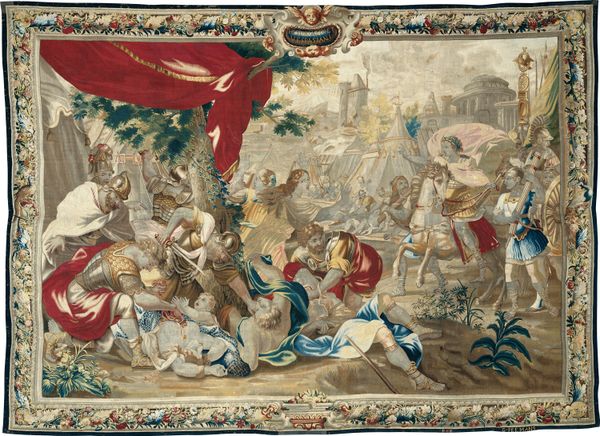
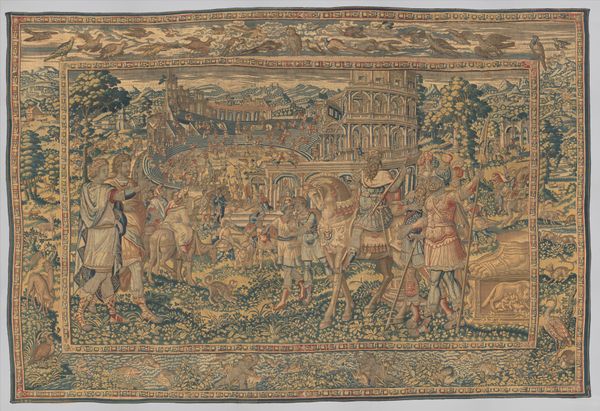
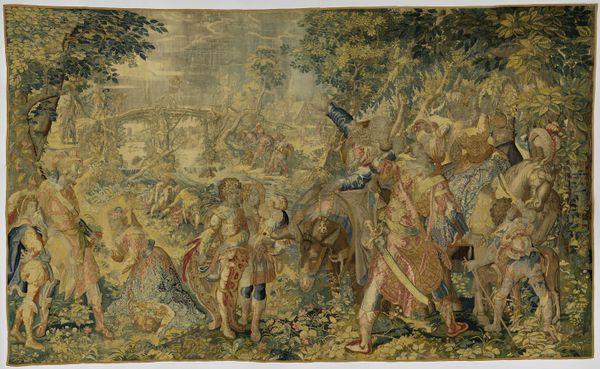
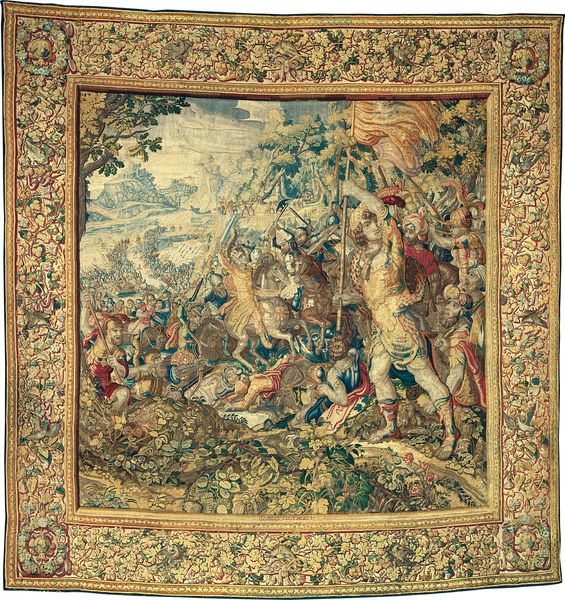
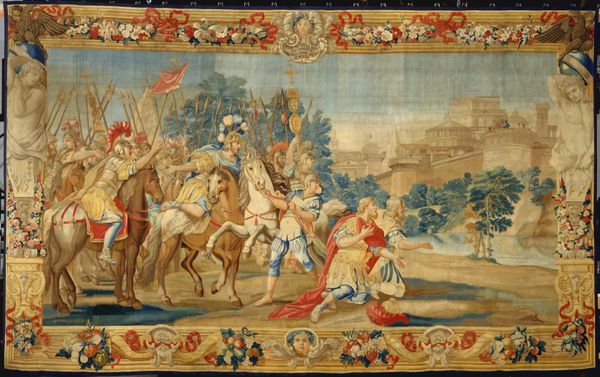
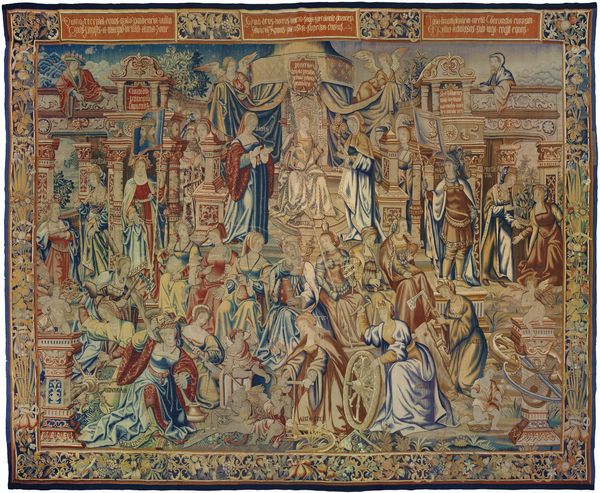
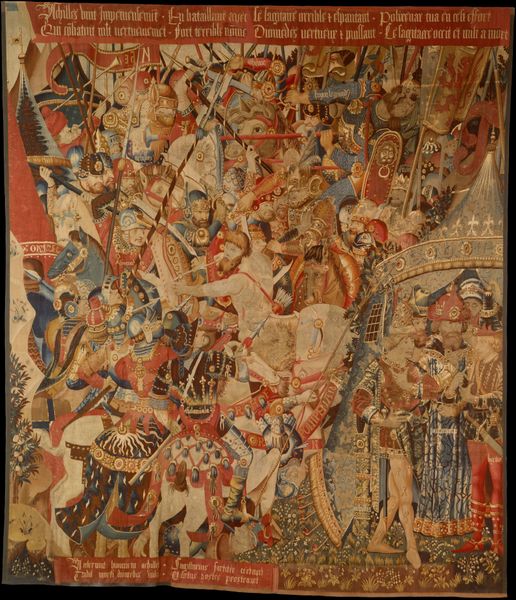
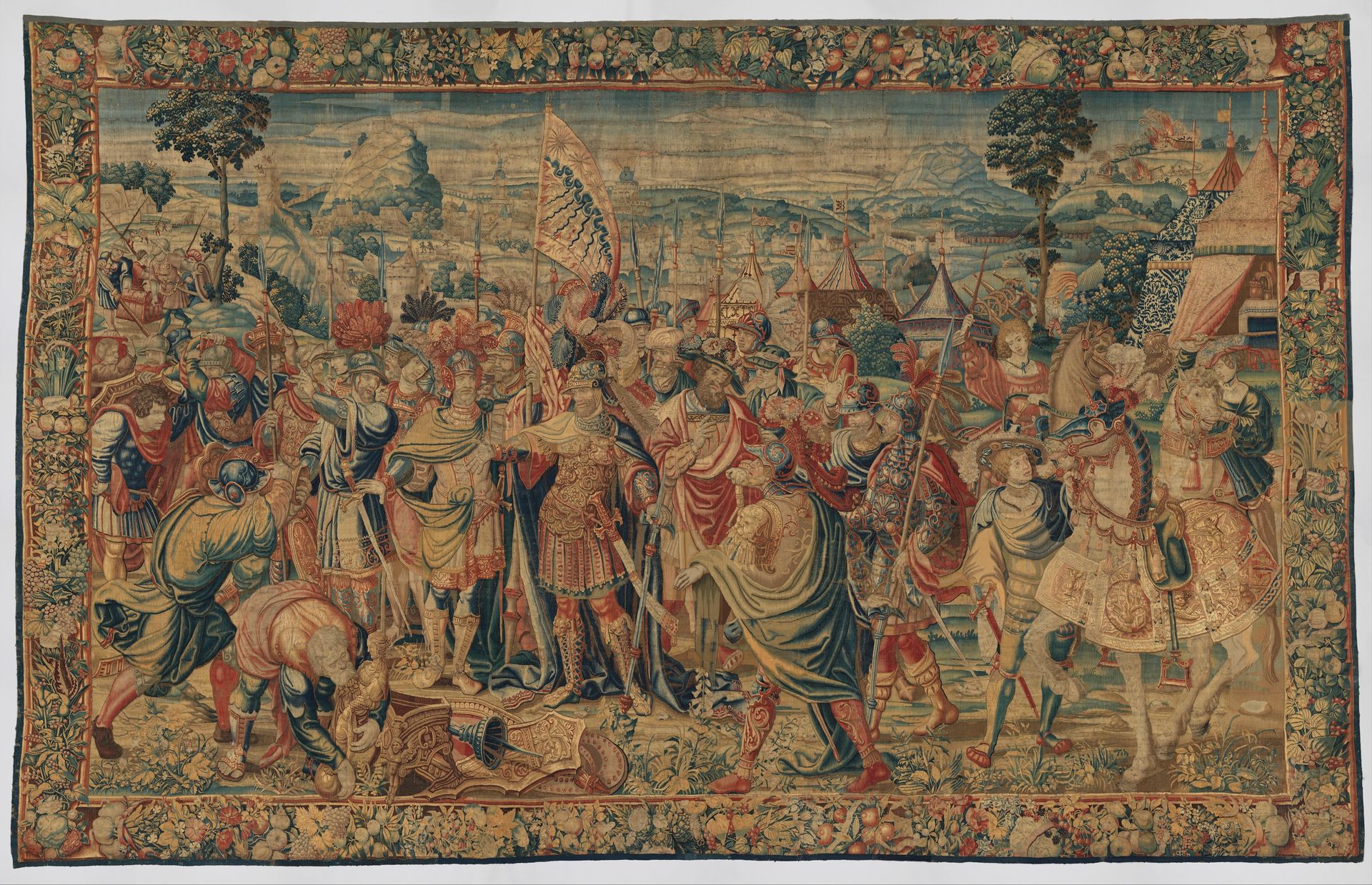
This tapestry, made in the mid-16th century, by Pieter Coecke van Aelst, depicts Agamemnon mustering the Greek troops at Aulis. It's woven with wool and silk threads, using a technique that’s essentially pictorial weaving. The dense, weighty texture speaks to the immense labor involved. Each thread meticulously placed, interlocking to create a dense, durable surface. The silk adds sheen and highlights, bringing the scene to life. The scale alone suggests a patron of great wealth, able to commission such a grand object. Tapestries like this served as portable displays of power and status, reinforcing social hierarchies. The subject matter, drawn from classical mythology, further elevated the owner's status, linking them to a world of learning and refinement. Considering the materials, the making, and the context invites us to appreciate the tapestry as both art and craft, challenging the conventional boundaries that separate the two.
Agamemnon musters the Greek troops at Aulis from the “Story of Iphigenia”
1535 - 1548

Pieter Coecke van Aelst
1502 - 1550
The Metropolitan Museum of Art
Metropolitan Museum of Art, New York, NYArtwork details
- Medium
- textile
- Dimensions
- Overall: 164 1/2 x 259 in. (417.8 x 657.9 cm)
- Location
- Metropolitan Museum of Art, New York, NY
- Copyright
- Public Domain
Tags
Comments
Share your thoughts
About this artwork
This tapestry, made in the mid-16th century, by Pieter Coecke van Aelst, depicts Agamemnon mustering the Greek troops at Aulis. It's woven with wool and silk threads, using a technique that’s essentially pictorial weaving. The dense, weighty texture speaks to the immense labor involved. Each thread meticulously placed, interlocking to create a dense, durable surface. The silk adds sheen and highlights, bringing the scene to life. The scale alone suggests a patron of great wealth, able to commission such a grand object. Tapestries like this served as portable displays of power and status, reinforcing social hierarchies. The subject matter, drawn from classical mythology, further elevated the owner's status, linking them to a world of learning and refinement. Considering the materials, the making, and the context invites us to appreciate the tapestry as both art and craft, challenging the conventional boundaries that separate the two.
Comments
Share your thoughts