About this artwork
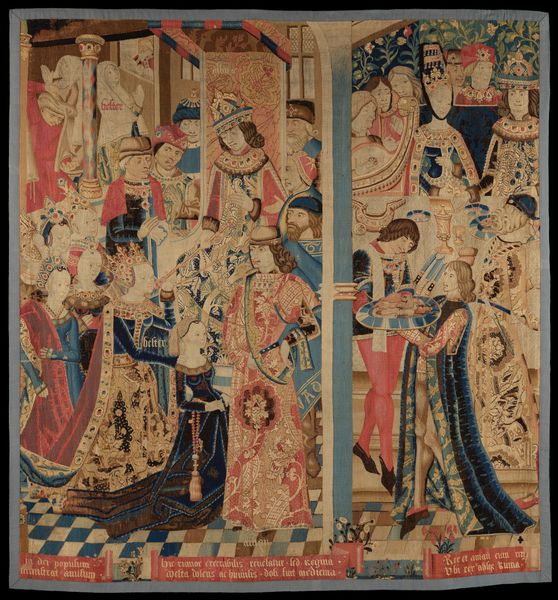
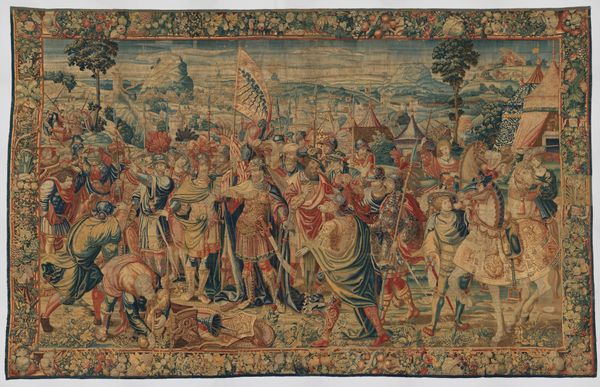
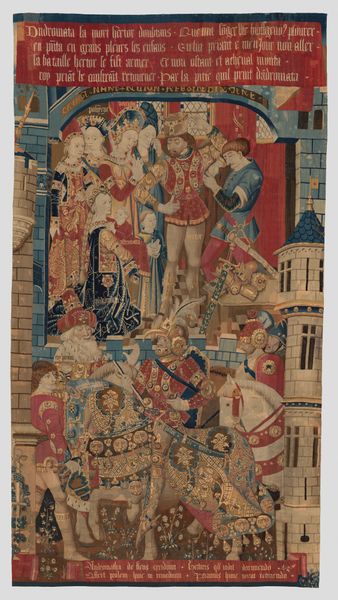
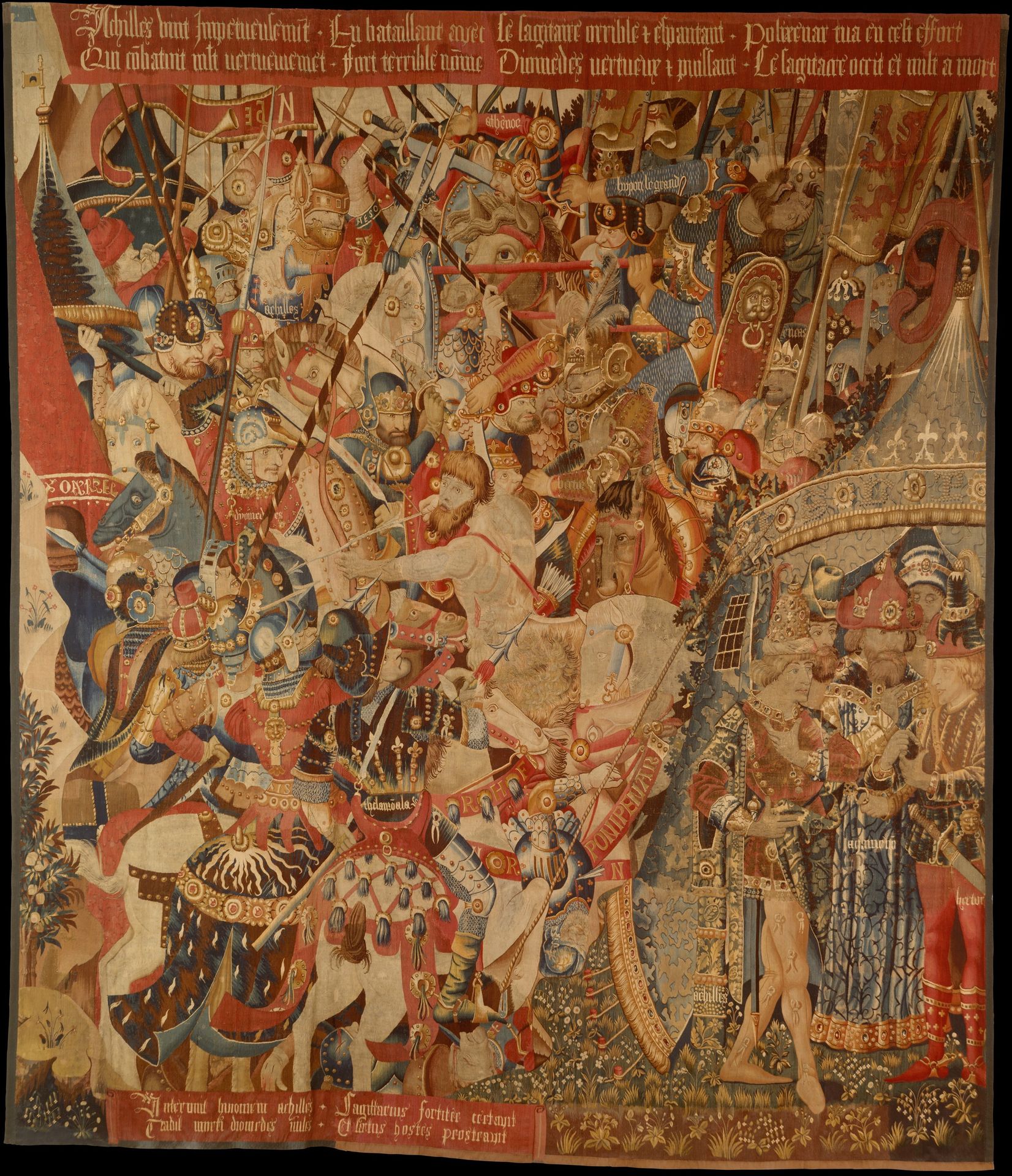
This tapestry, woven by Jean or Pasquier Grenier, plunges us into the heart of the Trojan War with its chaotic energy. The composition is densely packed, a maelstrom of figures, horses, and weaponry rendered in wool and silk. Notice how the eye struggles to find a focal point, mirroring the disarray of battle itself. The tapestry’s structure cleverly destabilizes any clear narrative hierarchy. Multiple scenes unfold simultaneously, challenging our perception of time and space. The formal arrangement suggests a world where established orders are collapsing. The intricate details of armor and heraldry serve as visual signs, yet their profusion obscures rather than clarifies meaning. Ultimately, the tapestry engages with the philosophical notion of war as a site of profound ambiguity. The blurred lines between hero and villain, victory and defeat, prompt us to question the very values upon which these conflicts are waged. The dense materiality of the woven threads serves as a constant reminder of the labor and artistry involved in constructing such narratives.
The Battle with the Sagittary and the Conference at Achilles' Tent (from Scenes from the Story of the Trojan War)
1467 - 1493

Jean or Pasquier Grenier
@jeanorpasquiergrenier
The Metropolitan Museum of Art
Metropolitan Museum of Art, New York, NYArtwork details
- Medium
- painting, textile
- Dimensions
- Overall: 172 × 156 in. (436.9 × 396.2 cm)
- Location
- Metropolitan Museum of Art, New York, NY
- Copyright
- Public Domain
Tags
Comments
Share your thoughts
About this artwork
This tapestry, woven by Jean or Pasquier Grenier, plunges us into the heart of the Trojan War with its chaotic energy. The composition is densely packed, a maelstrom of figures, horses, and weaponry rendered in wool and silk. Notice how the eye struggles to find a focal point, mirroring the disarray of battle itself. The tapestry’s structure cleverly destabilizes any clear narrative hierarchy. Multiple scenes unfold simultaneously, challenging our perception of time and space. The formal arrangement suggests a world where established orders are collapsing. The intricate details of armor and heraldry serve as visual signs, yet their profusion obscures rather than clarifies meaning. Ultimately, the tapestry engages with the philosophical notion of war as a site of profound ambiguity. The blurred lines between hero and villain, victory and defeat, prompt us to question the very values upon which these conflicts are waged. The dense materiality of the woven threads serves as a constant reminder of the labor and artistry involved in constructing such narratives.
Comments
Share your thoughts