
Curatorial notes
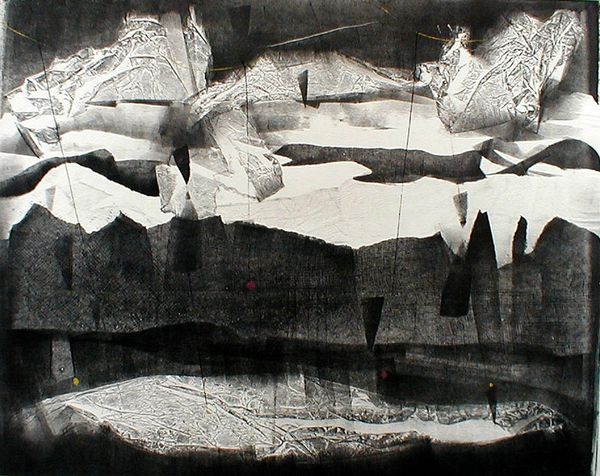
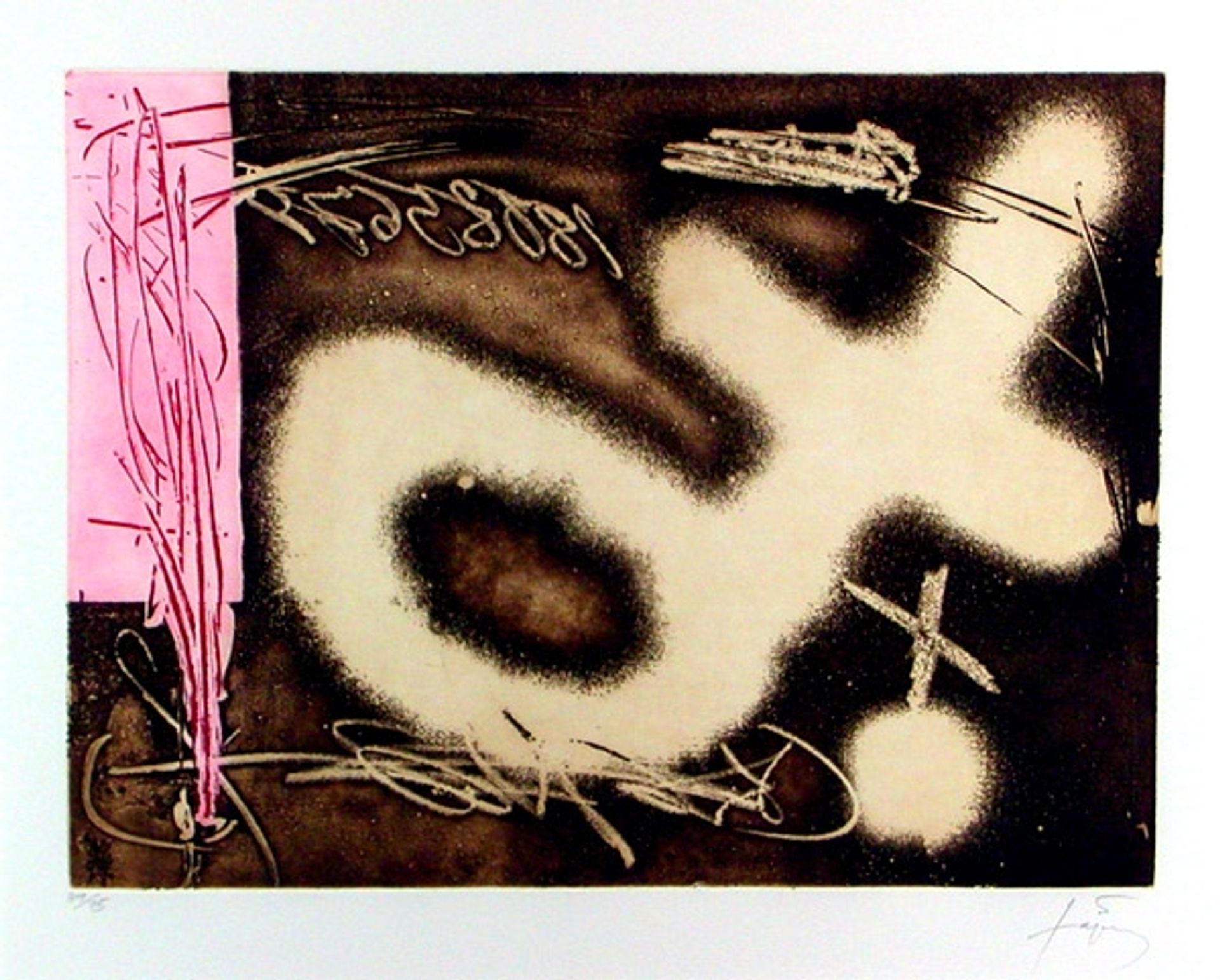
Editor: So, this is Antoni Tapies’s "El Péndulo Inmóvil I" from 1982. It looks like a mixed-media work incorporating printmaking, collage and stencil. There's something haunting about the piece. A strange juxtaposition of a clean stencil with crude graffiti. How do you interpret it? Curator: This piece deeply resonates with cultural memory and the symbolism inherent in graffiti. Tapies utilizes recognizable signs, transforming the raw energy of street art into a reflection on society. Consider the "female" symbol centrally placed. What could that represent in the context of the graffiti marks? Editor: Perhaps a statement about gender, power, and vulnerability in public spaces? Graffiti is often about marking territory, leaving your stamp… Curator: Precisely! Tapies layers meaning. The stark contrast between the precise stencil and chaotic, almost primal scratches points to tensions. A controlled message versus raw, unfiltered expression. Think about the pink linear composition at the left. Is that acting as a stabilizer? Editor: I see what you mean; it’s an anchor in a sea of chaos. The title talks about the immobile pendulum; it feels as though everything *should* be swinging or moving. Yet it's not. Curator: A pendulum typically symbolizes the passage of time, a rhythm. But immobility here? That hints at stagnation or a frozen moment in the ongoing dialogue between order and chaos, public and private. Editor: It’s interesting how such simple, almost crude markings can carry so much cultural weight. Curator: Tapies understood that the simplest symbols can be powerful triggers of cultural memory. He invites us to reconsider the everyday language we often overlook. I’m newly energized!