About this artwork
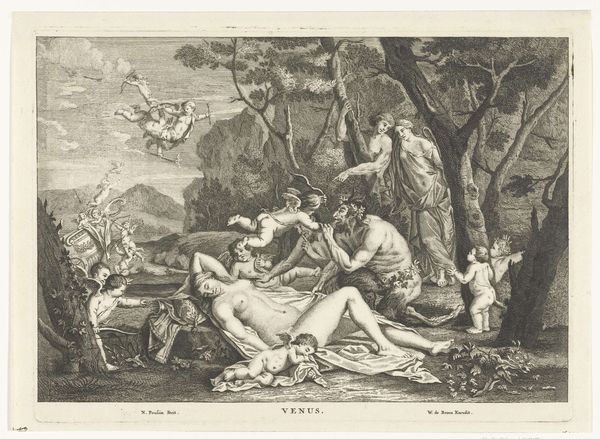
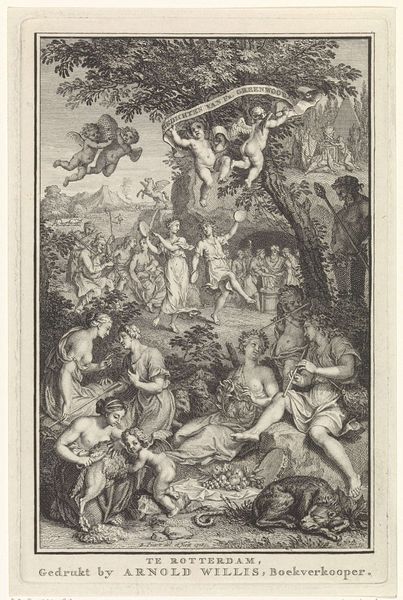
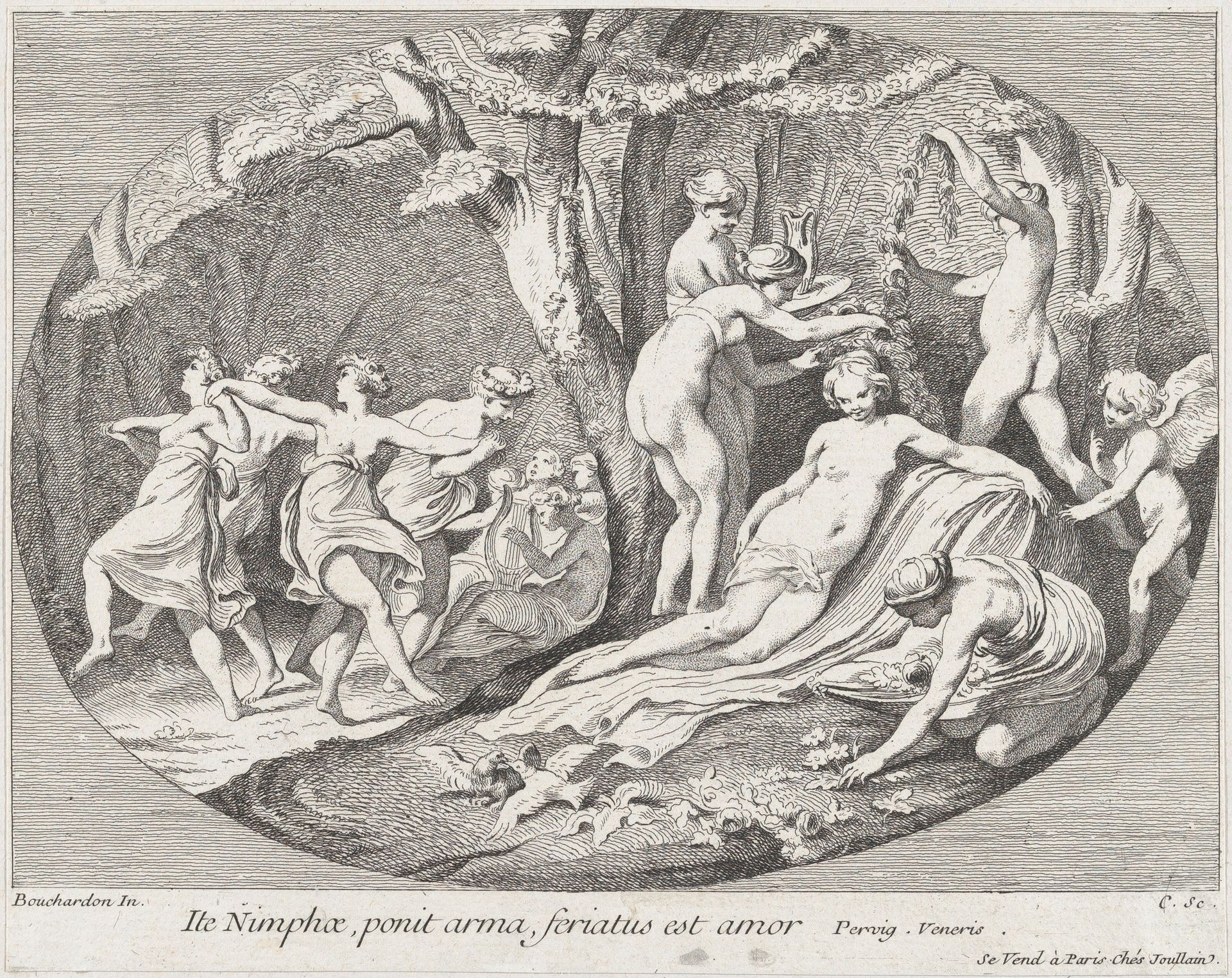
Anne Claude Philippe Caylus created "Go Nymphs, who lay down their arms, Love is resting!" sometime in the 18th century. The print comes out of a French Rococo culture steeped in aristocratic patronage and defined by its ornamental elegance. In this scene, Caylus depicts a group of nymphs in a state of leisure, attending to a reclining figure of Love, or Venus. The imagery reinforces conventional gender roles, presenting women in service to love and beauty, reflecting the era’s emphasis on the feminine and the erotic in art. Consider how the figures are arranged: some dance, others attend to the reclining figure, and all are within an idyllic, natural setting. This composition is not merely decorative. It invites reflection on the themes of love, beauty, and leisure. The artwork thus becomes an intimate reflection on the dynamics of desire and pleasure, echoing the personal and societal values of its time.
Go Nymphs, who lay down their arms, Love is resting! 1730 - 1760

Anne Claude Philippe Caylus
1692 - 1765
The Metropolitan Museum of Art
Metropolitan Museum of Art, New York, NYArtwork details
- Medium
- drawing, print, etching
- Dimensions
- Sheet (trimmed): 6 5/16 × 7 15/16 in. (16 × 20.1 cm)
- Location
- Metropolitan Museum of Art, New York, NY
- Copyright
- Public Domain
Tags
drawing
allegory
baroque
etching
landscape
figuration
nude
Comments
No comments
About this artwork
Anne Claude Philippe Caylus created "Go Nymphs, who lay down their arms, Love is resting!" sometime in the 18th century. The print comes out of a French Rococo culture steeped in aristocratic patronage and defined by its ornamental elegance. In this scene, Caylus depicts a group of nymphs in a state of leisure, attending to a reclining figure of Love, or Venus. The imagery reinforces conventional gender roles, presenting women in service to love and beauty, reflecting the era’s emphasis on the feminine and the erotic in art. Consider how the figures are arranged: some dance, others attend to the reclining figure, and all are within an idyllic, natural setting. This composition is not merely decorative. It invites reflection on the themes of love, beauty, and leisure. The artwork thus becomes an intimate reflection on the dynamics of desire and pleasure, echoing the personal and societal values of its time.
Comments
No comments