drawing, print, intaglio, engraving
#
drawing
#
baroque
# print
#
pen illustration
#
pen sketch
#
intaglio
#
old engraving style
#
perspective
#
figuration
#
form
#
11_renaissance
#
pen-ink sketch
#
line
#
pen work
#
sketchbook drawing
#
history-painting
#
engraving
Dimensions: height 194 mm, width 133 mm
Copyright: Rijks Museum: Open Domain
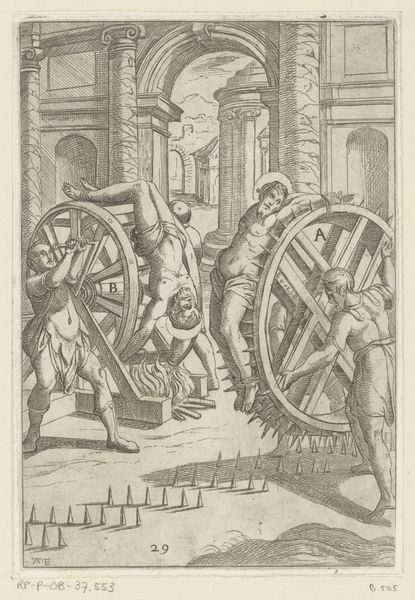
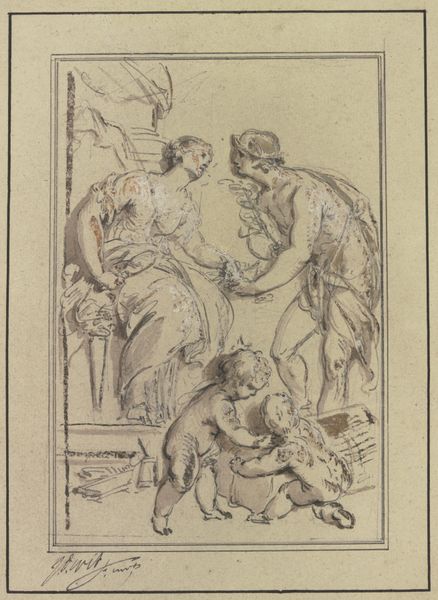
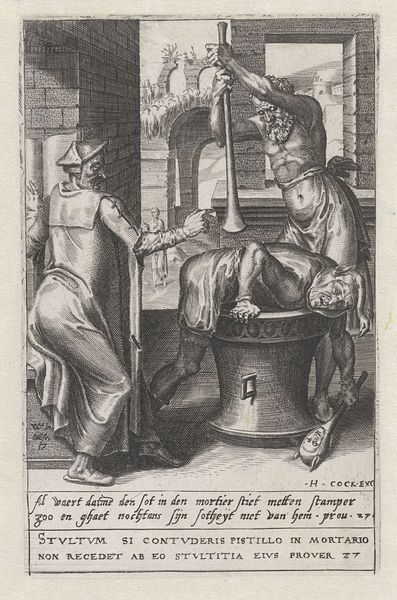
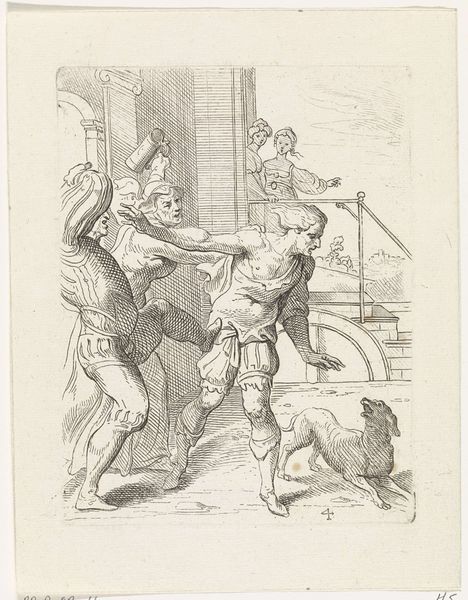
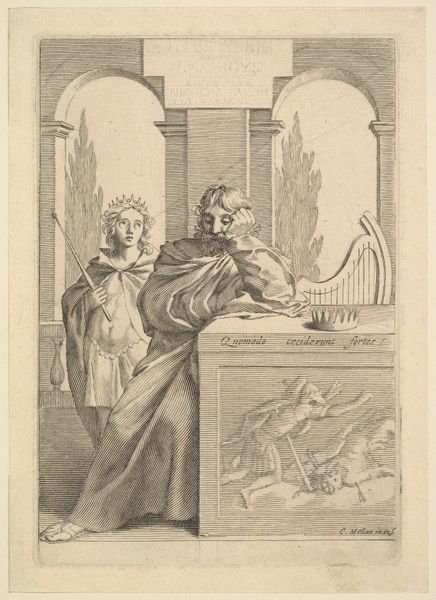
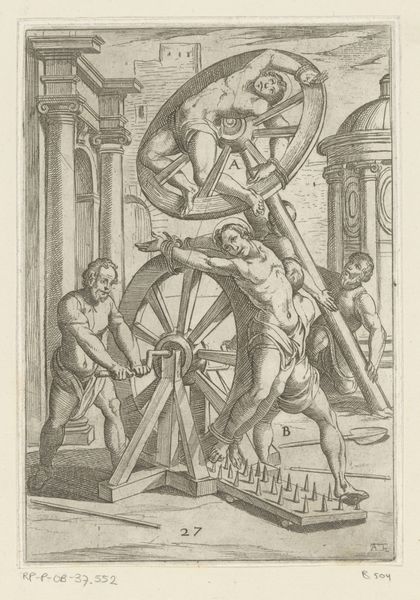
Curator: Oof. That gives me the chills just looking at it. Editor: Indeed. Here we have a work titled "Foltering op vat met staven," or "Torture on a Barrel with Rods," attributed to Antonio Tempesta and created sometime between 1565 and 1630. It's currently held at the Rijksmuseum. The image, rendered using intaglio and engraving, captures a scene of, well, torture. Curator: Torture is right. Makes you think about the range of human experience, doesn’t it? From laughing children to…this. Though, the cherub riding the eagle gives it a surreal juxtaposition, don’t you think? Editor: Certainly. The composition, arranged with a sharp sense of perspective, forces the viewer to confront the horror directly. The figure strapped to the wheel is centrally positioned, making his suffering unavoidable. Note the precise linework—especially the details defining the muscles of the victim and his torturers. The artist uses this linear precision to enhance the scene's brutal realism. Curator: And there's an interesting bit of narrative happening with that wheel. You see how the man’s placed right over what looks like the letter “A”? It’s subtle, but I feel like it adds an allegorical layer, some symbolic depth to the scene. Like a twisted sort of branding. Editor: That's an insightful observation. The "A" could indeed be interpreted as symbolic branding, perhaps signifying Adultery, or another imputed crime worthy of such extreme punishment, an indicator of shame permanently affixed to the victim. Or even *auctor*, the author, pointing to who bears responsibility. Curator: Or maybe Tempesta just felt like popping a letter in there for giggles? I’m just sayin', ya never know. It feels kind of dreamlike. Maybe Tempesta had a pizza with a missing topping, you know? Made him add something extra to the next work, too. What do you make of the location? Columns and classical structure give a certain historical or maybe even theatrical element? Editor: The classical architectural setting does lend the scene a sense of historical gravity. It elevates a common scene of brutality, or perhaps hints at the systematic nature of torture in so-called "civilized" society, all underscored through form and its arrangement in space. Curator: Well, whatever Tempesta’s message was, he really sticks the landing here. Makes ya think twice about behaving! I feel more pensive now; like, I need a Renaissance fair, stat. Editor: Indeed, a disquieting yet technically impressive artwork. It provides valuable insights into historical punishment. The careful formal choices of this baroque print elevate it beyond mere reportage of a torture scene into a chilling statement on human nature, and of humanism’s limits.
Comments
No comments
Be the first to comment and join the conversation on the ultimate creative platform.
 Collect
 React
React Comment
More like this