About this artwork
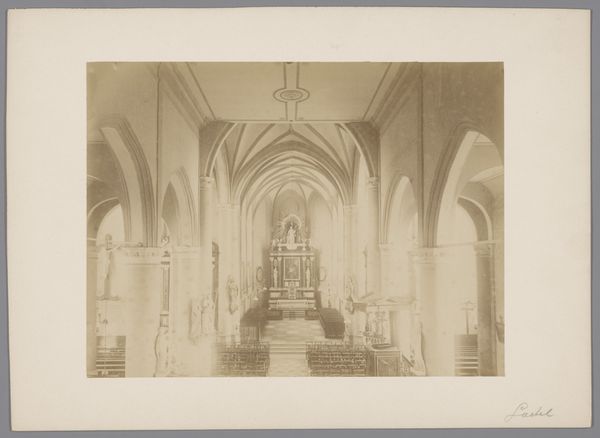
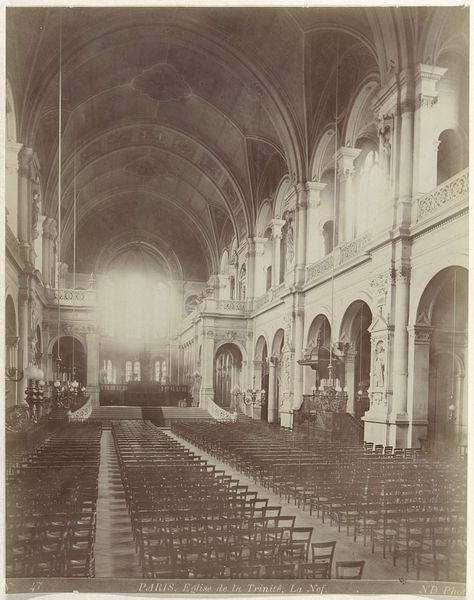
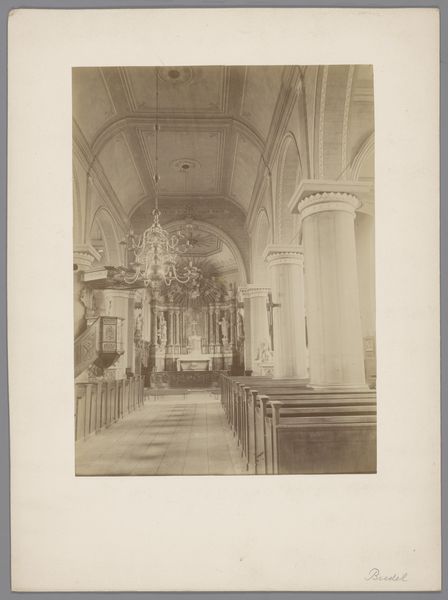
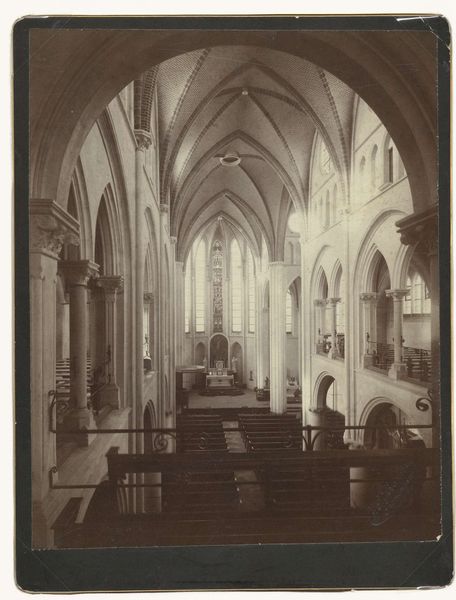
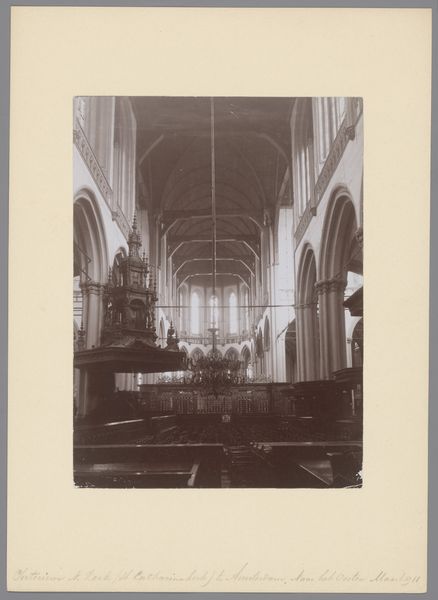
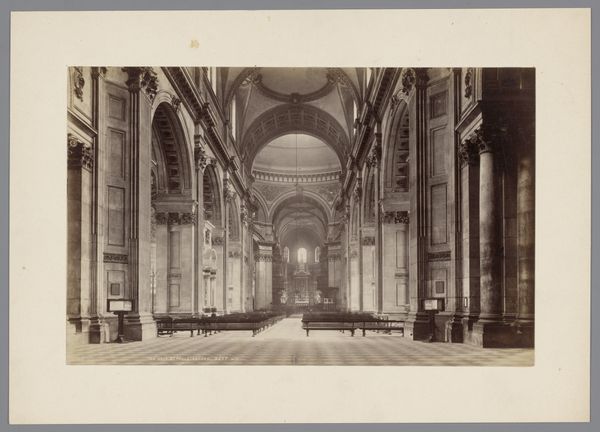
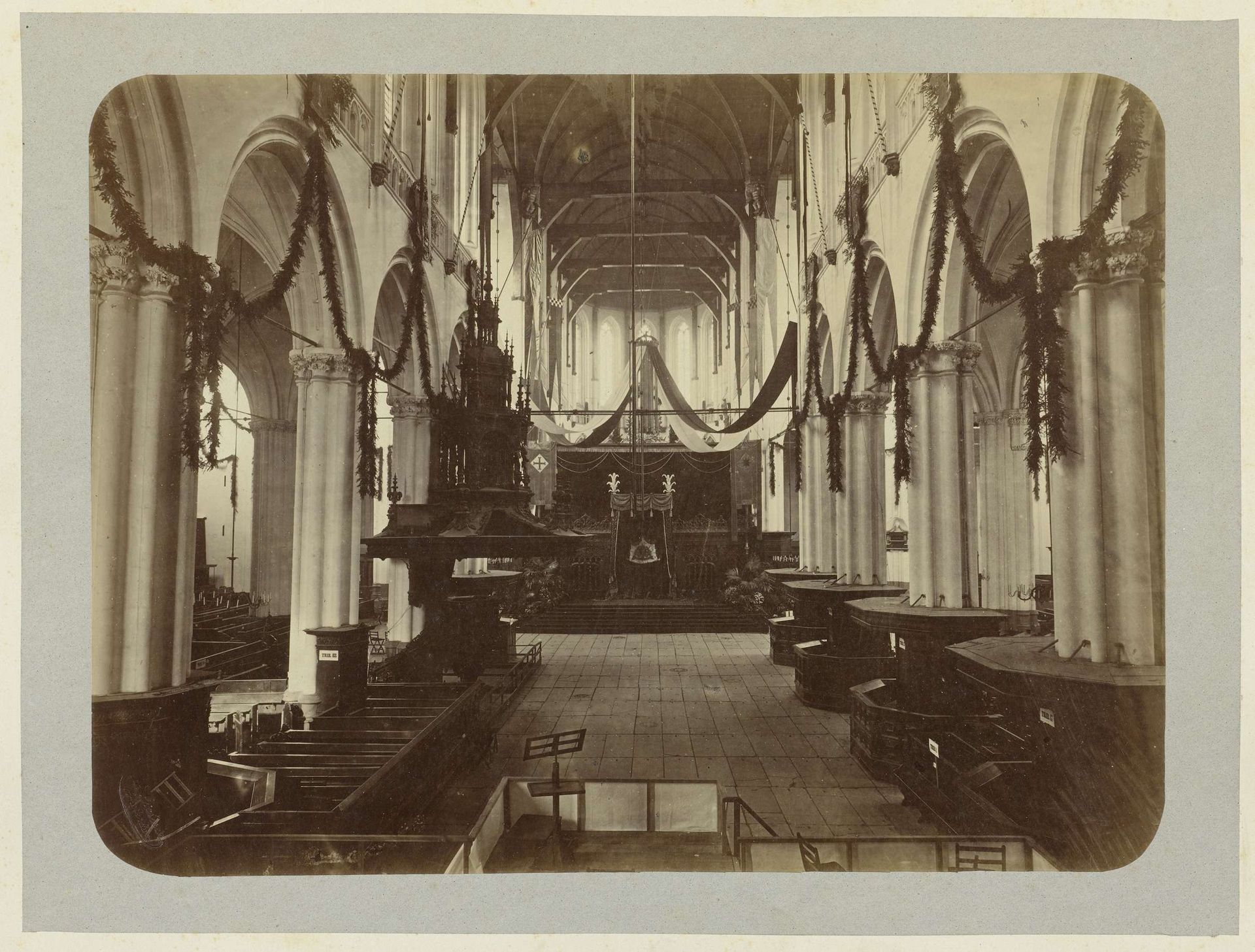
Albert Greiner captured with photography the ‘Decoratie in de Nieuwe Kerk bij de ontvangst van Willem III en Emma in Amsterdam’. The photograph presents a grand interior, dominated by vertical lines of massive columns that rise to meet arched ceilings. Garlands, draped between the columns, add a festive yet orderly rhythm to the space. This composition invites a semiotic reading; the architectural structure signifies established power, while the decorations signal a specific event of welcome. The perspective draws the eye to the vanishing point, where symbolic objects of royalty and religion converge, reinforcing traditional hierarchies. The photograph functions as a historical document and a study in spatial representation. Its structured composition mirrors the order and values of the society it depicts, yet the very act of capturing it through a new medium hints at evolving cultural dynamics. The interplay of light and shadow enriches the texture, drawing us into a space where ceremony and the everyday intersect.
Decoratie in de Nieuwe Kerk bij de ontvangst van Willem III en Emma in Amsterdam
1879

Albert Greiner
1833 - 1890Location
RijksmuseumArtwork details
- Medium
- photography, gelatin-silver-print, architecture
- Dimensions
- height 262 mm, width 326 mm, height 394 mm, width 477 mm
- Location
- Rijksmuseum
- Copyright
- Rijks Museum: Open Domain
Tags
sculpture
landscape
outdoor photograph
outdoor photo
photography
historical photography
gelatin-silver-print
19th century
architecture
statue
Comments
Be the first to share your thoughts about this work.
About this artwork
Albert Greiner captured with photography the ‘Decoratie in de Nieuwe Kerk bij de ontvangst van Willem III en Emma in Amsterdam’. The photograph presents a grand interior, dominated by vertical lines of massive columns that rise to meet arched ceilings. Garlands, draped between the columns, add a festive yet orderly rhythm to the space. This composition invites a semiotic reading; the architectural structure signifies established power, while the decorations signal a specific event of welcome. The perspective draws the eye to the vanishing point, where symbolic objects of royalty and religion converge, reinforcing traditional hierarchies. The photograph functions as a historical document and a study in spatial representation. Its structured composition mirrors the order and values of the society it depicts, yet the very act of capturing it through a new medium hints at evolving cultural dynamics. The interplay of light and shadow enriches the texture, drawing us into a space where ceremony and the everyday intersect.
Comments
Be the first to share your thoughts about this work.