1815
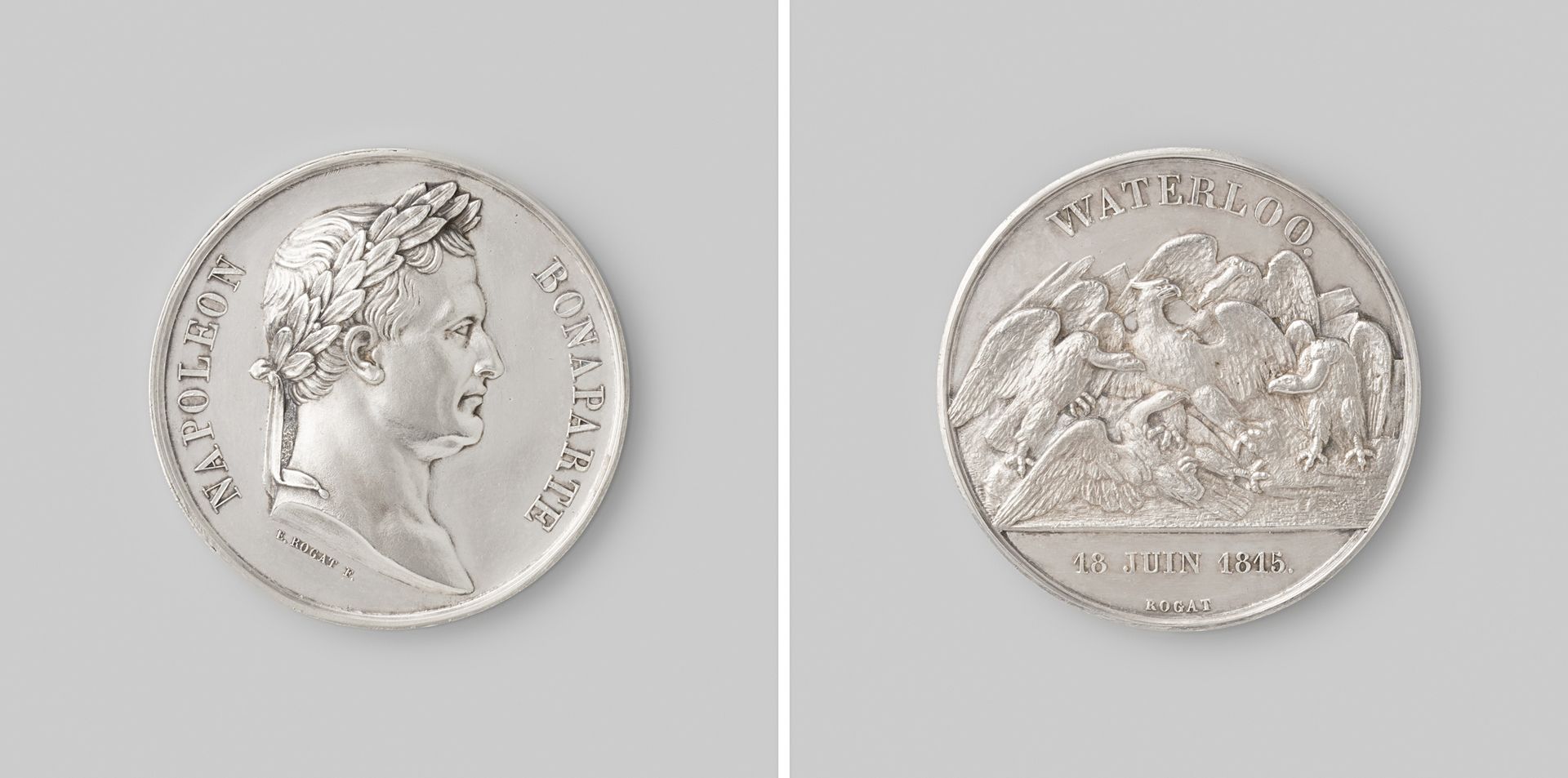
Slag bij Waterloo, ter ere van Napoleon I Bonaparte, keizer der Fransen

Listen to curator's interpretation
Curatorial notes
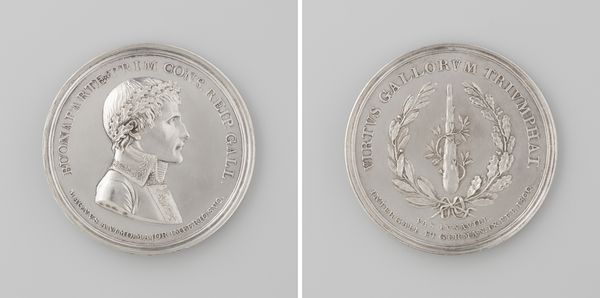
This silver medal, commemorating the Battle of Waterloo, was made by Emile Rogat, a French medalist active in the early 19th century. It presents two distinct scenes, each meticulously rendered in low relief. On one side, we see a profile of Napoleon Bonaparte, adorned with a laurel wreath, symbol of victory and imperial power. On the reverse, a cluster of eagles—likely representing the coalition forces that defeated Napoleon—confront each other in a flurry of wings and talons. The inscription "Waterloo" looms above. The medal would have been produced through a process of die-striking, requiring specialized tools, skilled labor, and an established workshop. The very concept of commemorative medals speaks to a culture of memorializing events, but also to the rise of mass production and distribution of objects that carried ideological weight. Thinking about this medal, we can see how it serves as a reminder that even seemingly simple objects can reveal complex histories of making, conflict, and cultural values.