About this artwork
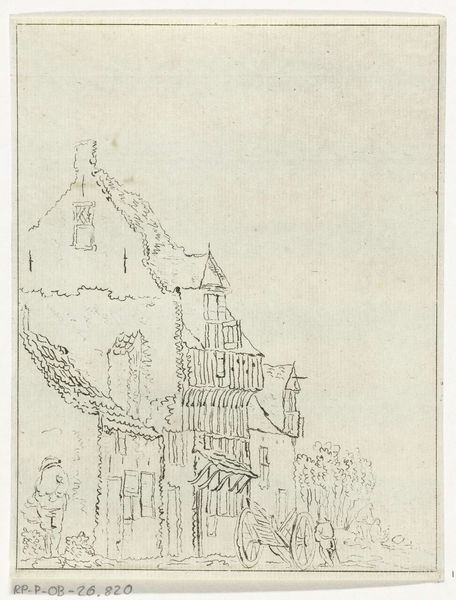
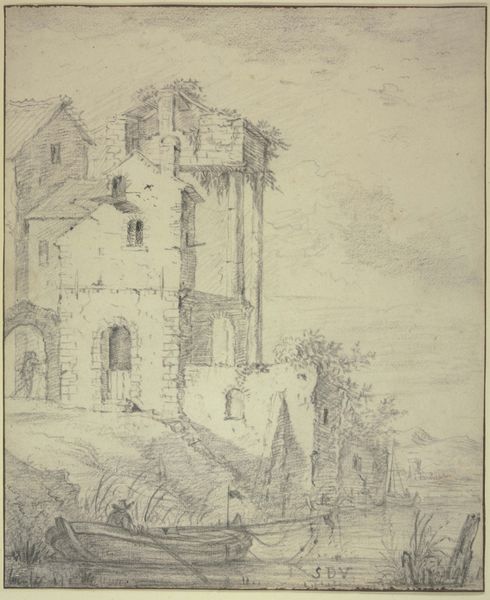
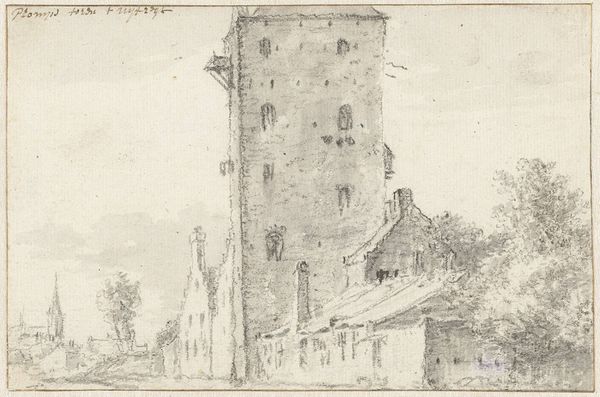
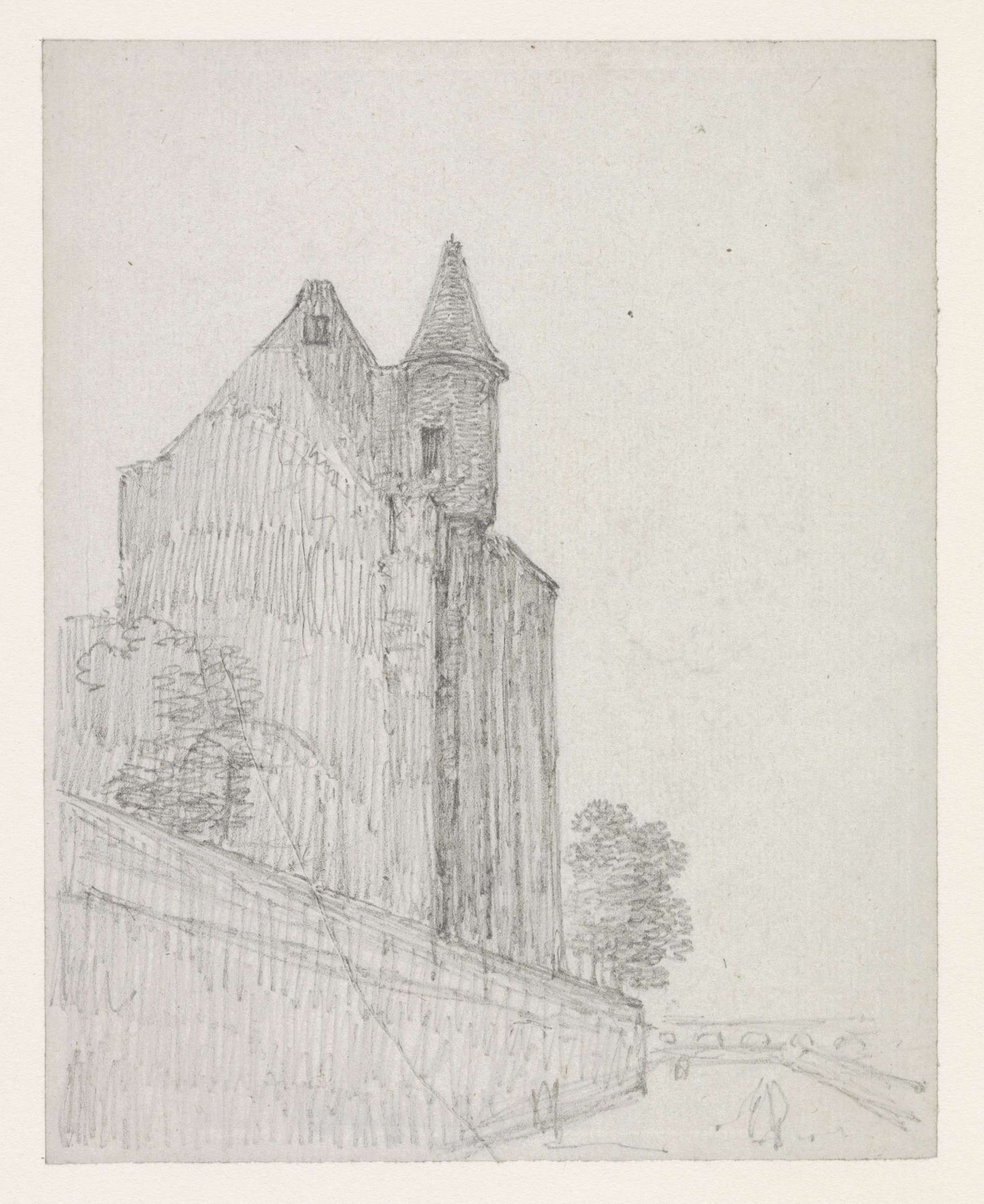
Georges Michel created this drawing of a medieval remain on the Seine quay, using graphite, with a delicate touch. The composition, dominated by vertical and diagonal lines, structures the scene with an emphasis on architectural form and perspective. The tower rises, a slender cylinder that interrupts the more rigid geometry of the building, while the river embankment slopes downwards, creating a sense of depth. Michel’s marks create a visual rhythm that guides the eye. The subtle tonal variations, achieved through the layering of graphite, give texture to the stone, hinting at the passage of time. The work invites us to consider the relationship between permanence and transience, the built environment and the natural world, echoing broader themes of Romanticism, such as the sublime and the poetics of ruin. Through his focus on the formal elements of line, tone and composition, Michel explores the essence of form itself.
Overblijfsel van een Middeleeuws gebouw aan de Seine-kade
1773 - 1843

Artwork details
- Medium
- drawing, pencil
- Dimensions
- height 127 mm, width 100 mm
- Copyright
- Rijks Museum: Open Domain
Tags
Comments
Share your thoughts
About this artwork
Georges Michel created this drawing of a medieval remain on the Seine quay, using graphite, with a delicate touch. The composition, dominated by vertical and diagonal lines, structures the scene with an emphasis on architectural form and perspective. The tower rises, a slender cylinder that interrupts the more rigid geometry of the building, while the river embankment slopes downwards, creating a sense of depth. Michel’s marks create a visual rhythm that guides the eye. The subtle tonal variations, achieved through the layering of graphite, give texture to the stone, hinting at the passage of time. The work invites us to consider the relationship between permanence and transience, the built environment and the natural world, echoing broader themes of Romanticism, such as the sublime and the poetics of ruin. Through his focus on the formal elements of line, tone and composition, Michel explores the essence of form itself.
Comments
Share your thoughts