About this artwork
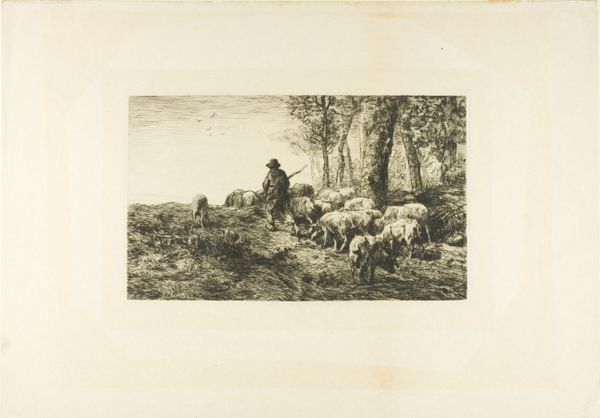
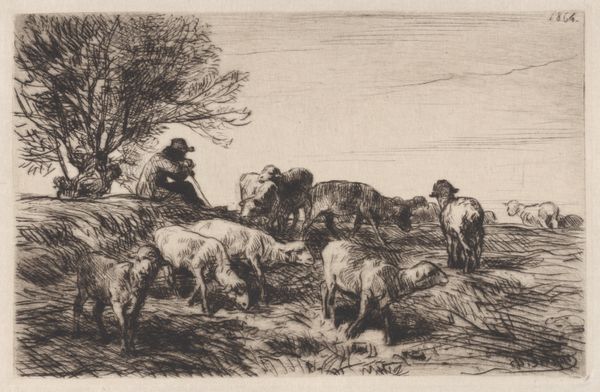
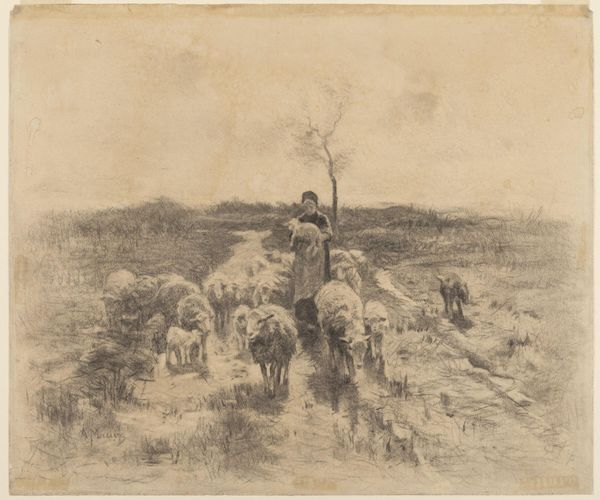
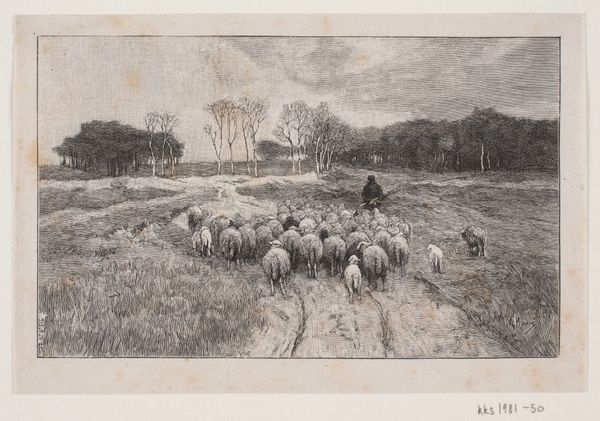
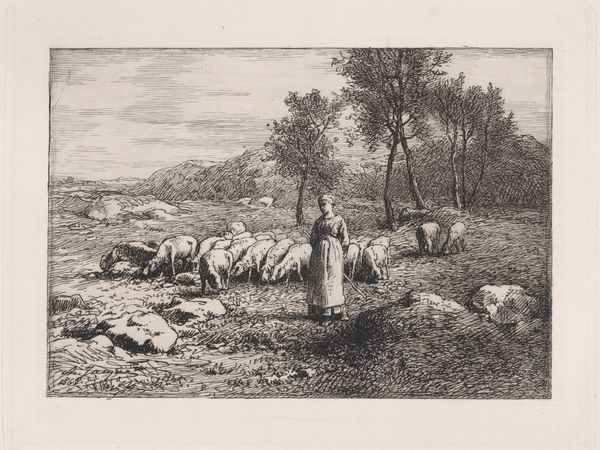
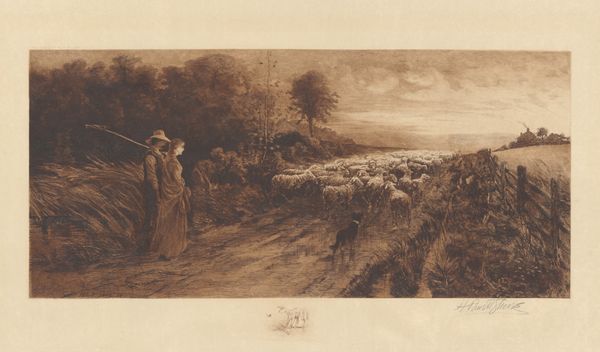
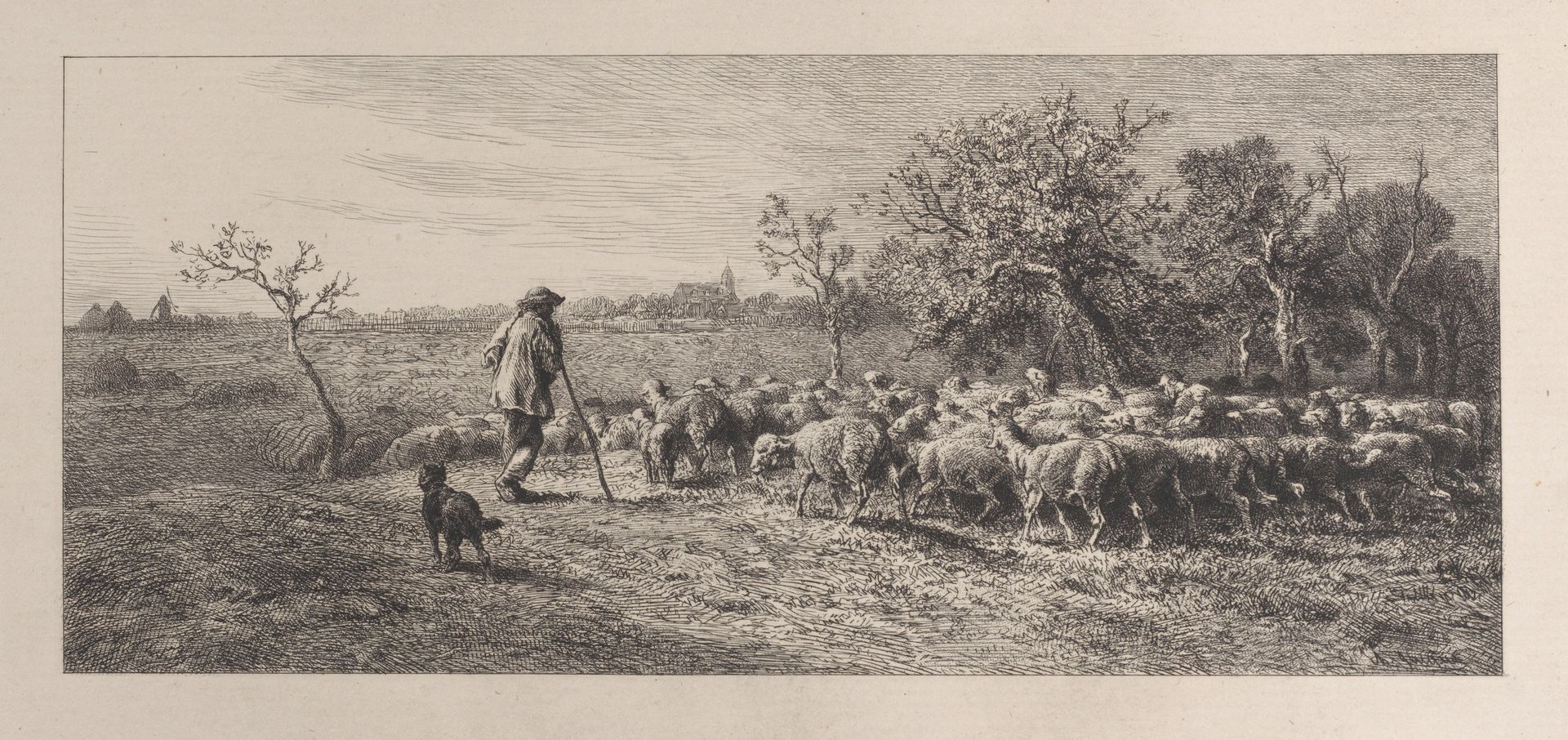
Charles Jacque created this print, "Arrival in the Field," using etching. At first glance, we see a landscape dominated by varied textures. The foreground bristles with finely rendered grasses, leading the eye toward a dense cluster of sheep. A shepherd and his dog bookend the herd, setting a rhythm across the composition. Jacque's technical skill is apparent in the tonal variations he achieves with etching. Notice how he uses darker, concentrated lines to define the sheep and shepherd, creating a focal point against the lighter, more open sky. The buildings in the background are suggested, not precisely depicted, inviting us to consider the relationship between rural life and the broader world. What's compelling here is not just the scene, but the very act of representation. Each etched line contributes to a larger meditation on light, texture, and space. Jacque captures the pastoral tradition not as a static image, but as a dynamic interplay between form and content.
Arrival in the Field
1864


Artwork details
- Medium
- drawing, print, etching, engraving
- Dimensions
- Sheet: 12 13/16 × 18 7/8 in. (32.5 × 48 cm) Plate: 5 1/8 × 9 7/16 in. (13 × 24 cm)
- Location
- Metropolitan Museum of Art, New York, NY
- Copyright
- Public Domain
Tags
Comments
Share your thoughts
About this artwork
Charles Jacque created this print, "Arrival in the Field," using etching. At first glance, we see a landscape dominated by varied textures. The foreground bristles with finely rendered grasses, leading the eye toward a dense cluster of sheep. A shepherd and his dog bookend the herd, setting a rhythm across the composition. Jacque's technical skill is apparent in the tonal variations he achieves with etching. Notice how he uses darker, concentrated lines to define the sheep and shepherd, creating a focal point against the lighter, more open sky. The buildings in the background are suggested, not precisely depicted, inviting us to consider the relationship between rural life and the broader world. What's compelling here is not just the scene, but the very act of representation. Each etched line contributes to a larger meditation on light, texture, and space. Jacque captures the pastoral tradition not as a static image, but as a dynamic interplay between form and content.
Comments
Share your thoughts