1878
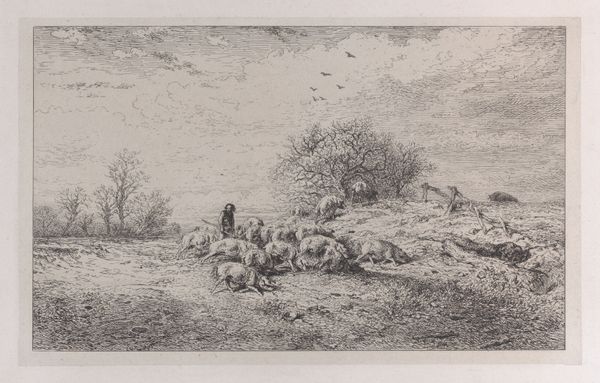
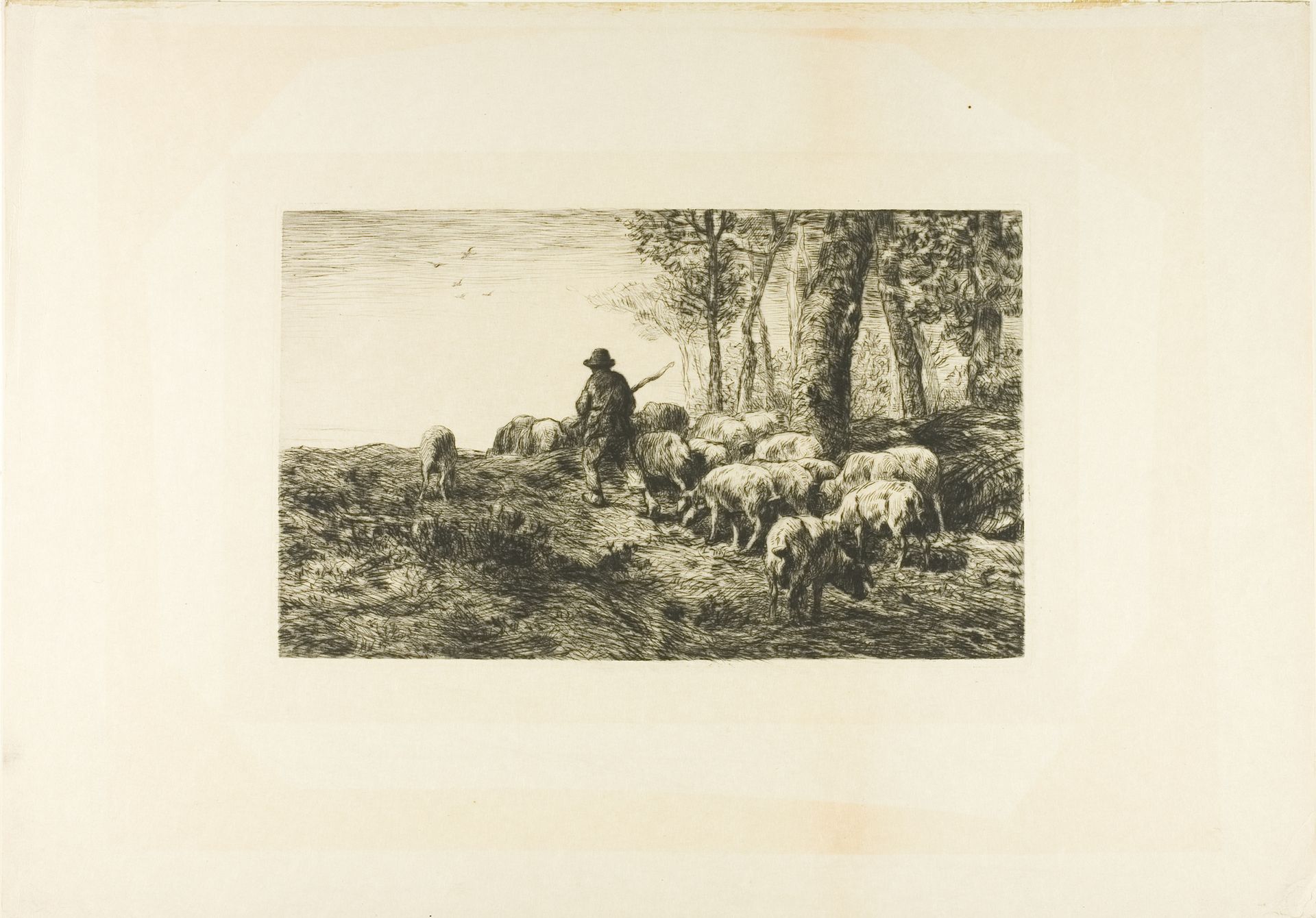
Herd of Pigs with Swineherd


Listen to curator's interpretation
Curatorial notes
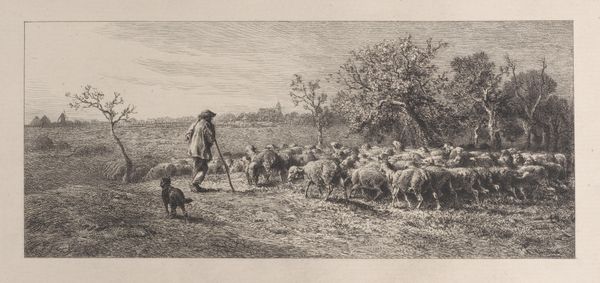
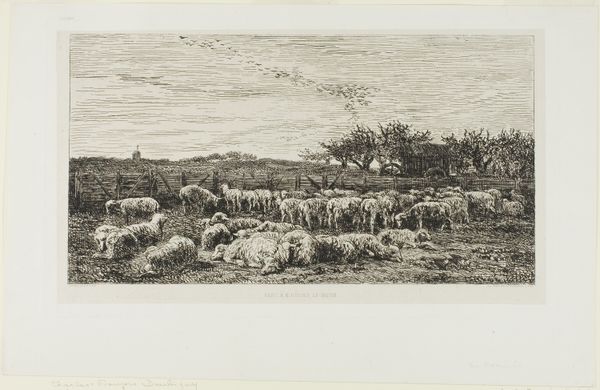
Editor: Here we have Charles Jacque’s 1878 etching, "Herd of Pigs with Swineherd." It’s a charming, somewhat rustic scene. The etching technique gives it a lot of detail and texture. What do you see in this piece, considering its historical context? Curator: This etching exemplifies a 19th-century interest in rural life and genre painting. The depiction of the swineherd and his pigs isn't merely pastoral; it speaks to broader socio-economic shifts. Consider the rise of industrialization: depictions of rural life become idealized visions but also markers of a way of life threatened by urban development. What role do you think the art market plays in shaping how we view such imagery? Editor: That's a really interesting point about the art market. I suppose it creates a demand for these images, potentially romanticizing the countryside while overlooking the harsh realities of rural labor. It’s interesting to consider it was consumed in urban settings. Curator: Exactly. And think about the institutional framework – how would exhibiting a work like this in a museum then further shape public perception? It subtly reinforces certain values and ways of seeing, influencing how viewers connect – or disconnect – with that subject matter and even those who produced food for them. Editor: So, the act of exhibiting elevates the scene, imbuing it with perhaps more meaning than it originally held. I guess it becomes a commentary by virtue of its display. Curator: Precisely. Museums, galleries, the market itself--they're never neutral spaces. Each presentation further amplifies existing cultural narratives. Consider who had the means to consume it? Editor: That’s given me a lot to consider. It’s a lovely image, but definitely needs a more critical viewing. Curator: Absolutely. Understanding art’s public role allows us to engage more critically with not just the art, but the world around us.