About this artwork
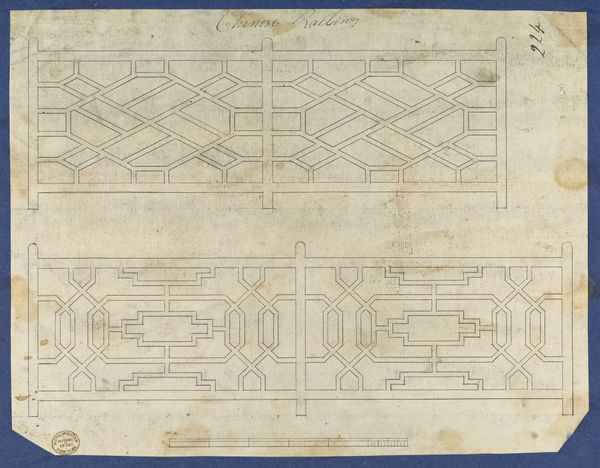
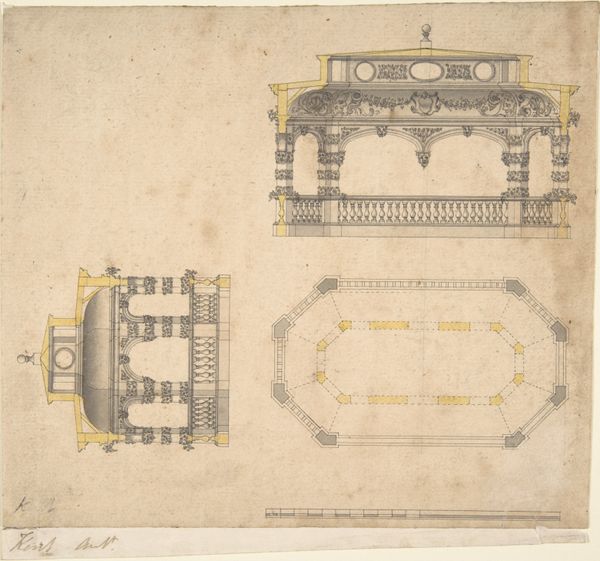
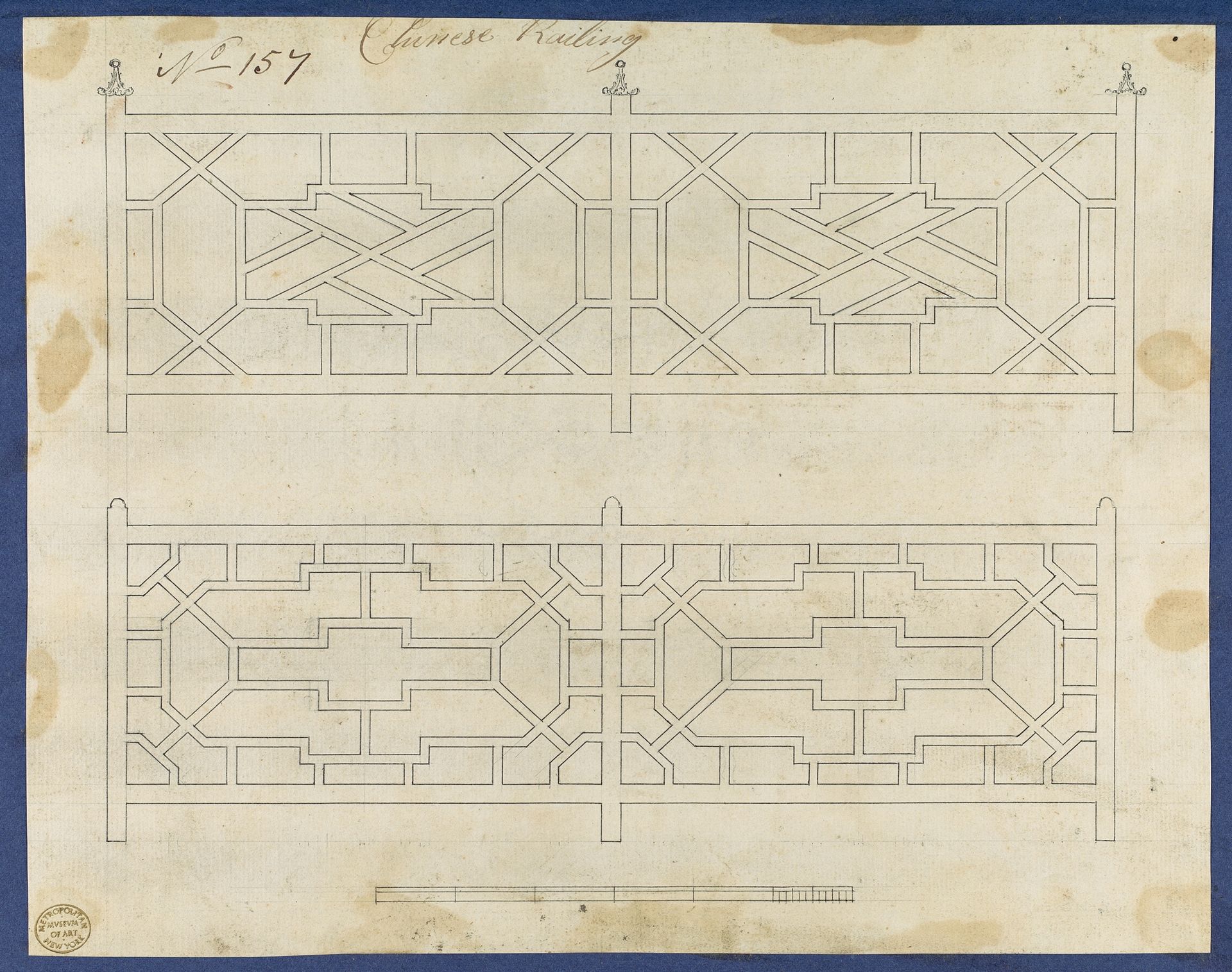
This is a design for a 'Chinese Railing' on paper by Thomas Chippendale, most likely from England in the mid-18th century. The design presents itself as Chinese, and was part of a fashion for Chinoiserie. But it is important to ask what ‘Chinese’ actually meant at this time. It’s more like a western fantasy of what China might be. The design shows the perspective of a culture looking outward, appropriating imagery from another culture and using it for its own purposes. Chippendale was one of the first to produce fully illustrated catalogues of his designs, skillfully marketing his work. These publications provide a fascinating insight into 18th-century tastes and the rise of consumer culture. By consulting design pattern books and trade catalogues we can better understand the circulation of images in the 1700s. We come to see how design is itself a product of cultural exchange and social aspiration.
Chinese Railing, from Chippendale Drawings, Vol. II
1754


Artwork details
- Medium
- drawing, print
- Dimensions
- sheet: 8 3/8 x 10 9/16 in. (21.3 x 26.8 cm)
- Location
- Metropolitan Museum of Art, New York, NY
- Copyright
- Public Domain
Tags
drawing
neoclacissism
form
geometric
15_18th-century
line
decorative-art
Comments
Be the first to share your thoughts about this work.
About this artwork
This is a design for a 'Chinese Railing' on paper by Thomas Chippendale, most likely from England in the mid-18th century. The design presents itself as Chinese, and was part of a fashion for Chinoiserie. But it is important to ask what ‘Chinese’ actually meant at this time. It’s more like a western fantasy of what China might be. The design shows the perspective of a culture looking outward, appropriating imagery from another culture and using it for its own purposes. Chippendale was one of the first to produce fully illustrated catalogues of his designs, skillfully marketing his work. These publications provide a fascinating insight into 18th-century tastes and the rise of consumer culture. By consulting design pattern books and trade catalogues we can better understand the circulation of images in the 1700s. We come to see how design is itself a product of cultural exchange and social aspiration.
Comments
Be the first to share your thoughts about this work.