About this artwork
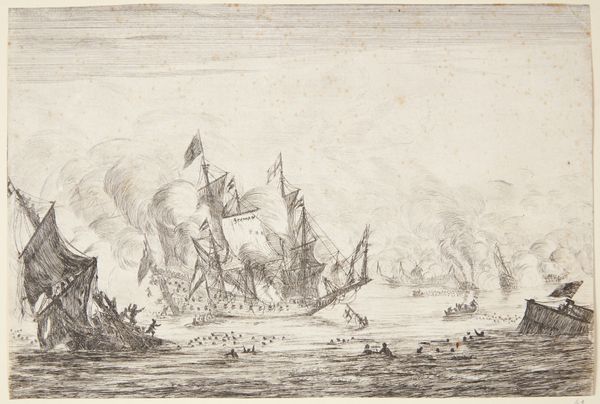
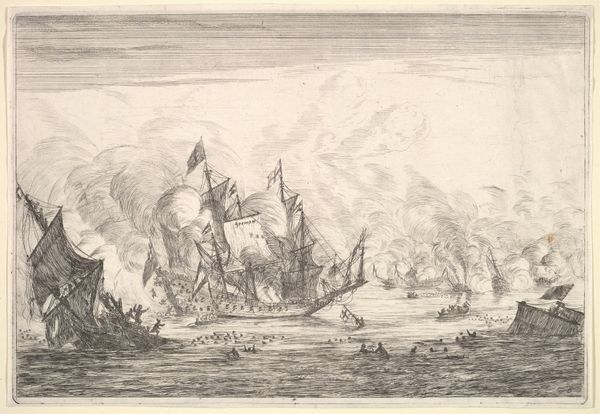
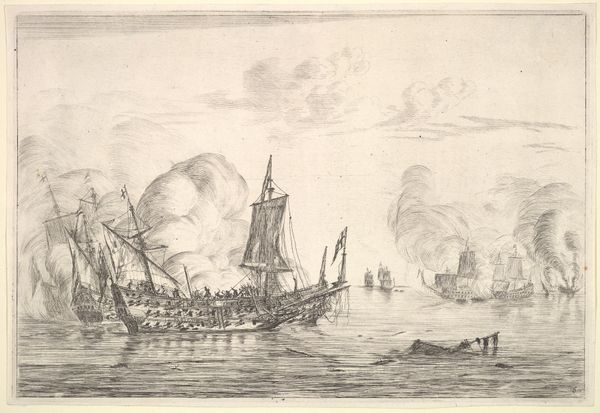
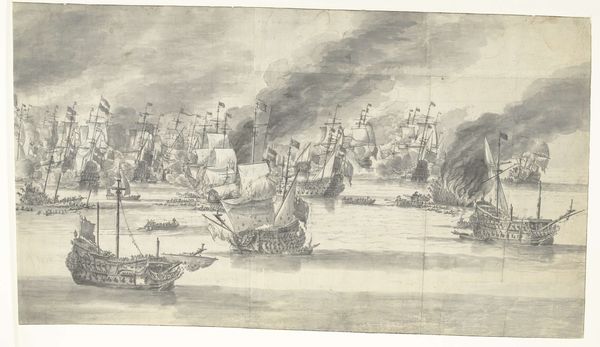
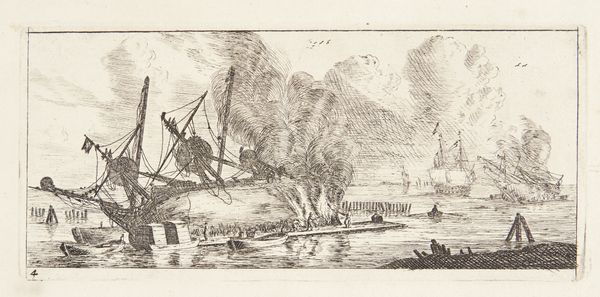
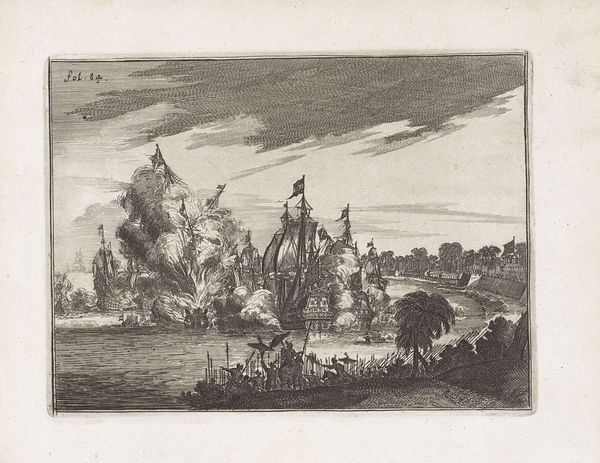
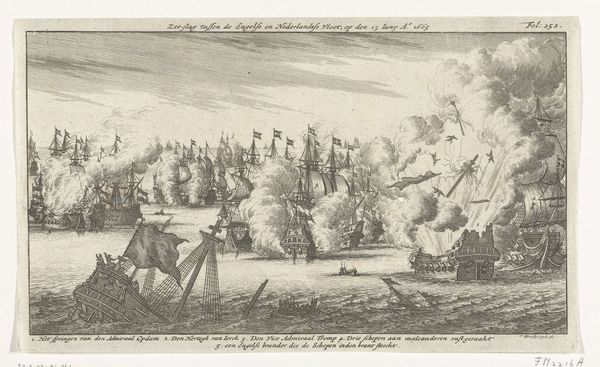
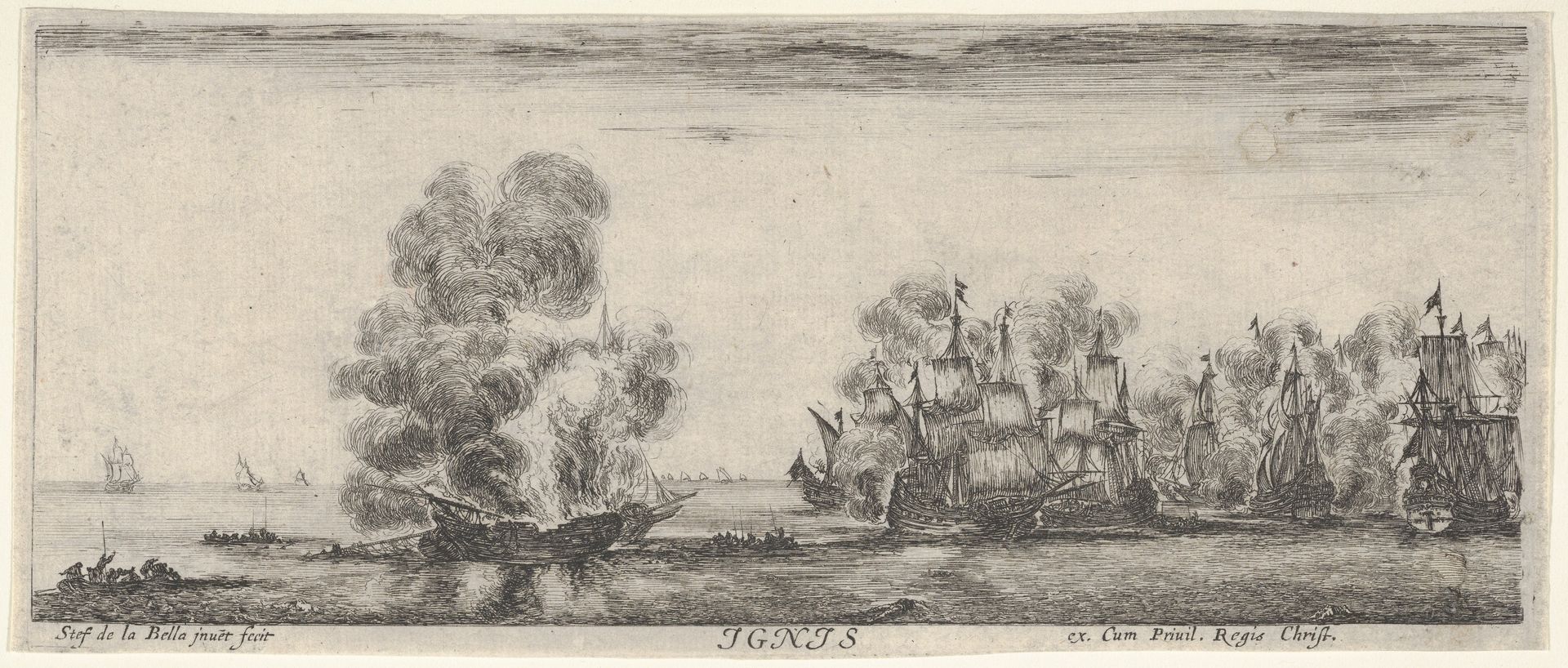
Stefano della Bella's etching, "Fire," from "The Four Elements," depicts a chaotic naval scene consumed by flames. Fire, labeled "IGNIS," rises voraciously, devouring ships and threatening the fleeing figures. Fire has been used as a symbol for purification, destruction, and transformation across cultures. This image evokes a sense of both terror and awe, reminding us of humankind’s eternal fascination with its destructive power. Think of the eternal flames of antiquity or the biblical accounts of fire. Here, the ships engulfed in flames become emblems of fleeting power. The scene is reminiscent of the "vanitas" tradition, reminding us of the ephemeral nature of human endeavors. The image resonates deeply because of its primal symbolism, tapping into our collective memory and evoking the complex emotions associated with fire: fear, destruction, but also renewal. It is a symbol that transcends time, constantly reappearing and reshaping itself in our cultural consciousness.
Fire, a flotilla on fire in center and to the right, two boats full of people to left, from 'The four elements' (Les quatre Eléments) 1645 - 1650

Stefano della Bella
1610 - 1664
The Metropolitan Museum of Art
Metropolitan Museum of Art, New York, NYArtwork details
- Medium
- drawing, print, etching
- Dimensions
- Sheet: 3 1/4 x 7 13/16 in. (8.3 x 19.9 cm) Plate: 3 1/4 x 7 11/16 in. (8.2 x 19.6 cm)
- Location
- Metropolitan Museum of Art, New York, NY
- Copyright
- Public Domain
Tags
drawing
baroque
etching
cityscape
history-painting
Comments
No comments
About this artwork
Stefano della Bella's etching, "Fire," from "The Four Elements," depicts a chaotic naval scene consumed by flames. Fire, labeled "IGNIS," rises voraciously, devouring ships and threatening the fleeing figures. Fire has been used as a symbol for purification, destruction, and transformation across cultures. This image evokes a sense of both terror and awe, reminding us of humankind’s eternal fascination with its destructive power. Think of the eternal flames of antiquity or the biblical accounts of fire. Here, the ships engulfed in flames become emblems of fleeting power. The scene is reminiscent of the "vanitas" tradition, reminding us of the ephemeral nature of human endeavors. The image resonates deeply because of its primal symbolism, tapping into our collective memory and evoking the complex emotions associated with fire: fear, destruction, but also renewal. It is a symbol that transcends time, constantly reappearing and reshaping itself in our cultural consciousness.
Comments
No comments