About this artwork
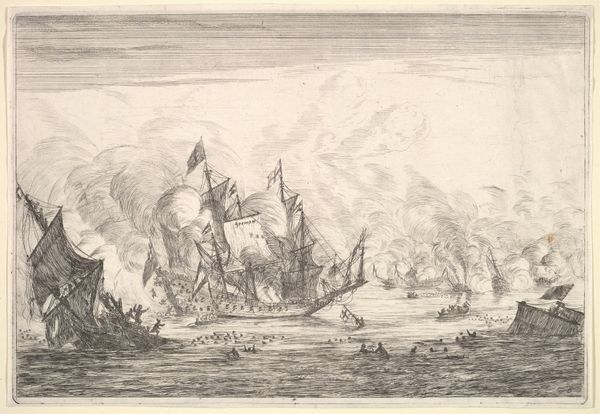
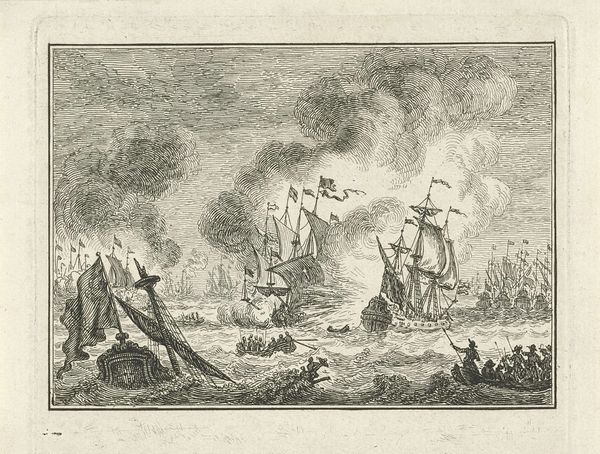
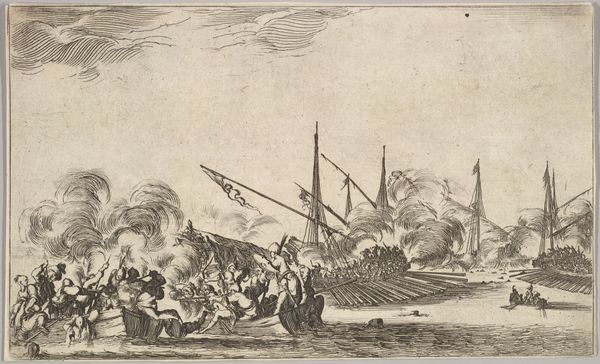
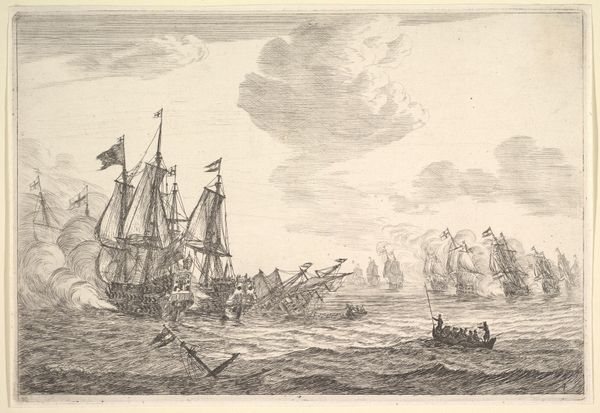
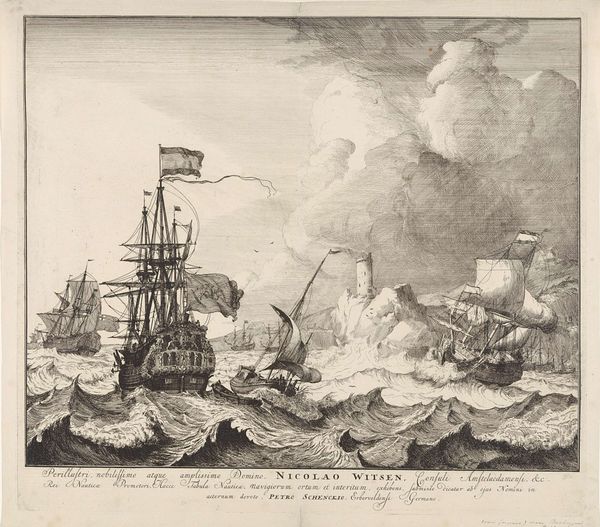
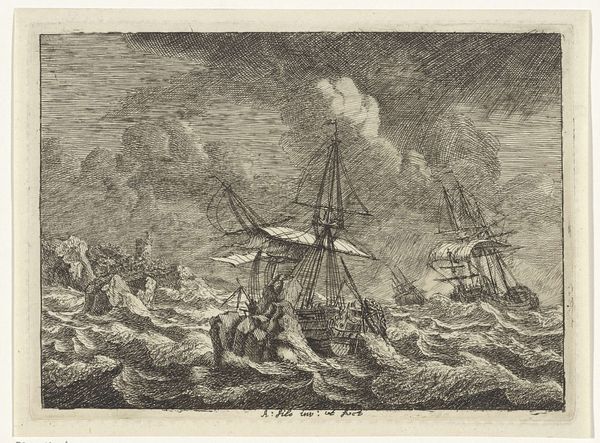
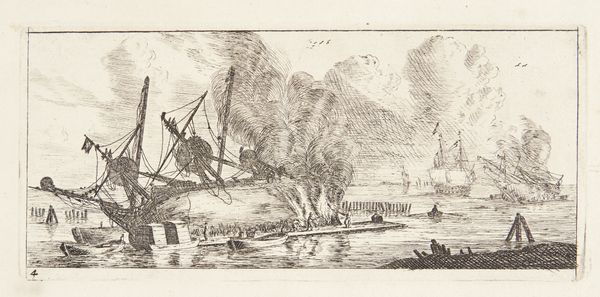
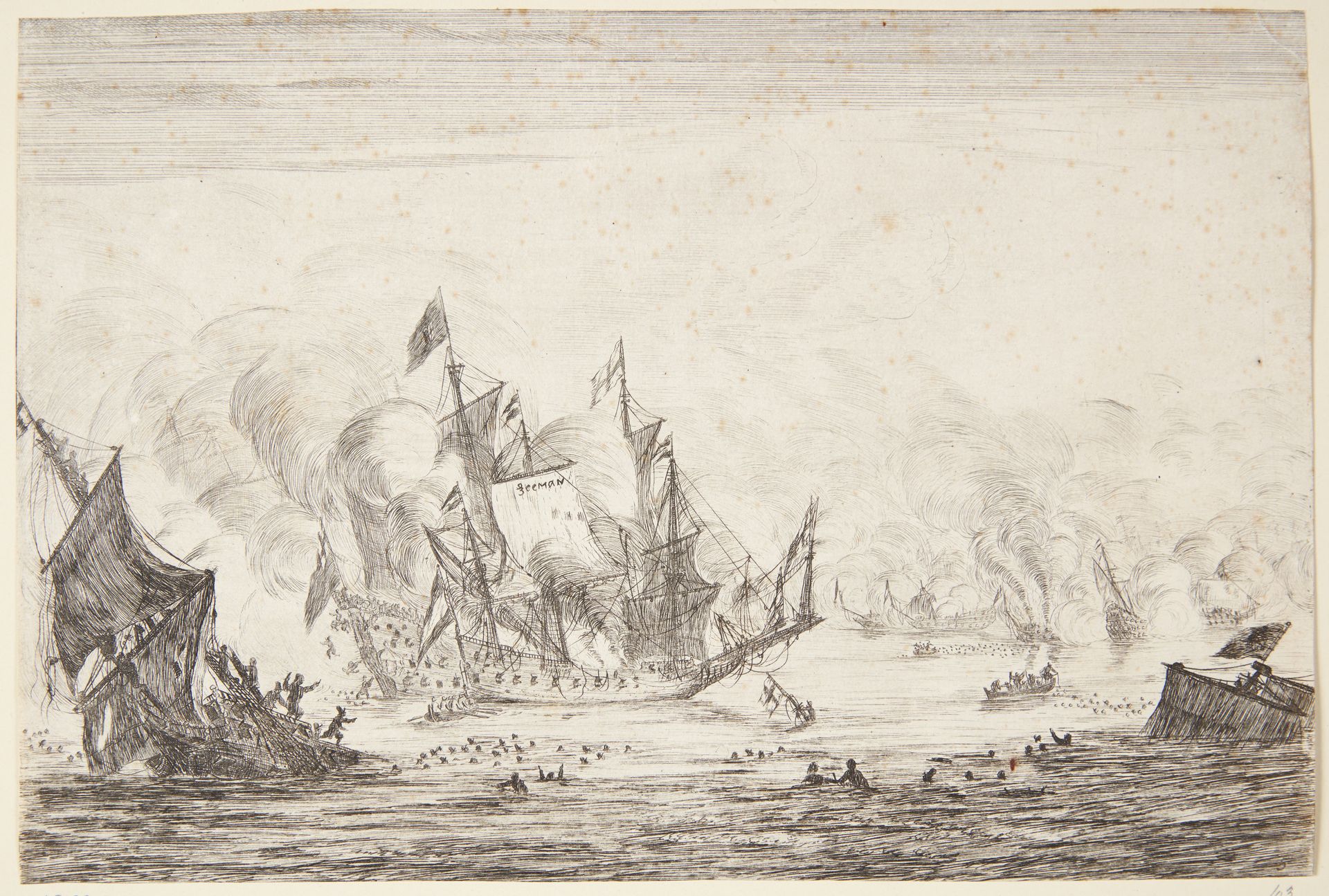
Reinier Nooms, also known as Zeeman, created this etching of a naval battle with a sinking English vessel in the 17th century. Nooms, who lived from 1623 to 1664, was more than just an artist; he was a sailor and maritime expert. His first-hand experience at sea deeply influenced his art. This work captures a clash between nations amidst the Anglo-Dutch Wars, conflicts rooted in trade rivalries and colonial ambitions. The image is filled with chaos: smoke billows, ships list precariously, and figures struggle in the water. The sinking English ship becomes a potent symbol of defeat, but also of the human cost of war. Nooms doesn't glorify the battle, but rather presents a scene of destruction and struggle. His identity as a sailor perhaps allowed him to see beyond nationalistic fervor, focusing instead on the raw, visceral experience of naval warfare. It is a reminder of the complex interplay between personal experience, national identity, and the brutal realities of war.
Søslag med et synkende engelsk orlogsfartøj 1652 - 1654


Artwork details
- Medium
- print, etching
- Dimensions
- 173 mm (height) x 258 mm (width) (bladmaal)
- Location
- SMK - Statens Museum for Kunst
Tags
baroque
etching
landscape
history-painting
Comments
No comments
About this artwork
Reinier Nooms, also known as Zeeman, created this etching of a naval battle with a sinking English vessel in the 17th century. Nooms, who lived from 1623 to 1664, was more than just an artist; he was a sailor and maritime expert. His first-hand experience at sea deeply influenced his art. This work captures a clash between nations amidst the Anglo-Dutch Wars, conflicts rooted in trade rivalries and colonial ambitions. The image is filled with chaos: smoke billows, ships list precariously, and figures struggle in the water. The sinking English ship becomes a potent symbol of defeat, but also of the human cost of war. Nooms doesn't glorify the battle, but rather presents a scene of destruction and struggle. His identity as a sailor perhaps allowed him to see beyond nationalistic fervor, focusing instead on the raw, visceral experience of naval warfare. It is a reminder of the complex interplay between personal experience, national identity, and the brutal realities of war.
Comments
No comments