About this artwork
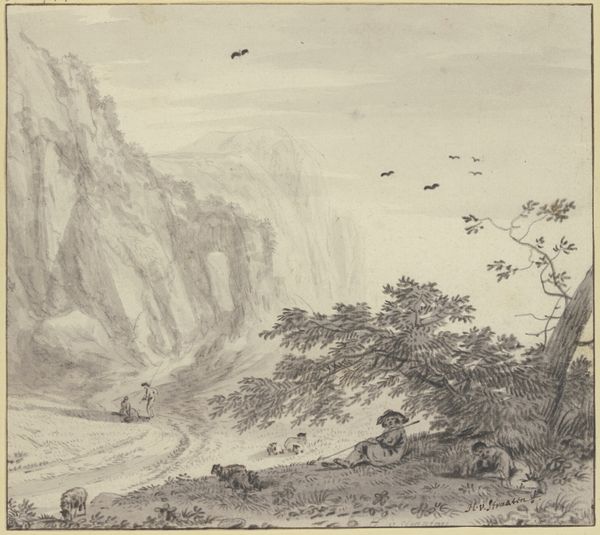
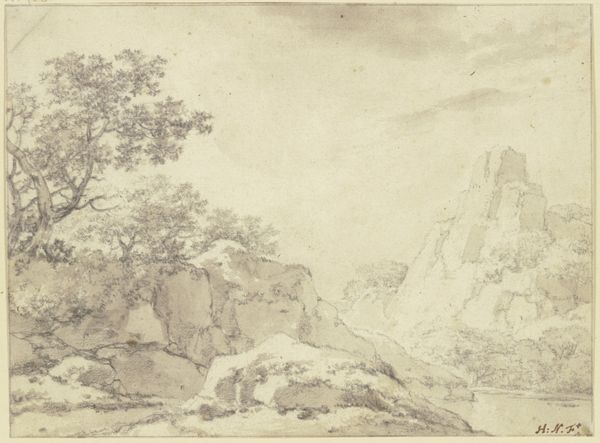
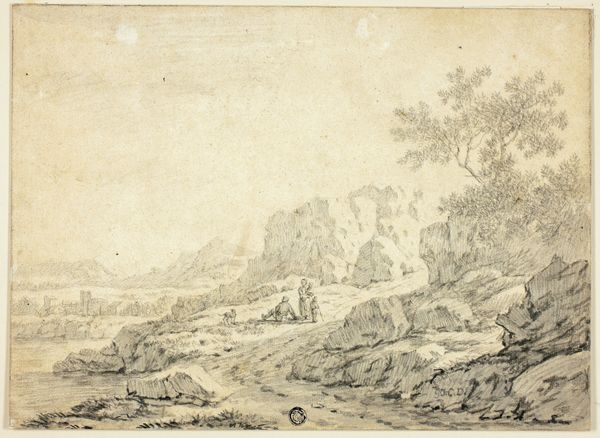
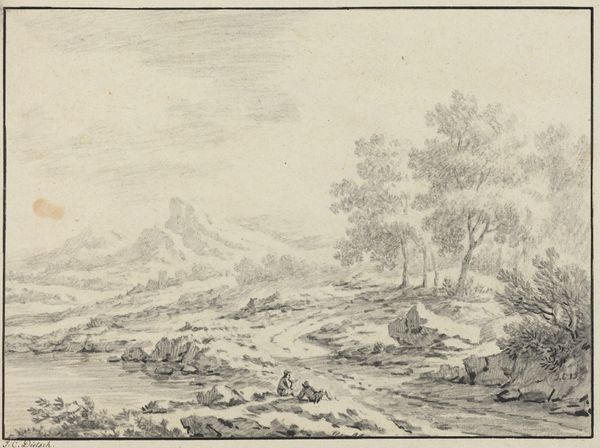
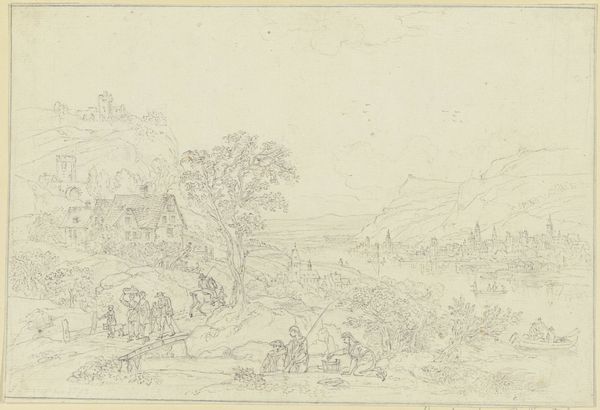
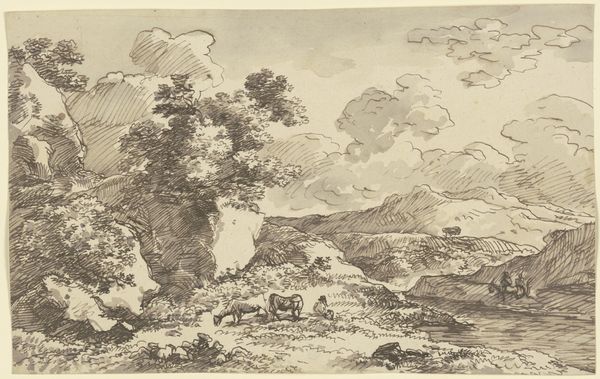
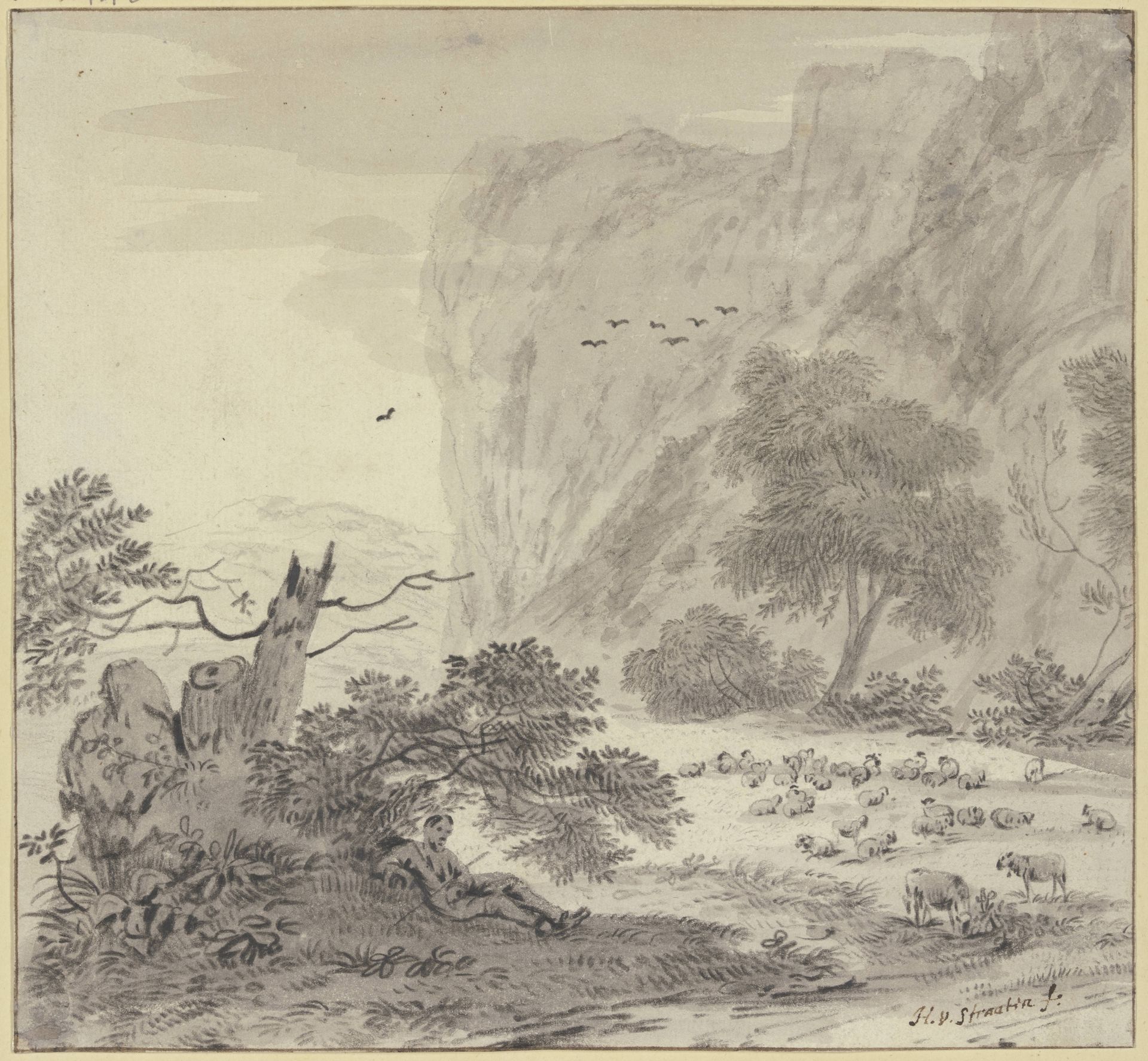
Hendrik van der Straaten made this drawing, 'Hohe Felsen, links ruhender Schafhirte,' using pen and grey ink, and grey wash. These materials, common for sketching, allowed the artist to capture a scene with a remarkable economy of means. Note how the pen defines the contours of the rocks, trees, and figures, while the wash creates subtle gradations of light and shadow. The choice of these materials speaks to the artist's engagement with the tradition of landscape drawing. This was a practice that valued direct observation and the skillful rendering of natural forms. But there's a social dimension here, too. The shepherd, a figure of rural labor, is depicted at rest, highlighting a romanticized vision of pastoral life. The artist's skillful handling of the pen and ink elevates this scene, inviting us to reflect on the relationship between labor, leisure, and the natural world. It is a reminder that art can transform the mundane into something meaningful.
Hohe Felsen, links ruhender Schafhirte


Artwork details
- Medium
- drawing, paper, ink, pencil, chalk
- Location
- Städel Museum
- Copyright
- Public Domain
Tags
drawing
baroque
landscape
figuration
paper
ink
pencil
chalk
genre-painting
Comments
No comments
About this artwork
Hendrik van der Straaten made this drawing, 'Hohe Felsen, links ruhender Schafhirte,' using pen and grey ink, and grey wash. These materials, common for sketching, allowed the artist to capture a scene with a remarkable economy of means. Note how the pen defines the contours of the rocks, trees, and figures, while the wash creates subtle gradations of light and shadow. The choice of these materials speaks to the artist's engagement with the tradition of landscape drawing. This was a practice that valued direct observation and the skillful rendering of natural forms. But there's a social dimension here, too. The shepherd, a figure of rural labor, is depicted at rest, highlighting a romanticized vision of pastoral life. The artist's skillful handling of the pen and ink elevates this scene, inviting us to reflect on the relationship between labor, leisure, and the natural world. It is a reminder that art can transform the mundane into something meaningful.
Comments
No comments