About this artwork
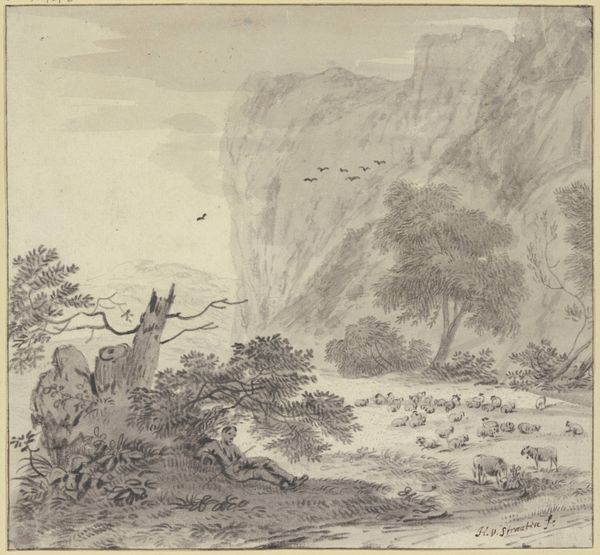
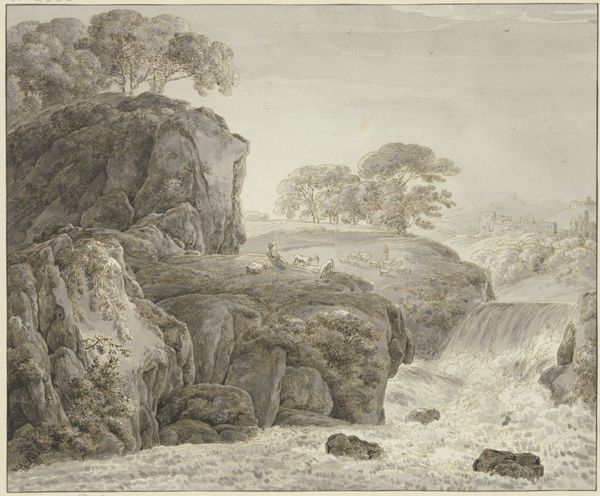
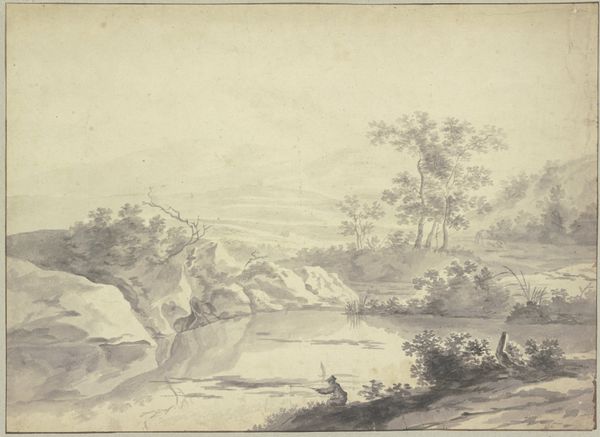
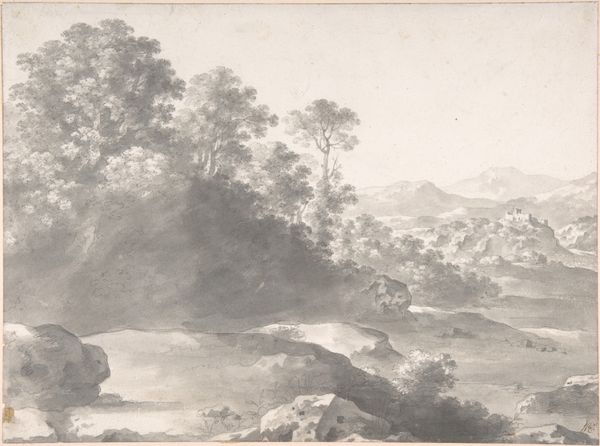
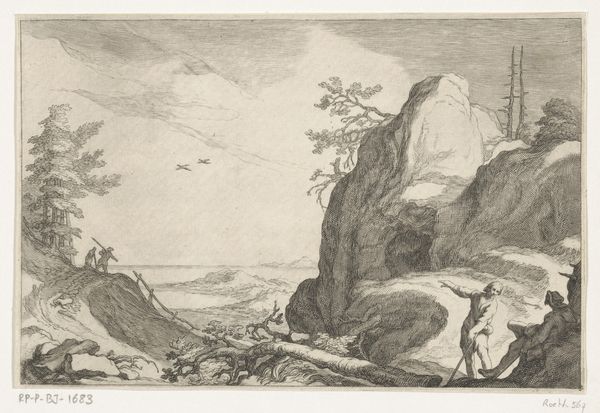
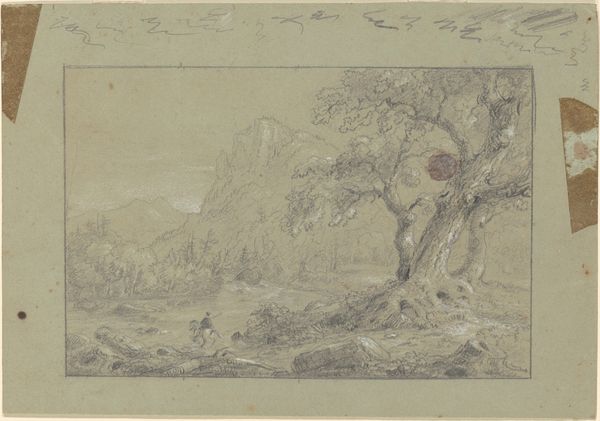
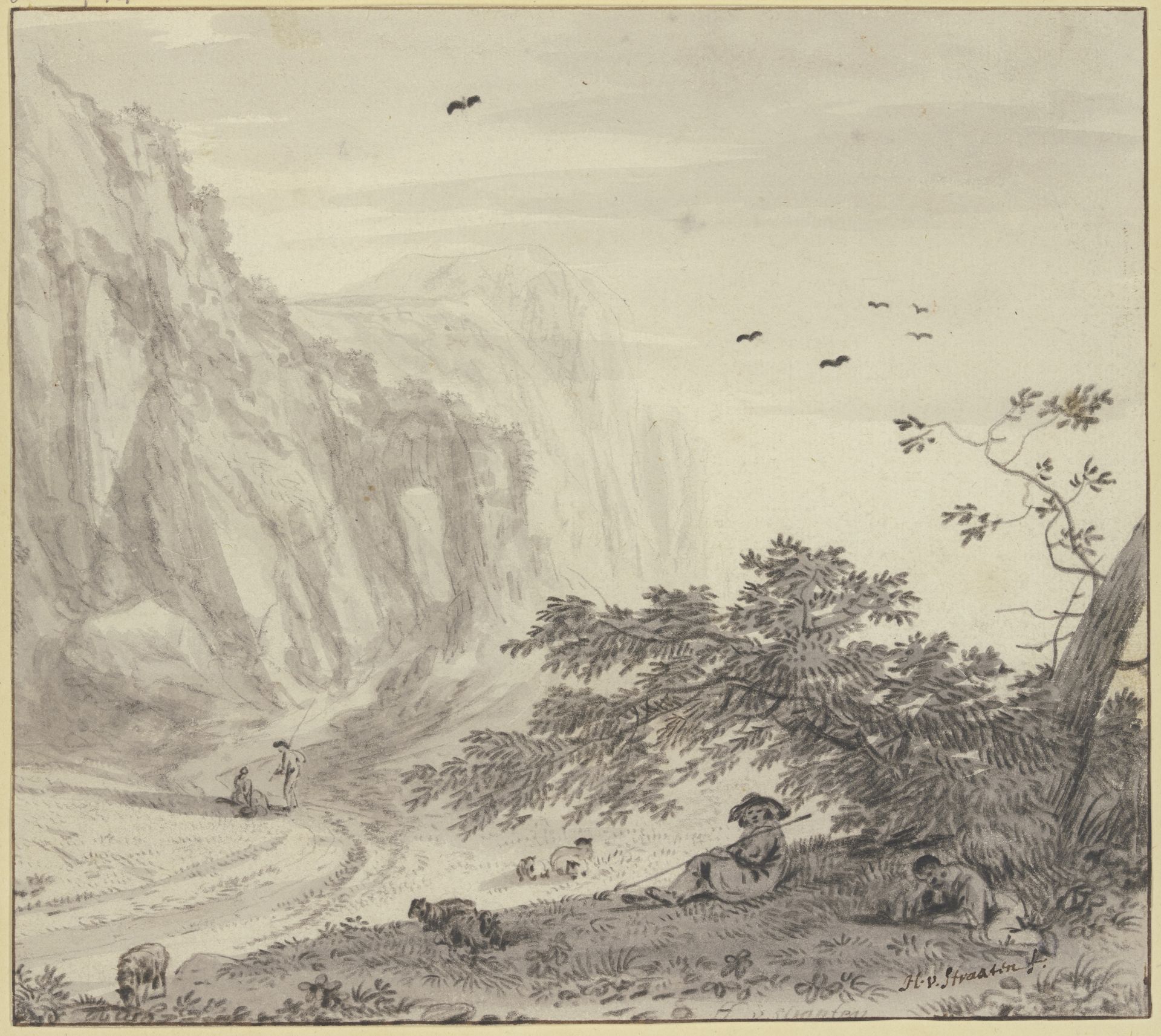
Hendrik van der Straaten made this drawing, "Hohe Felsen, rechts ruhende Schäfer," sometime between 1665 and 1722 using pen and brush with grey wash on paper. The paper is the foundation, its fibers providing texture for the ink to settle into. Note the range of marks van der Straaten achieved, from the delicate lines describing the foliage to the broader washes that suggest the mass of the cliffs. This wasn't just a technical exercise, however. The landscape tradition had long been associated with aristocratic land ownership. Here, instead, we see shepherds, members of the working class, at rest. The artist is offering us a vision of labor, but importantly, he's showing it in a state of repose. There is dignity in the way the figures occupy the space, suggesting perhaps a more sympathetic view of rural life than was typical for the time. Ultimately, this drawing underscores how materials and making, even in their simplest forms, can convey profound social and cultural meanings.
Hohe Felsen, rechts ruhende Schäfer


Artwork details
- Medium
- drawing, paper, ink, pencil, chalk
- Location
- Städel Museum
- Copyright
- Public Domain
Tags
pencil drawn
drawing
baroque
landscape
paper
ink
pencil drawing
pencil
chalk
15_18th-century
Comments
Be the first to share your thoughts about this work.
About this artwork
Hendrik van der Straaten made this drawing, "Hohe Felsen, rechts ruhende Schäfer," sometime between 1665 and 1722 using pen and brush with grey wash on paper. The paper is the foundation, its fibers providing texture for the ink to settle into. Note the range of marks van der Straaten achieved, from the delicate lines describing the foliage to the broader washes that suggest the mass of the cliffs. This wasn't just a technical exercise, however. The landscape tradition had long been associated with aristocratic land ownership. Here, instead, we see shepherds, members of the working class, at rest. The artist is offering us a vision of labor, but importantly, he's showing it in a state of repose. There is dignity in the way the figures occupy the space, suggesting perhaps a more sympathetic view of rural life than was typical for the time. Ultimately, this drawing underscores how materials and making, even in their simplest forms, can convey profound social and cultural meanings.
Comments
Be the first to share your thoughts about this work.