1690 - 1695
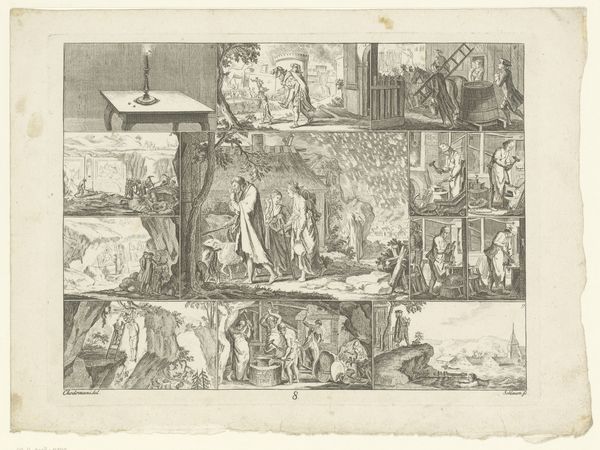
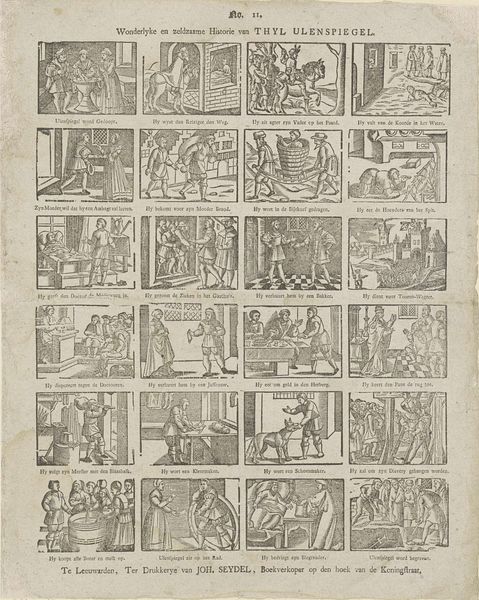
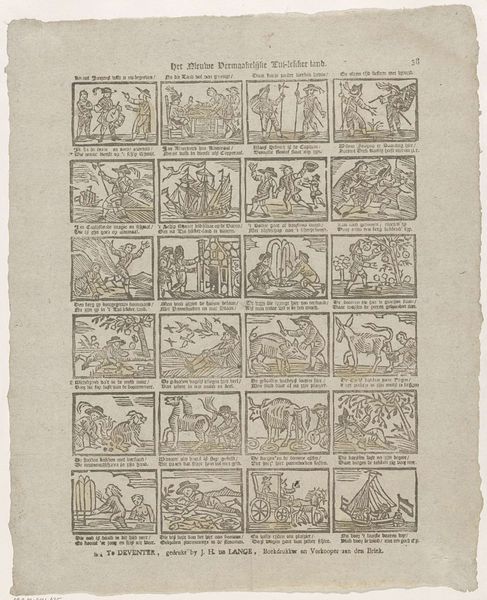
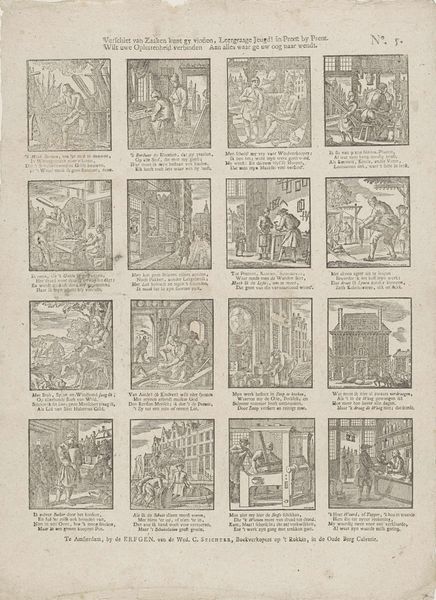
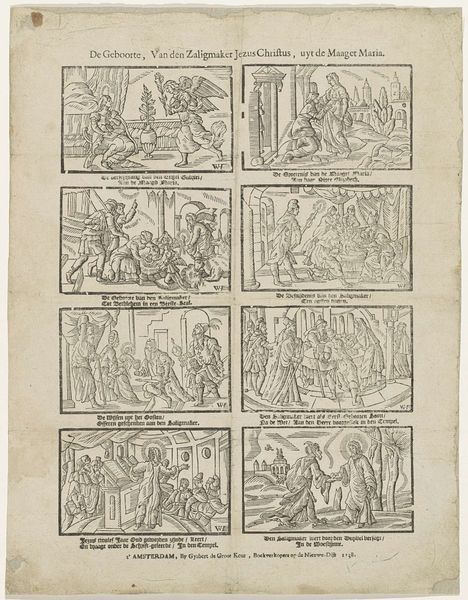
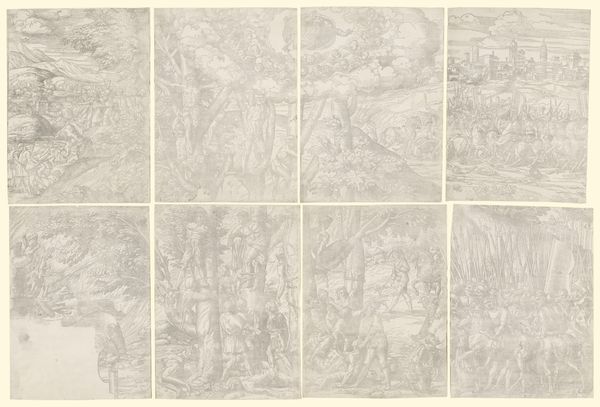
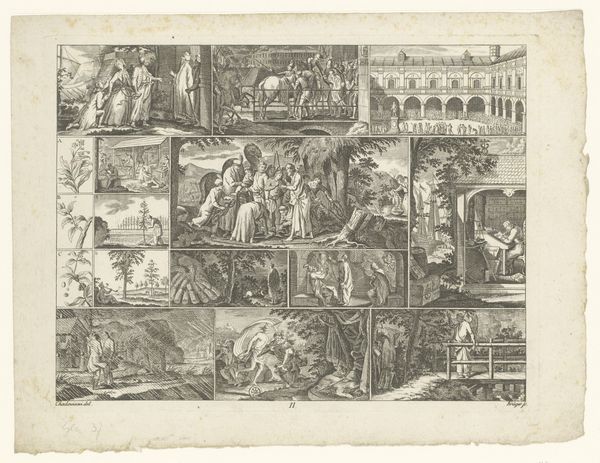
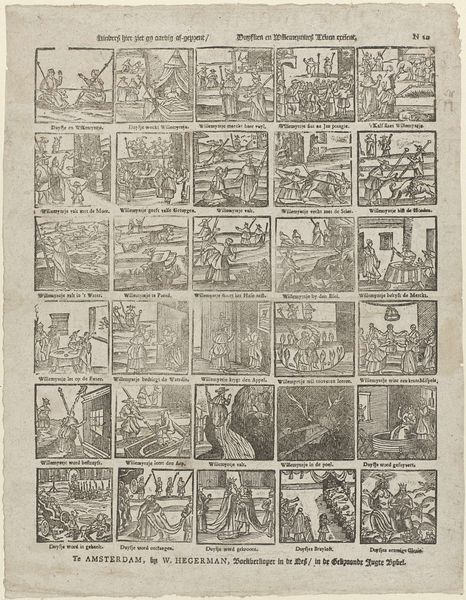
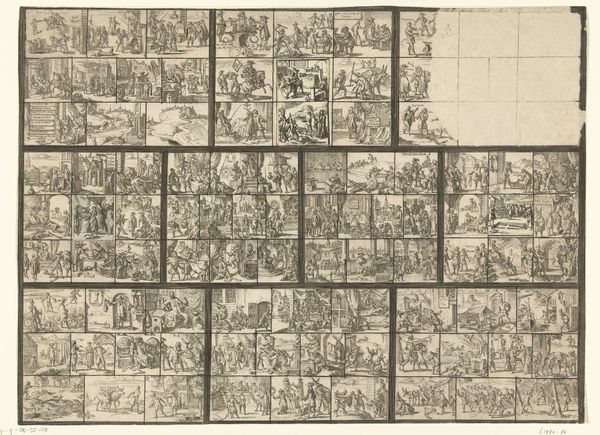
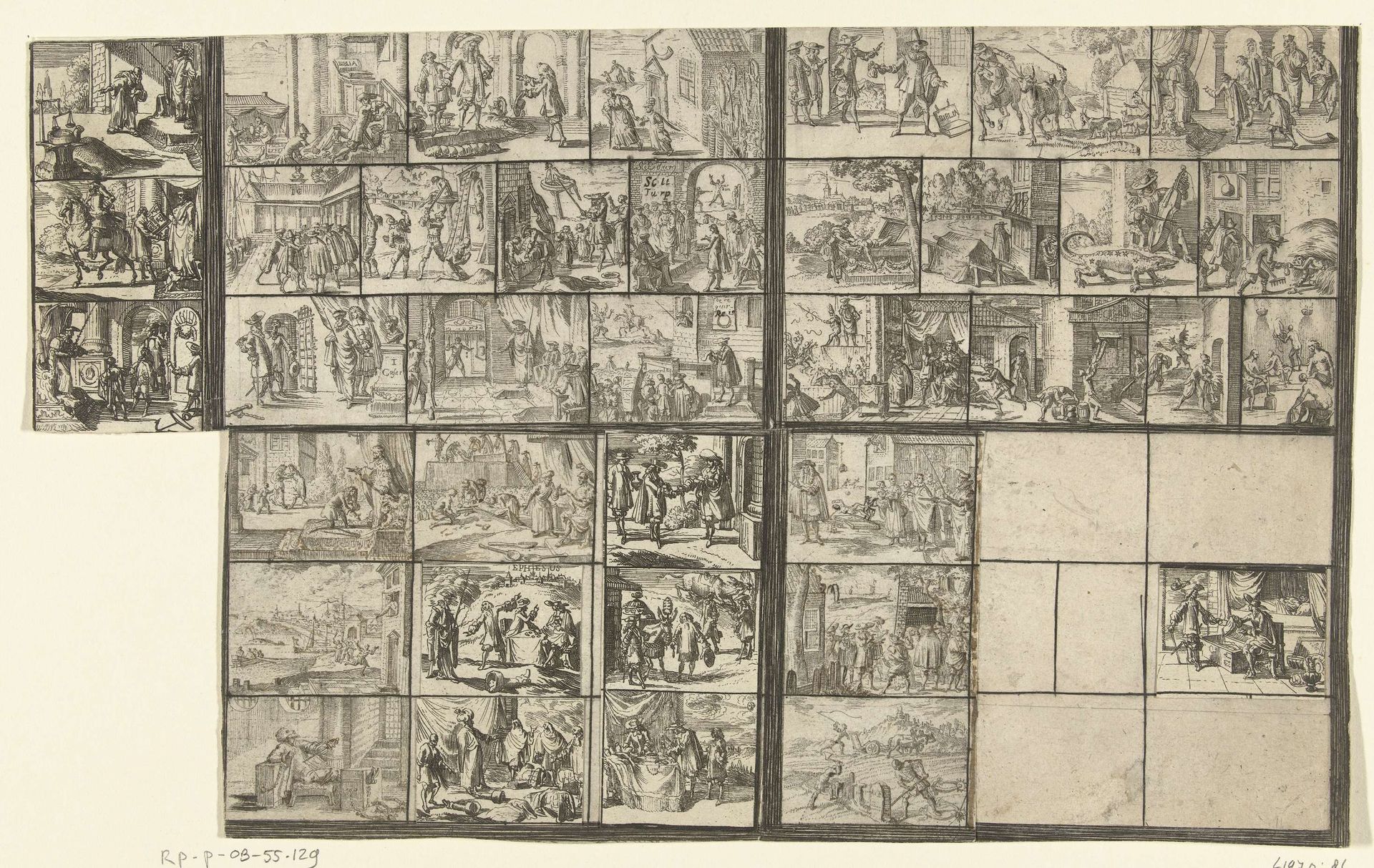
Blad met tientallen kleine voorstellingen van juridische aard (illustraties voor 'Ars magna et admirabilis (...) Pandectarum tituli (...) ope figurarum emblematicarum'?)

Romeyn de Hooghe
1645 - 1708Location
RijksmuseumListen to curator's interpretation
Curatorial notes
Romeyn de Hooghe created this intriguing sheet of illustrations of a juridical nature. The artwork presents a series of small, detailed scenes arranged in a grid-like composition. Each panel captures a different legal or judicial scenario, rendered with the fine, precise lines characteristic of engraving. The stark contrast between the dark lines and the light paper creates a visually striking effect, drawing the viewer's eye into each individual narrative. The use of emblematic figures and symbolic elements, such as scales, swords, and allegorical figures, enriches each scene with layers of meaning. De Hooghe employs a semiotic system to comment on themes of justice, power, and morality. This echoes the contemporary philosophical interest in the underlying structures of law and society. The layout encourages us to decode these visual cues, challenging us to interpret the complex relationships between the images and their cultural context. The artist doesn't offer fixed meanings, allowing for multiple interpretations and reflecting a modern sensibility towards the fluid nature of truth and representation.