About this artwork
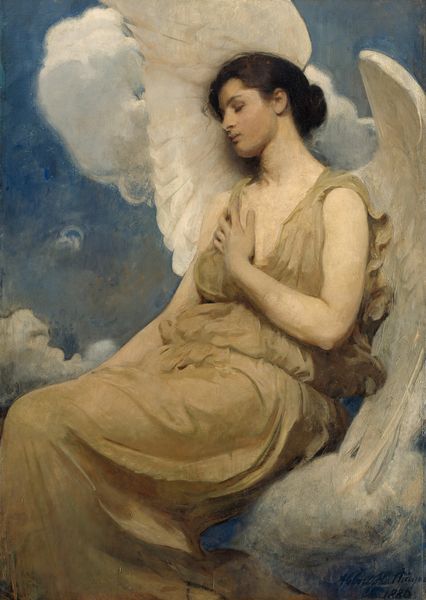
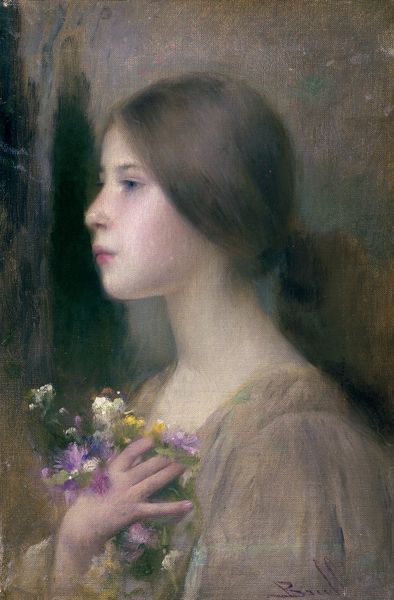
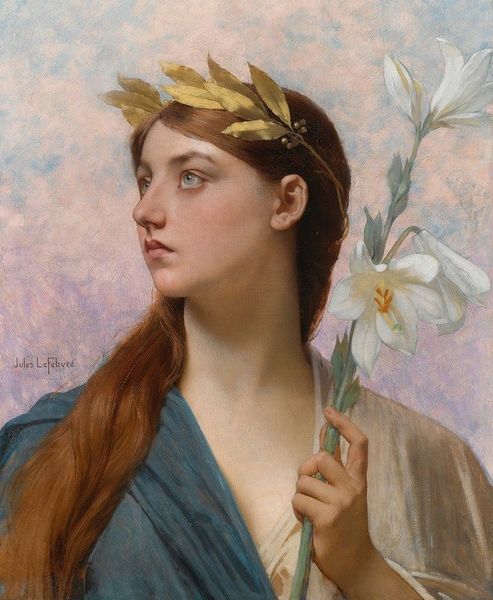
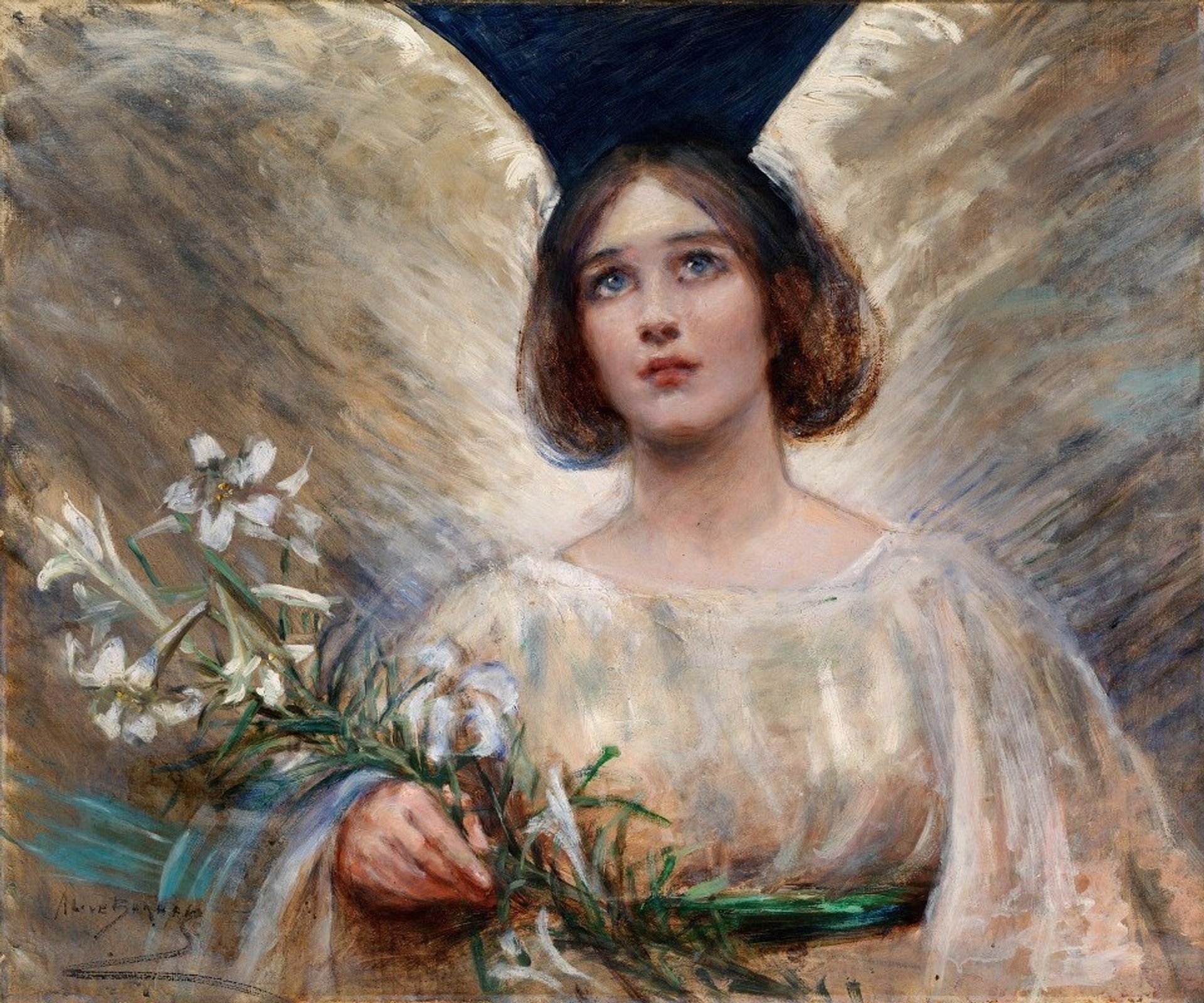
Alice Pike Barney created this oil painting, "Easter Lilies." The portrait is striking with its ethereal treatment of form. The soft, almost hazy application of paint gives the figure a dreamlike quality, blurring the distinction between the angel and the background. The artist used gentle strokes to model the face, conveying a sense of serenity and contemplation, while contrasting this with a geometric block of a dark space above the head, which appears as a symbolic halo. The lilies act as a pivotal semiotic device. Often associated with purity, rebirth, and hope, these flowers reinforce the spiritual essence of the figure. They serve as a bridge between the earthly and the divine, suggesting a continuous cycle of renewal and transcendence. The formal qualities of the painting—the juxtaposition of light and shadow, the texture of the brushstrokes, and the serene expression—all contribute to a broader reflection on faith, beauty, and the transient nature of existence. In conclusion, notice how the visual elements work together to challenge fixed ideas, offering a fresh perspective on traditional religious iconography.

Artwork details
- Medium
- painting, oil-paint
- Copyright
- Public Domain: Artvee
Tags
Comments
Share your thoughts
About this artwork
Alice Pike Barney created this oil painting, "Easter Lilies." The portrait is striking with its ethereal treatment of form. The soft, almost hazy application of paint gives the figure a dreamlike quality, blurring the distinction between the angel and the background. The artist used gentle strokes to model the face, conveying a sense of serenity and contemplation, while contrasting this with a geometric block of a dark space above the head, which appears as a symbolic halo. The lilies act as a pivotal semiotic device. Often associated with purity, rebirth, and hope, these flowers reinforce the spiritual essence of the figure. They serve as a bridge between the earthly and the divine, suggesting a continuous cycle of renewal and transcendence. The formal qualities of the painting—the juxtaposition of light and shadow, the texture of the brushstrokes, and the serene expression—all contribute to a broader reflection on faith, beauty, and the transient nature of existence. In conclusion, notice how the visual elements work together to challenge fixed ideas, offering a fresh perspective on traditional religious iconography.
Comments
Share your thoughts