About this artwork
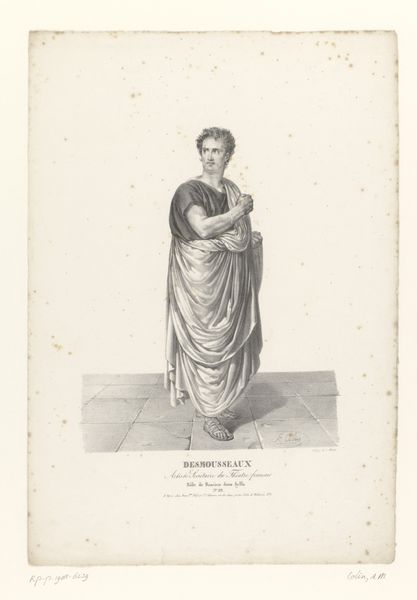
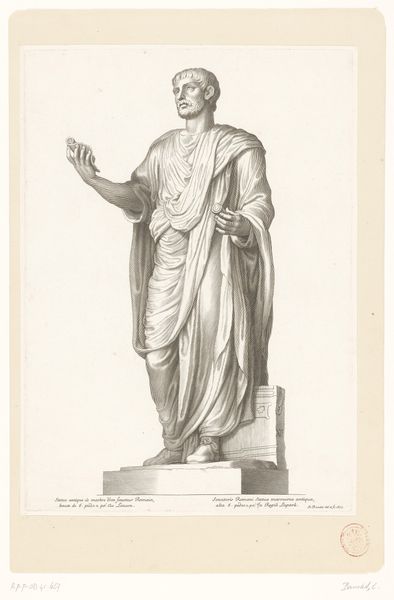
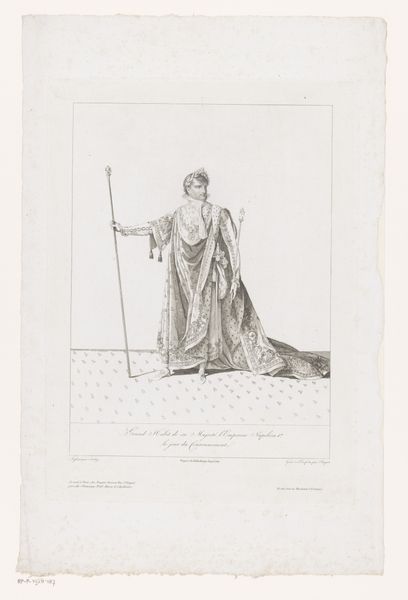
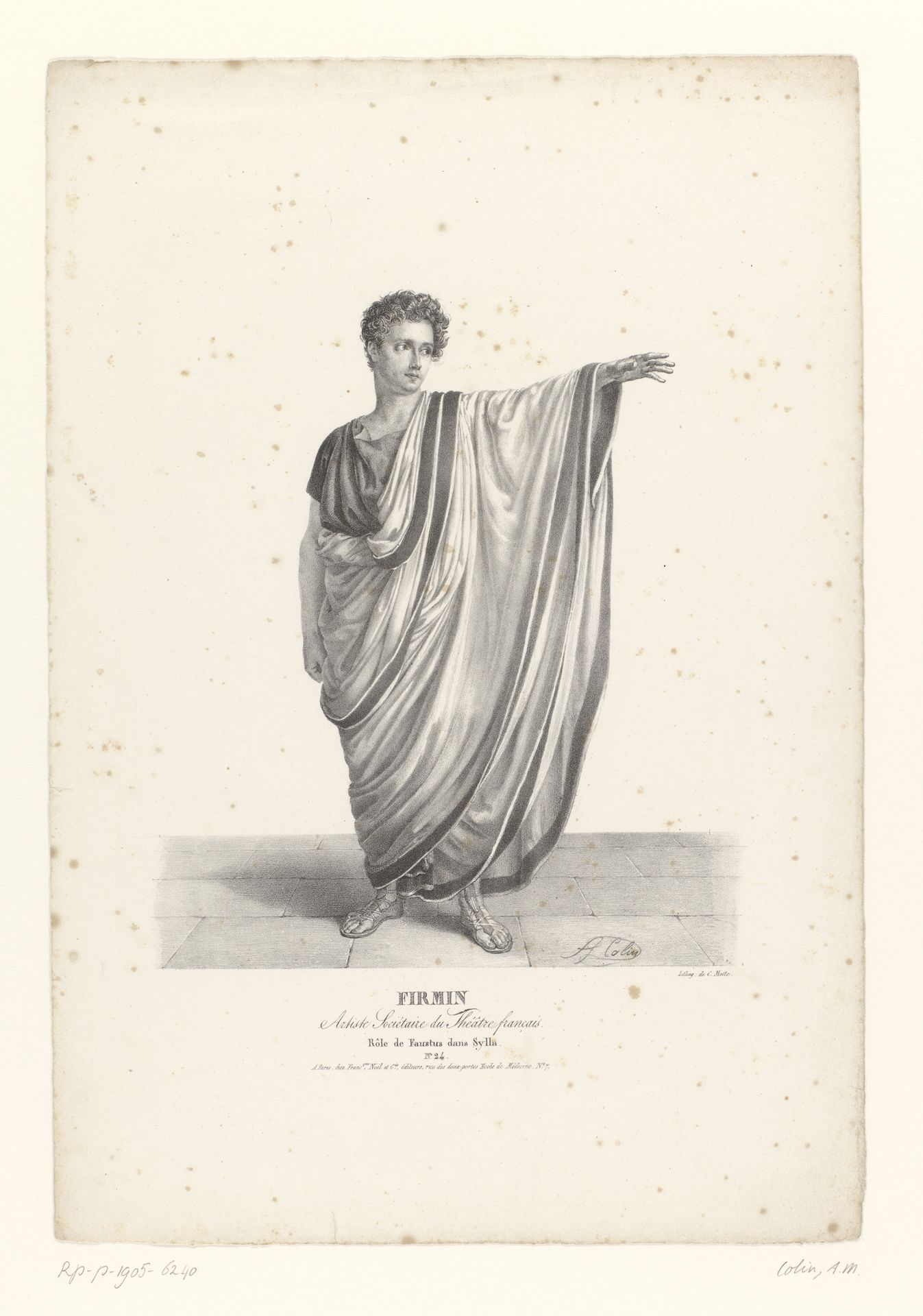
Alexandre-Marie Colin captured this portrait of Firmin as Faustus Sylla using graphite. The drawing presents a solitary figure, a theatrical representation of power and tragedy through careful arrangement of line and form. Light drapes dramatically over Firmin’s toga, creating a play of shadows that emphasize the classical sculpture. The eye is drawn to the textured details of the fabric as it falls, indicating attention to both volume and surface. This graphic rendering invites us to consider how the artist uses historical and theatrical frameworks to explore themes of identity and character. Firmin’s gesture, an open hand extended, acts as a signifier of authority, yet it also suggests vulnerability. Through this composition, Colin offers not just a portrait, but a study in the semiotics of power, inviting viewers to interpret the codes of dress, posture, and expression within the broader context of dramatic representation. This work reminds us that artistic interpretation is an ongoing process, shaped by our own perspectives and experiences.
Portret van Firmin als Faustus Sylla in de tragedie Sylla
1824

Artwork details
- Medium
- drawing, print, engraving
- Dimensions
- height 421 mm, width 289 mm
- Copyright
- Rijks Museum: Open Domain
Tags
Comments
Share your thoughts
About this artwork
Alexandre-Marie Colin captured this portrait of Firmin as Faustus Sylla using graphite. The drawing presents a solitary figure, a theatrical representation of power and tragedy through careful arrangement of line and form. Light drapes dramatically over Firmin’s toga, creating a play of shadows that emphasize the classical sculpture. The eye is drawn to the textured details of the fabric as it falls, indicating attention to both volume and surface. This graphic rendering invites us to consider how the artist uses historical and theatrical frameworks to explore themes of identity and character. Firmin’s gesture, an open hand extended, acts as a signifier of authority, yet it also suggests vulnerability. Through this composition, Colin offers not just a portrait, but a study in the semiotics of power, inviting viewers to interpret the codes of dress, posture, and expression within the broader context of dramatic representation. This work reminds us that artistic interpretation is an ongoing process, shaped by our own perspectives and experiences.
Comments
Share your thoughts