About this artwork
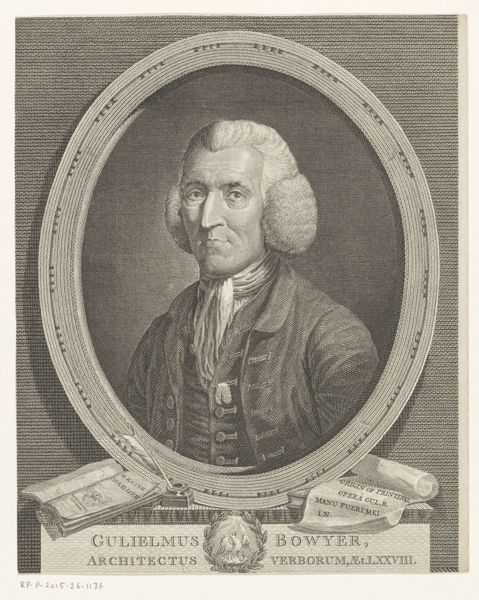
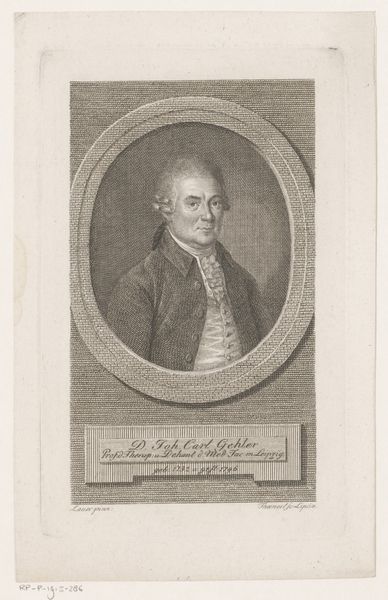
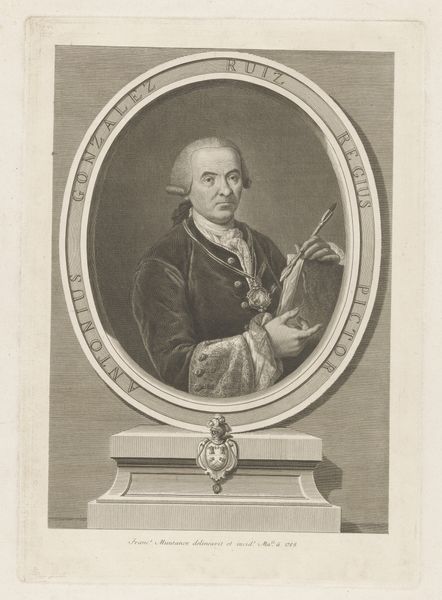
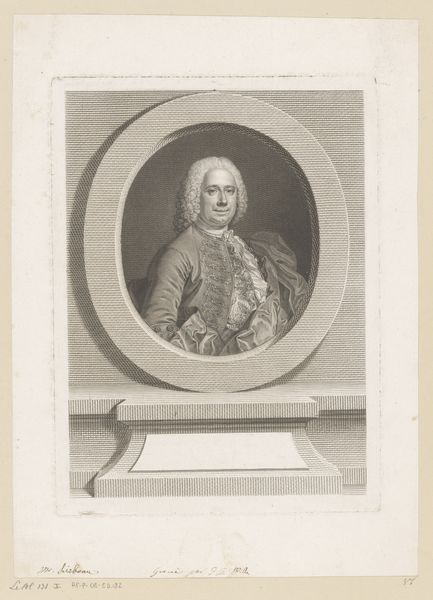
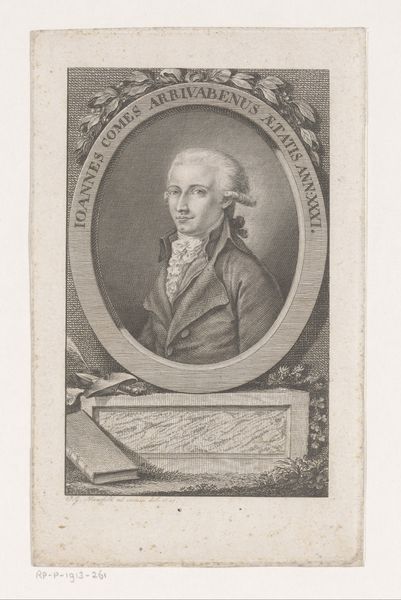
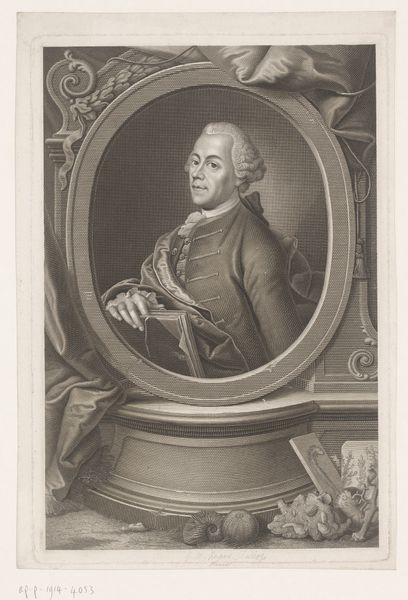
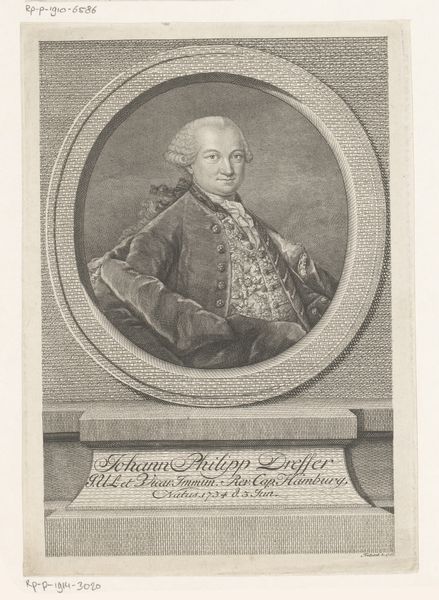
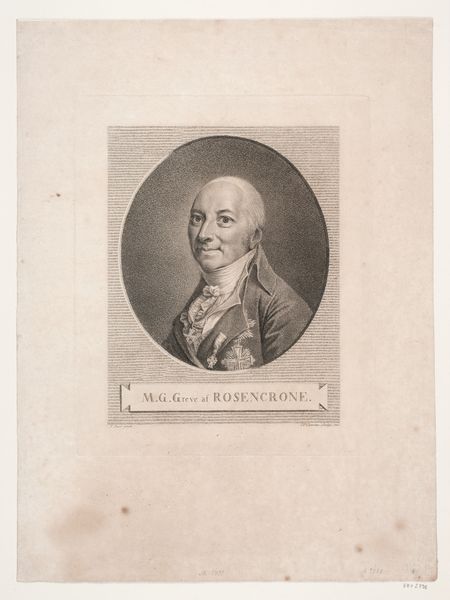
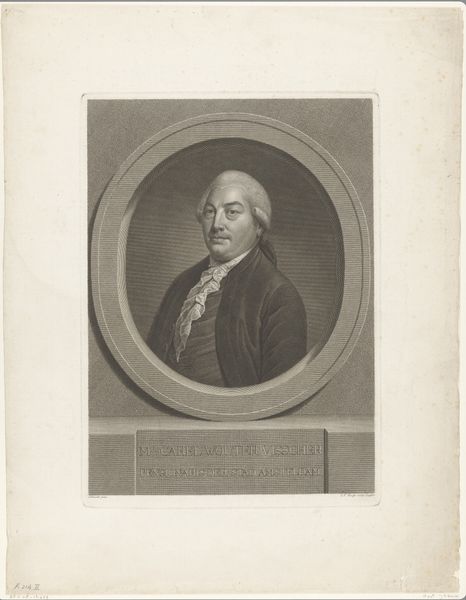
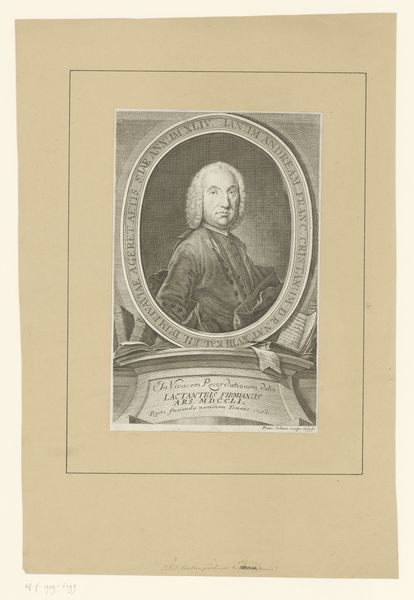
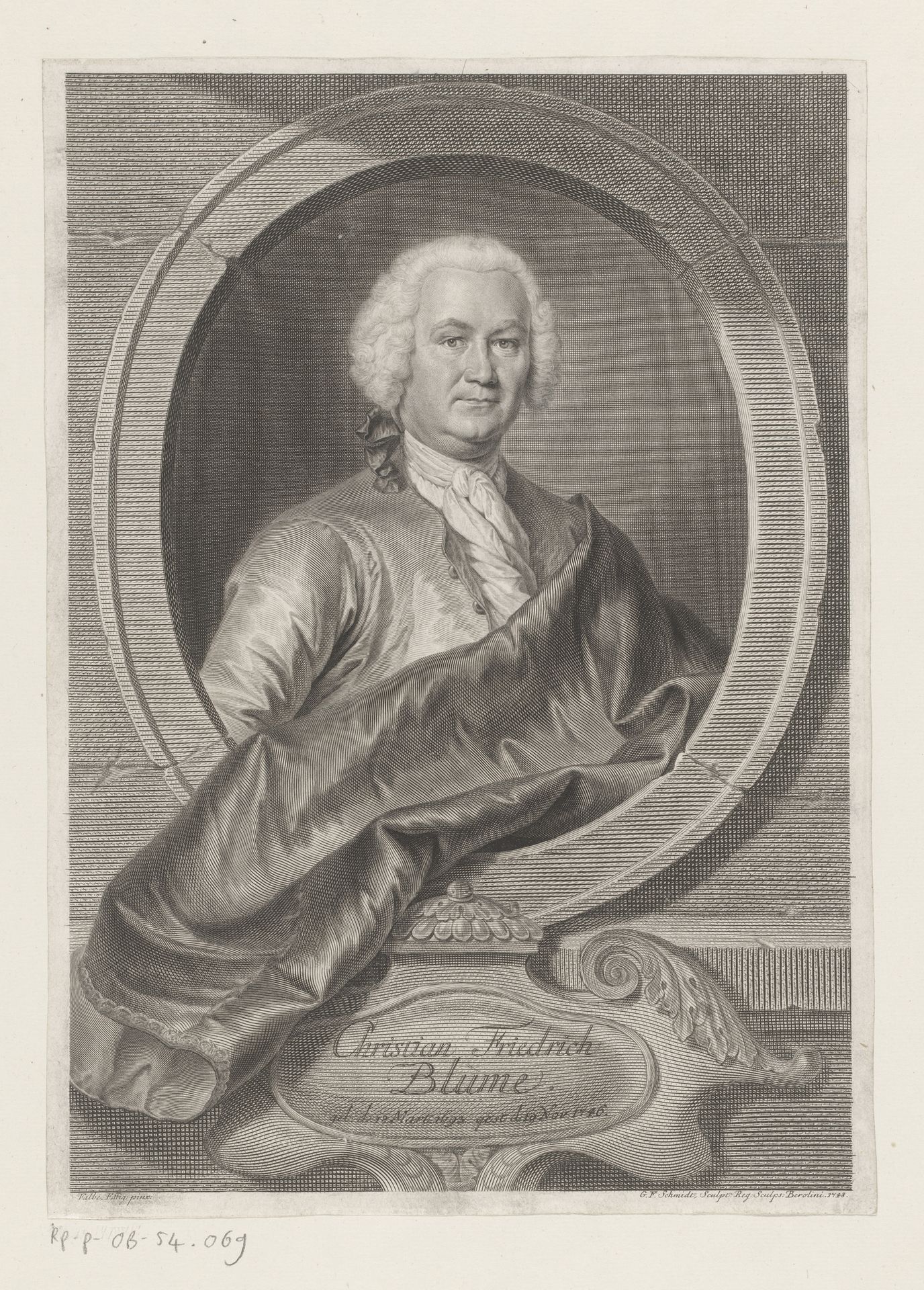
Georg Friedrich Schmidt created this engraving, "Portret van Christian Friedrich Blume," situating us within the visual culture of 18th-century portraiture. The image presents Blume, a figure of presumably notable status, framed within an oval border, his name elegantly inscribed below. Consider the conventions of portraiture during this era. Typically, portraits served to solidify the subject's identity within a specific societal framework, often reinforcing class and gender norms. Blume’s attire and wig speak to a certain social standing. What interests me, though, is how Schmidt uses the printmaking medium itself. There's a performative aspect to portraiture – the sitter posing, the artist capturing. Here, the engraving allows for the reproduction and dissemination of Blume’s image, extending his presence and influence beyond the immediate confines of a painted canvas. The emotional resonance lies in the subtle negotiation between the subject's self-presentation and the artist's interpretation, a dance of identity played out on the copper plate.
Portret van Christian Friedrich Blume
1748

Georg Friedrich Schmidt
1712 - 1775Location
RijksmuseumArtwork details
- Medium
- print, engraving
- Dimensions
- height 377 mm, width 269 mm
- Location
- Rijksmuseum
- Copyright
- Rijks Museum: Open Domain
Tags
Comments
Share your thoughts
About this artwork
Georg Friedrich Schmidt created this engraving, "Portret van Christian Friedrich Blume," situating us within the visual culture of 18th-century portraiture. The image presents Blume, a figure of presumably notable status, framed within an oval border, his name elegantly inscribed below. Consider the conventions of portraiture during this era. Typically, portraits served to solidify the subject's identity within a specific societal framework, often reinforcing class and gender norms. Blume’s attire and wig speak to a certain social standing. What interests me, though, is how Schmidt uses the printmaking medium itself. There's a performative aspect to portraiture – the sitter posing, the artist capturing. Here, the engraving allows for the reproduction and dissemination of Blume’s image, extending his presence and influence beyond the immediate confines of a painted canvas. The emotional resonance lies in the subtle negotiation between the subject's self-presentation and the artist's interpretation, a dance of identity played out on the copper plate.
Comments
Share your thoughts