About this artwork
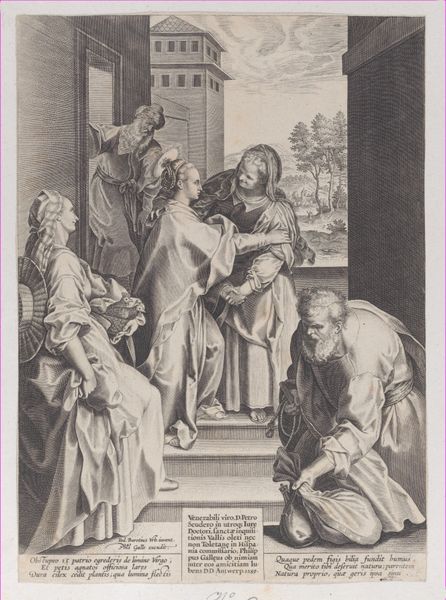
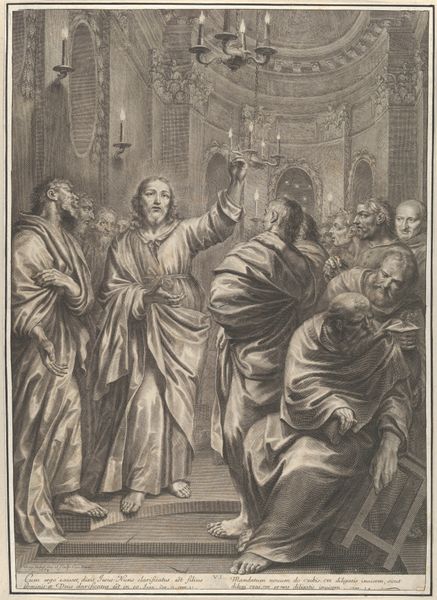
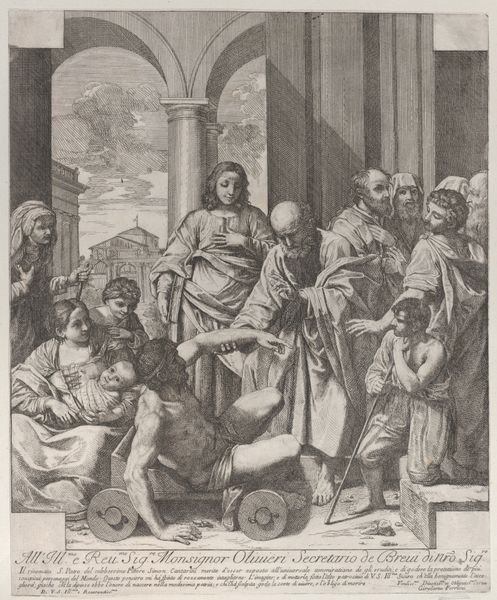
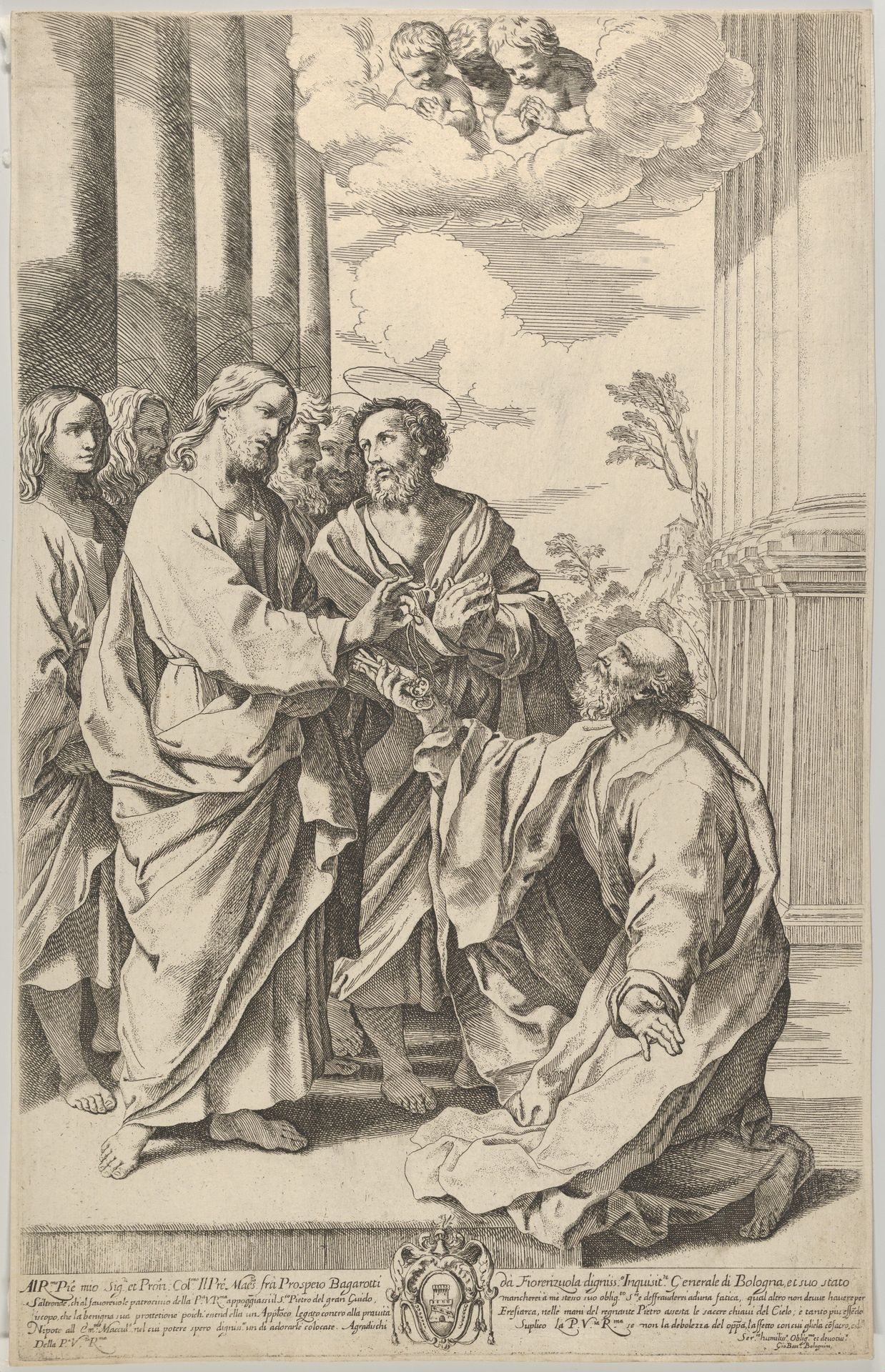
Gian Battista Bolognini created this print of Christ giving the keys of the church to Saint Peter, after Guido Reni, in the 17th century using etching. The image portrays a key moment in the establishment of the Catholic Church’s authority. Christ bestows the keys to Saint Peter, signifying the transfer of divine power. This imagery reinforces the Church’s hierarchical structure, placing the Pope and his successors as direct inheritors of Christ’s authority on Earth. The context of 17th-century Italy is key: the Catholic Church was a dominant force, both spiritually and politically. Prints like this, circulating widely, played a crucial role in disseminating religious ideology and solidifying the Church's influence. Art historians examine such images not only for their artistic merit, but also for their function within the complex web of religious and political power. By studying the production and distribution of Bolognini's print, we can better understand the social conditions that shaped both the creation and reception of this artwork.
Christ giving the keys of the church to Saint Peter who kneels before him, after Guido Reni
1640 - 1670

Gian Battista Bolognini
1611 - 1688
The Metropolitan Museum of Art
Metropolitan Museum of Art, New York, NYArtwork details
- Medium
- drawing, print
- Dimensions
- Sheet (Trimmed): 19 5/8 × 12 1/2 in. (49.9 × 31.7 cm)
- Location
- Metropolitan Museum of Art, New York, NY
- Copyright
- Public Domain
Tags
drawing
ink drawing
narrative-art
baroque
figuration
history-painting
italian-renaissance
christ
Comments
Be the first to share your thoughts about this work.
About this artwork
Gian Battista Bolognini created this print of Christ giving the keys of the church to Saint Peter, after Guido Reni, in the 17th century using etching. The image portrays a key moment in the establishment of the Catholic Church’s authority. Christ bestows the keys to Saint Peter, signifying the transfer of divine power. This imagery reinforces the Church’s hierarchical structure, placing the Pope and his successors as direct inheritors of Christ’s authority on Earth. The context of 17th-century Italy is key: the Catholic Church was a dominant force, both spiritually and politically. Prints like this, circulating widely, played a crucial role in disseminating religious ideology and solidifying the Church's influence. Art historians examine such images not only for their artistic merit, but also for their function within the complex web of religious and political power. By studying the production and distribution of Bolognini's print, we can better understand the social conditions that shaped both the creation and reception of this artwork.
Comments
Be the first to share your thoughts about this work.