About this artwork
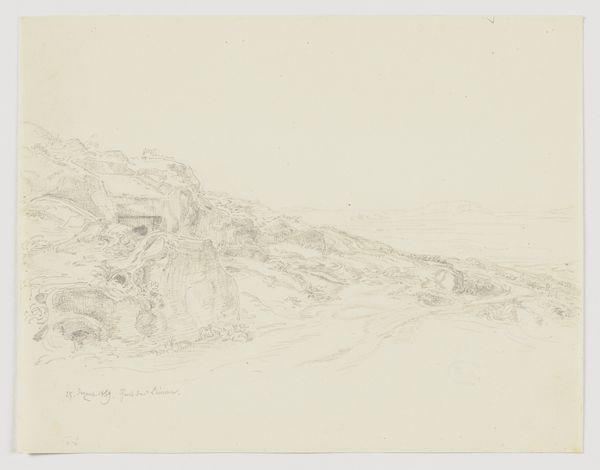
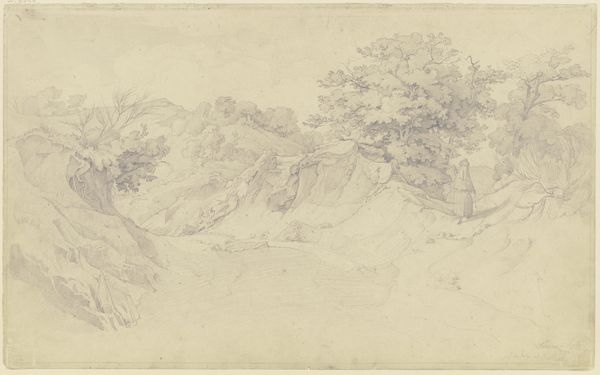
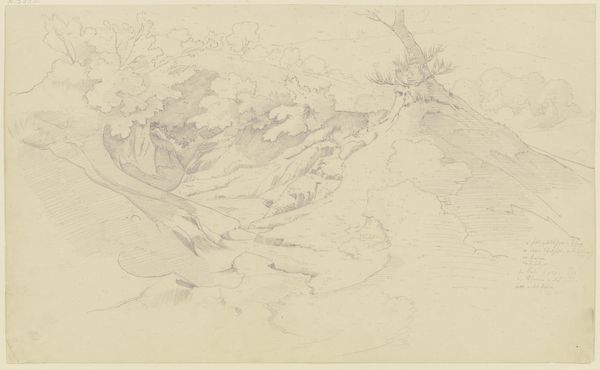
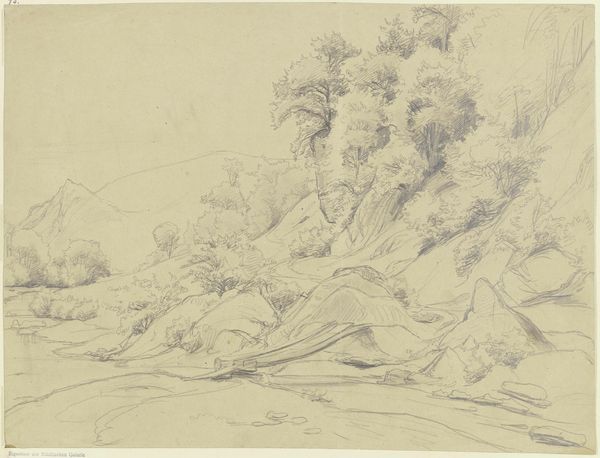
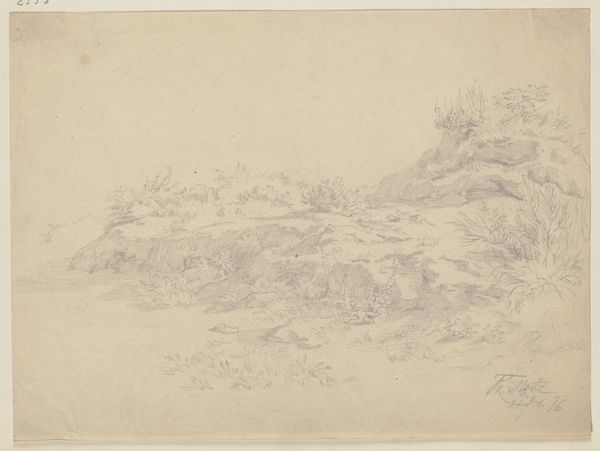
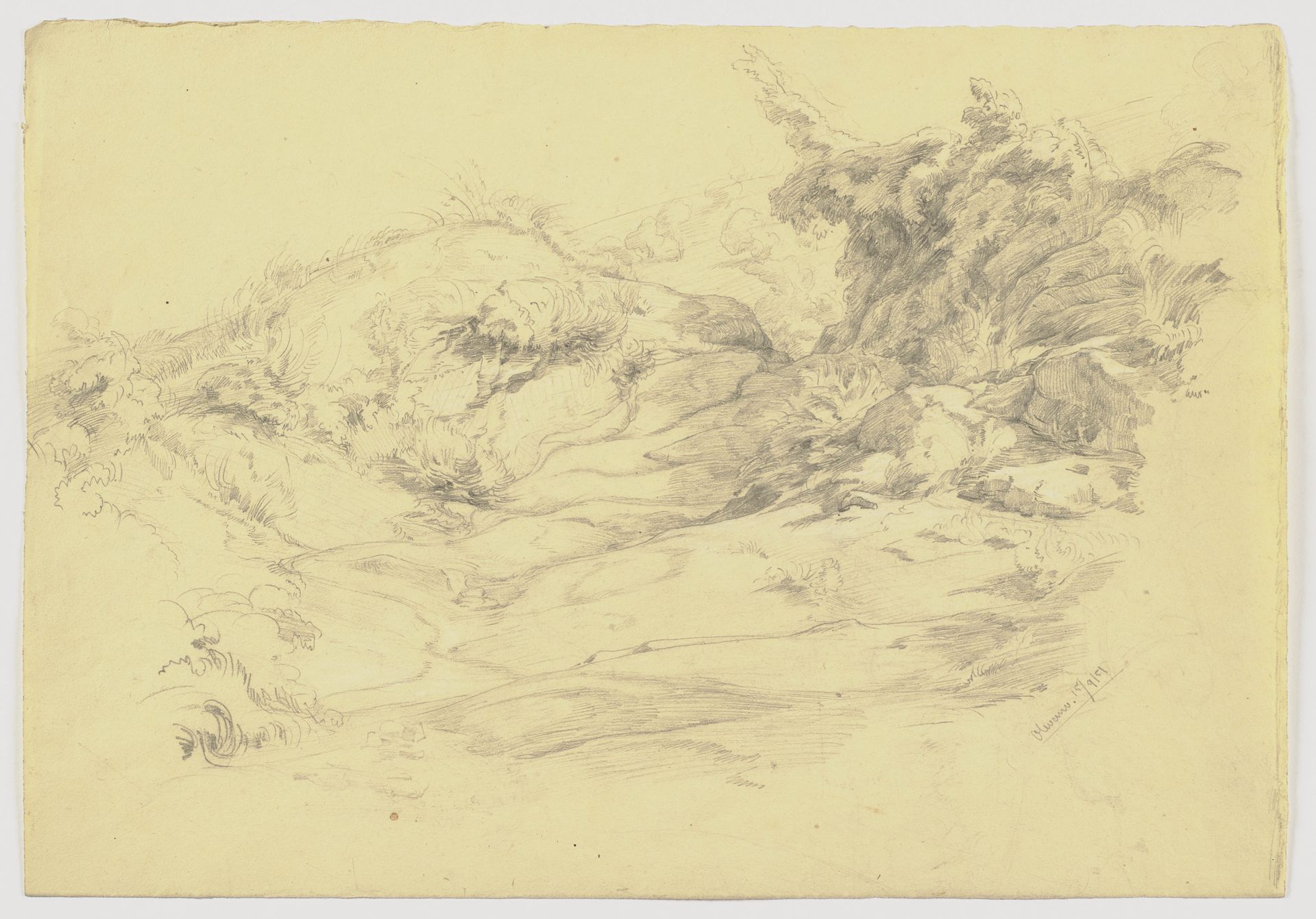
Editor: We're looking at Ludwig Metz's "Landscape near Olevano," dating from 1851. It’s a pencil drawing on paper and, to me, it feels like a fleeting impression of a rugged, perhaps even wild, natural setting. What stands out to you about this particular piece? Curator: It’s fascinating to consider Metz’s drawing in the context of 19th-century artistic trends. Realism was emerging, pushing back against Romanticism’s idealized views. Olevano, a town near Rome, became a popular destination for artists seeking authentic subjects. What do you notice about the composition? Does it remind you of other art from this period? Editor: I see a very focused composition using stark contrasts of line and shade. The realism seems evident, almost reportage in nature. How did landscape art play a role in the cultural life of the time? Curator: Landscape paintings were vital in shaping national identity and collective memory, often promoting specific views and serving as visual propaganda. A simple pencil drawing might also serve as sketches from the battlefield by war artists, documenting real and impactful events. Considering its creation during a time of evolving political landscapes and social reformations, what is your impression of it now? Editor: Knowing the context, I see it as more than just a landscape study; perhaps a reflection on the changing relationship between humanity and the natural world, a dialogue with cultural norms through form and technique. Curator: Precisely. And it reminds us that art always exists within, and comments on, its time. This unassuming drawing encapsulates a critical juncture in art history, pushing back on Romanticized landscape traditions. Editor: This gives me much food for thought! Thank you for this conversation, It definitely sheds new light on this realistic pencil artwork.


Artwork details
- Medium
- drawing, paper, dry-media, pencil, graphite
- Location
- Städel Museum
- Copyright
- Public Domain
Tags
Comments
Share your thoughts
About this artwork
Editor: We're looking at Ludwig Metz's "Landscape near Olevano," dating from 1851. It’s a pencil drawing on paper and, to me, it feels like a fleeting impression of a rugged, perhaps even wild, natural setting. What stands out to you about this particular piece? Curator: It’s fascinating to consider Metz’s drawing in the context of 19th-century artistic trends. Realism was emerging, pushing back against Romanticism’s idealized views. Olevano, a town near Rome, became a popular destination for artists seeking authentic subjects. What do you notice about the composition? Does it remind you of other art from this period? Editor: I see a very focused composition using stark contrasts of line and shade. The realism seems evident, almost reportage in nature. How did landscape art play a role in the cultural life of the time? Curator: Landscape paintings were vital in shaping national identity and collective memory, often promoting specific views and serving as visual propaganda. A simple pencil drawing might also serve as sketches from the battlefield by war artists, documenting real and impactful events. Considering its creation during a time of evolving political landscapes and social reformations, what is your impression of it now? Editor: Knowing the context, I see it as more than just a landscape study; perhaps a reflection on the changing relationship between humanity and the natural world, a dialogue with cultural norms through form and technique. Curator: Precisely. And it reminds us that art always exists within, and comments on, its time. This unassuming drawing encapsulates a critical juncture in art history, pushing back on Romanticized landscape traditions. Editor: This gives me much food for thought! Thank you for this conversation, It definitely sheds new light on this realistic pencil artwork.
Comments
Share your thoughts