1859 - 1860
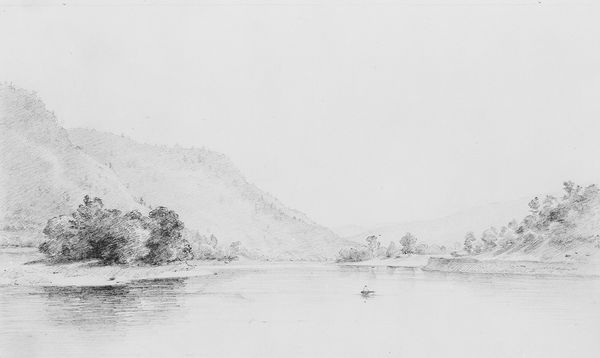
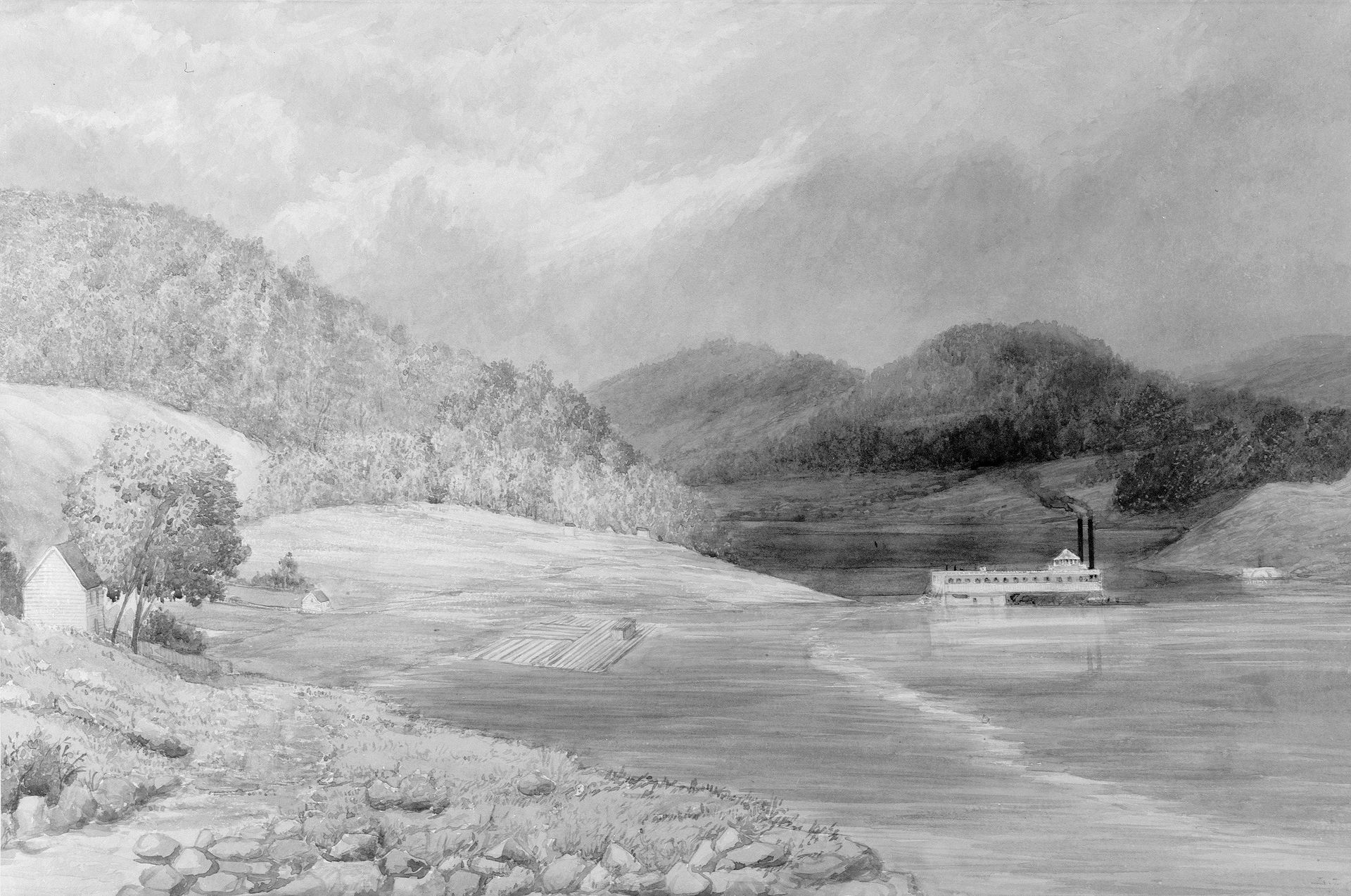
The Ohio River near Wheeling, West Virginia

Lefevre James Cranstone
1810 - 1910
The Metropolitan Museum of Art
Metropolitan Museum of Art, New York, NYListen to curator's interpretation
Curatorial notes
Lefevre James Cranstone rendered "The Ohio River near Wheeling, West Virginia" in graphite and gray wash. The composition, dominated by horizontal lines of the river and land, evokes a sense of tranquility. Cranstone manipulates tone to create depth, with darker washes defining the distant hills and contrasting against the lighter, open sky. This strategic use of light and shadow not only models the landscape but also guides the viewer's eye, inviting us to contemplate the relationship between nature and the nascent industrial presence marked by the steamboat. The river, serving as both a compositional and conceptual artery, destabilizes traditional landscape painting. Rather than portraying a purely bucolic scene, Cranstone integrates the signs of human activity, thus creating a tableau that captures a moment of transition. The artist uses a visual semiotic system to represent cultural codes of expansion and progress.