1603 - 1652
Mountain Landscape


Listen to curator's interpretation
Curatorial notes
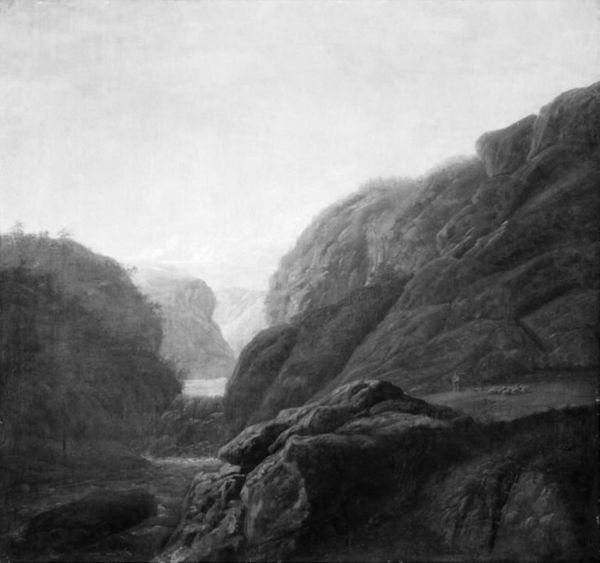
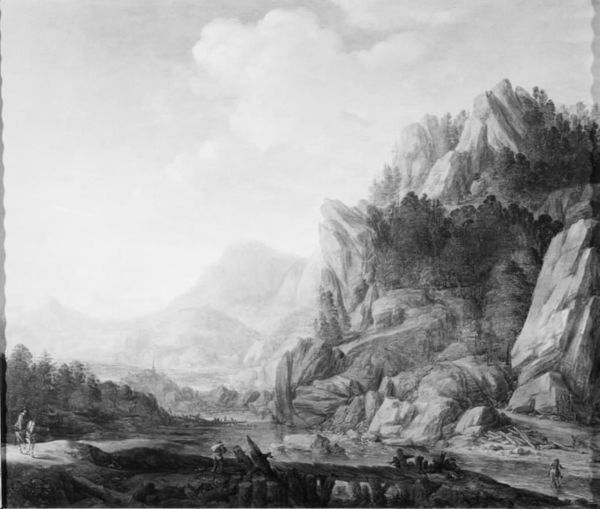
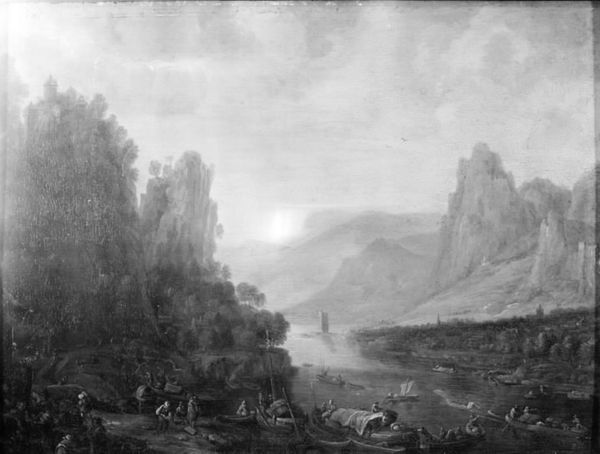
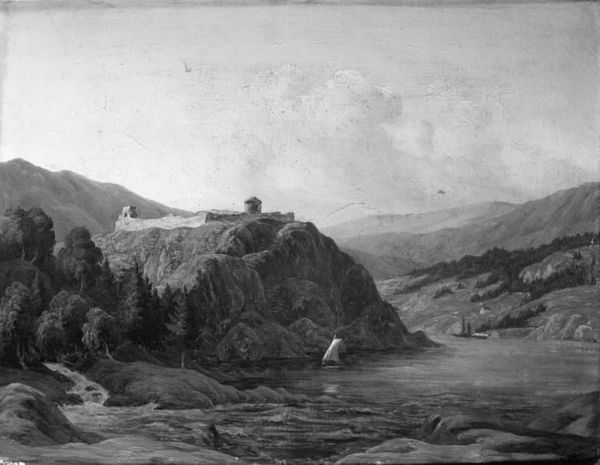
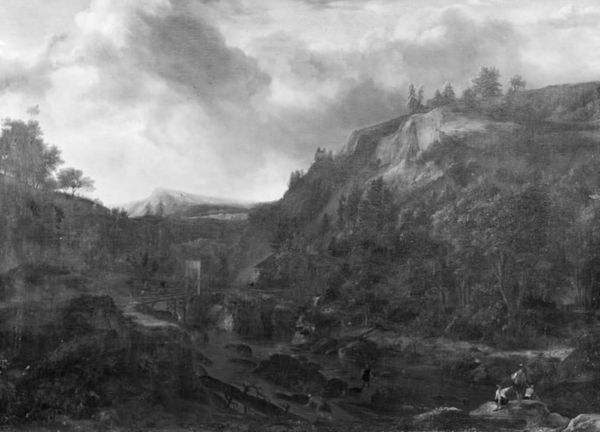
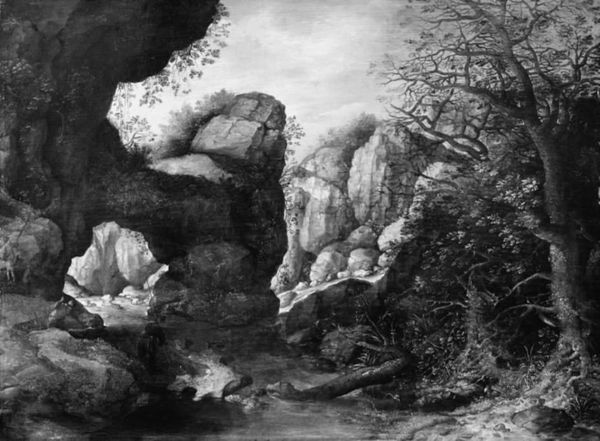
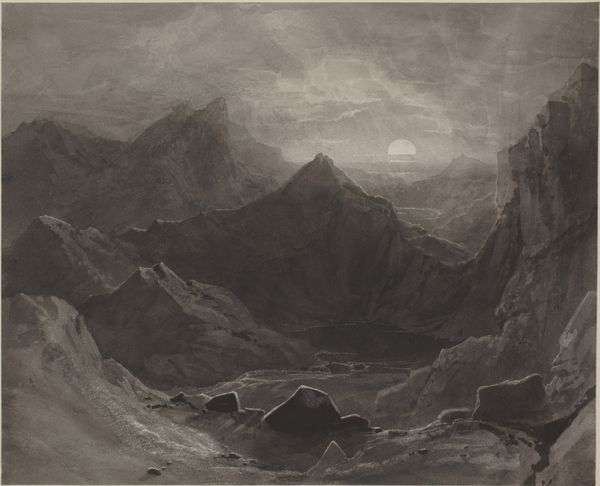
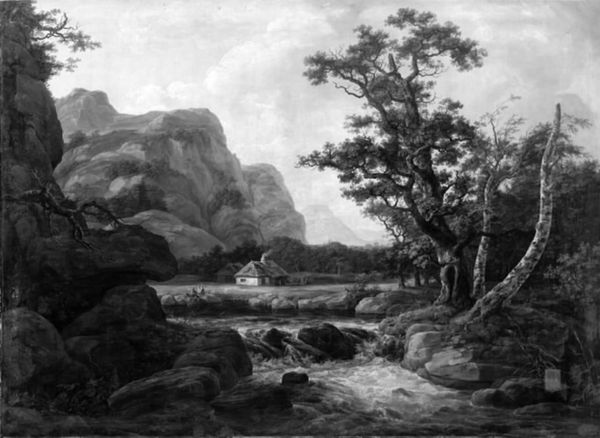
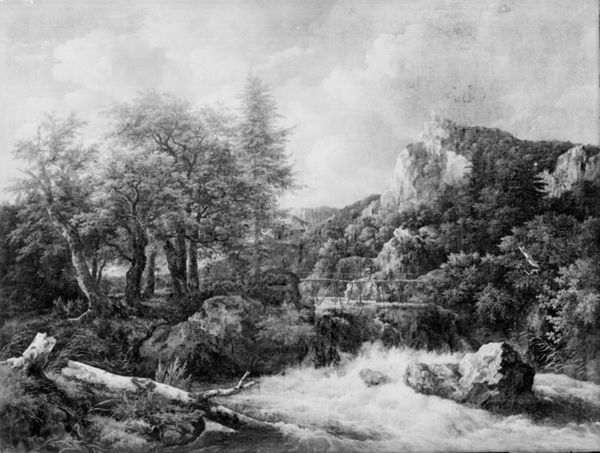
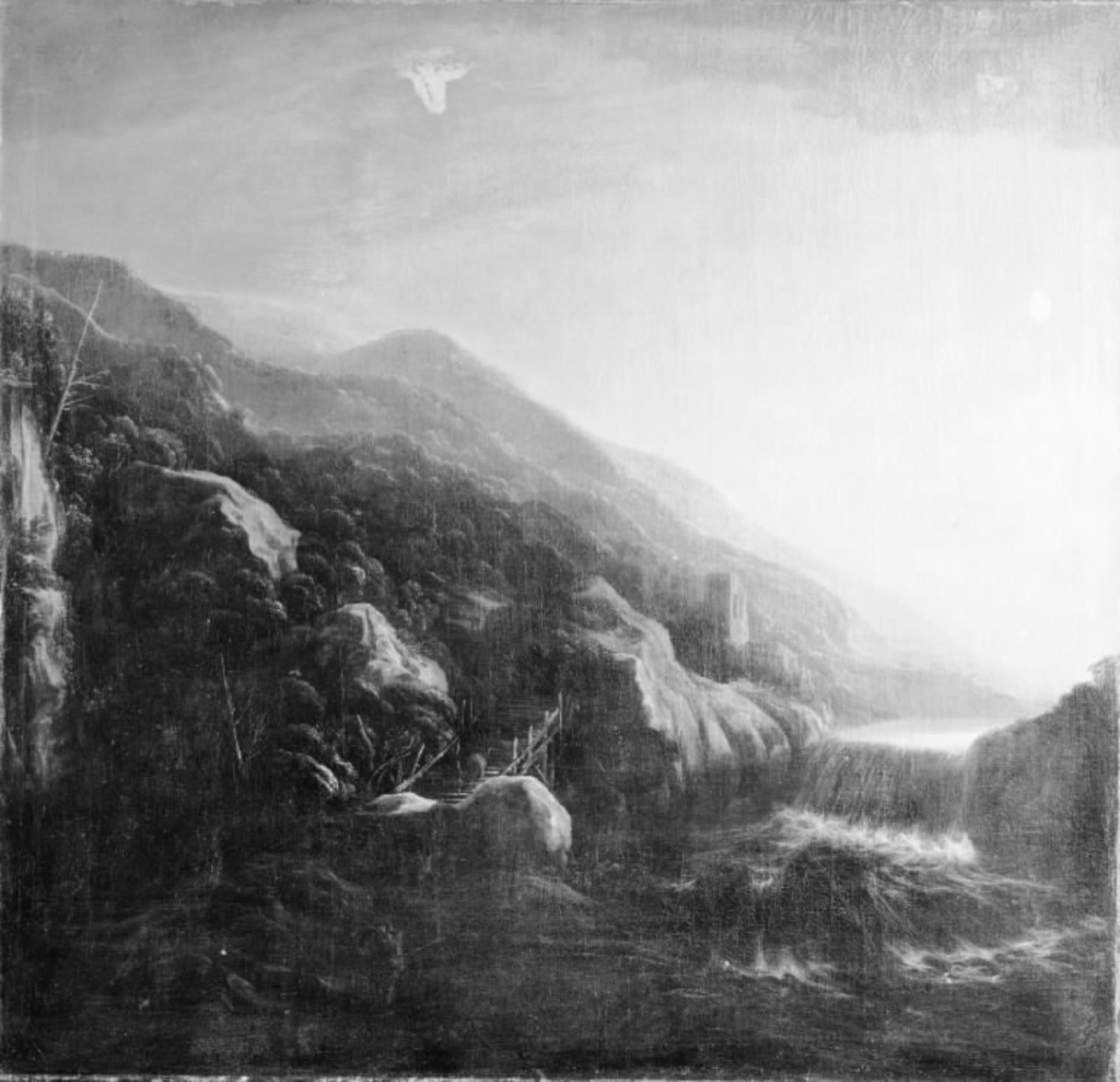
Curator: "Mountain Landscape" by Andreas Faistenberger I, likely created sometime between 1603 and 1652. What strikes you initially about it? Editor: Well, immediately I’m pulled into this somber, almost monochromatic world. There’s a beautiful yet overwhelming sense of nature's power, you know? It’s as if I'm standing in front of this massive, untamed scene feeling simultaneously exhilarated and insignificant. Curator: Yes, precisely. The nearly monochrome palette is worth noting. Its restrained tonality focuses our attention on the formal elements. Notice the strategic composition: the sharp, rugged peaks contrasted against softer, water elements. Editor: It feels heavy. The absence of color, maybe. You know, nature's usually so vibrant. Makes you think. Curator: Exactly, but think too about Faistenberger’s technique. The use of tempera offers this almost gritty texture that builds the landscape into this imposing structure. I read it as representing the sublime in Baroque aesthetics. The suggestion of danger. The viewer's own smallness. Editor: The "sublime," huh? I kind of see what you mean. But still, you strip away color, add dramatic contrast and swirling waters…makes nature a character. More menacing somehow. Curator: Certainly. And in considering it in a Baroque context, think of the period’s focus on dynamism, theatricality. The landscape isn't just a background—it's practically operatic. Its composition utilizes stark light-and-shadow play for maximum impact. Editor: Operatic. Okay, I buy that! A powerful crescendo with that waterfall taking center stage, right? It sort of throws me back to those romantic poets, wordsworth's of the world. Nature becomes a space where something grand happens, or is about to! Curator: It is there in how space is deployed as allegory for our awareness. A landscape painting like this provokes an exploration of our humanity in relation to the world we inhabit. Its monochrome visual impact almost guarantees a conversation around that central issue. Editor: You know what? Despite myself, I really got into that! Like I said from the beginning, there's something untamed and primal on display here. A reminder that nature marches to its own beat. Thanks for helping me decode Faistenberger's vision. Curator: My pleasure! These formal devices provide fertile ground for artistic dialogue. Considering context deepens the impact and enduring presence of his landscapes.