About this artwork
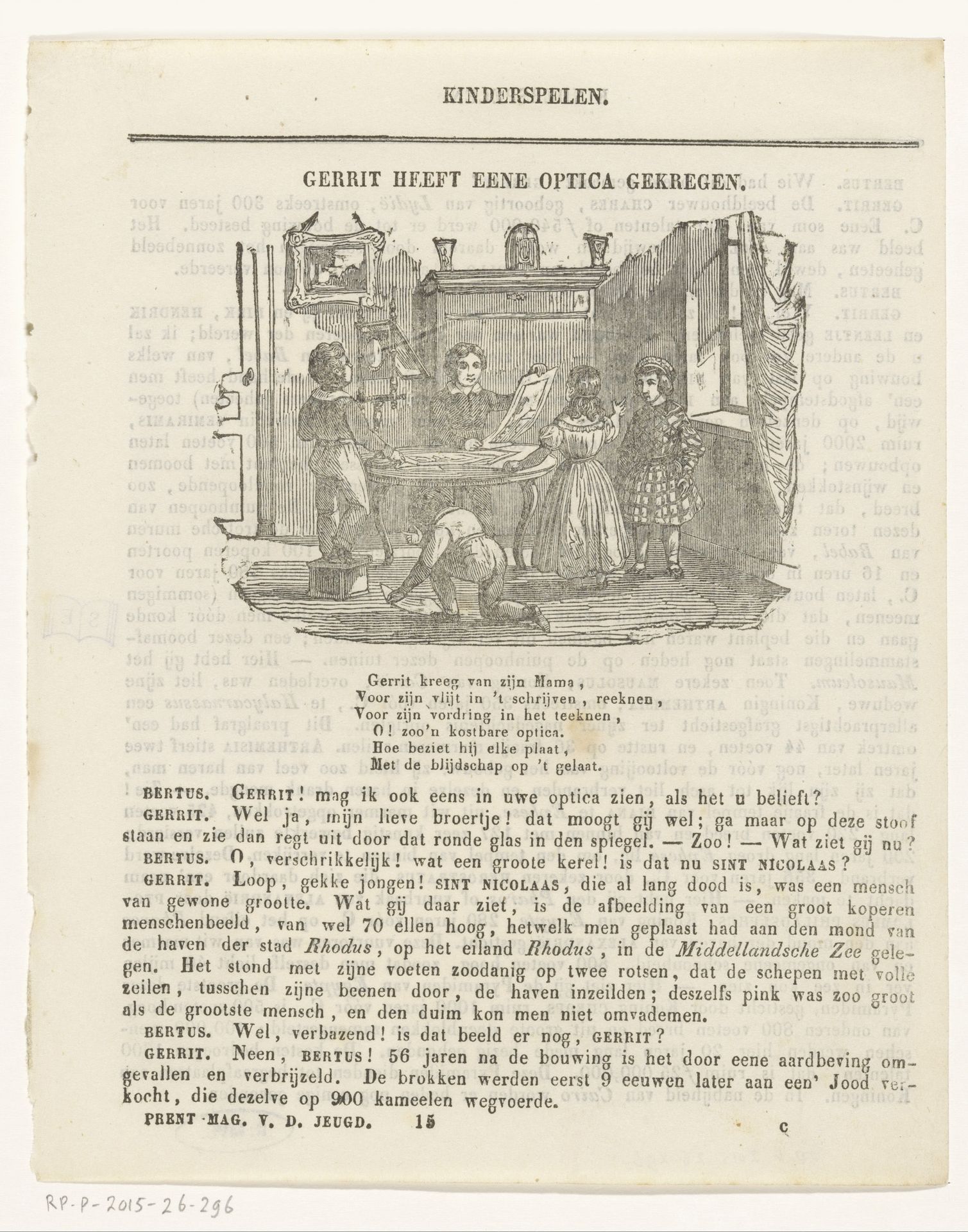
This anonymous print, titled "Interior with five children looking at prints through an optical device," invites us into a 19th-century domestic scene. Published in a children's magazine, the print reflects the period's burgeoning interest in education and entertainment for young audiences. Here we see children gathered around an "optica," a device used to view prints and create an illusion of depth. The scene reflects the privilege and social class of the children depicted, who have access to such novelties. The print also touches on historical narratives, referencing the Colossus of Rhodes, a symbol of ancient grandeur. This colossal statue once stood as a testament to human achievement, which was later destroyed by natural disaster. The text accompanying the image reveals a dialogue between the children, as they express wonder and disbelief at the images they see. This interplay between visual representation and textual narrative underscores the power of images to shape perceptions and spark imagination. The artist uses this medium to explore themes of knowledge, curiosity, and the allure of distant worlds.

Artwork details
- Medium
- print, engraving
- Dimensions
- height 199 mm, width 160 mm
- Copyright
- Rijks Museum: Open Domain
Tags
narrative-art
old engraving style
figuration
romanticism
line
genre-painting
northern-renaissance
engraving
Comments
No comments
About this artwork
This anonymous print, titled "Interior with five children looking at prints through an optical device," invites us into a 19th-century domestic scene. Published in a children's magazine, the print reflects the period's burgeoning interest in education and entertainment for young audiences. Here we see children gathered around an "optica," a device used to view prints and create an illusion of depth. The scene reflects the privilege and social class of the children depicted, who have access to such novelties. The print also touches on historical narratives, referencing the Colossus of Rhodes, a symbol of ancient grandeur. This colossal statue once stood as a testament to human achievement, which was later destroyed by natural disaster. The text accompanying the image reveals a dialogue between the children, as they express wonder and disbelief at the images they see. This interplay between visual representation and textual narrative underscores the power of images to shape perceptions and spark imagination. The artist uses this medium to explore themes of knowledge, curiosity, and the allure of distant worlds.
Comments
No comments