About this artwork
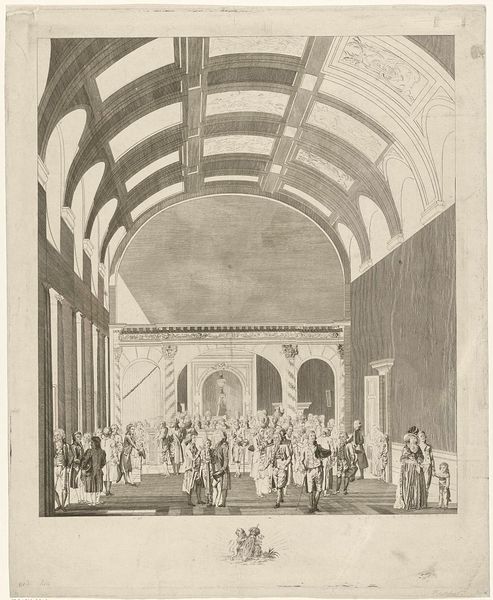
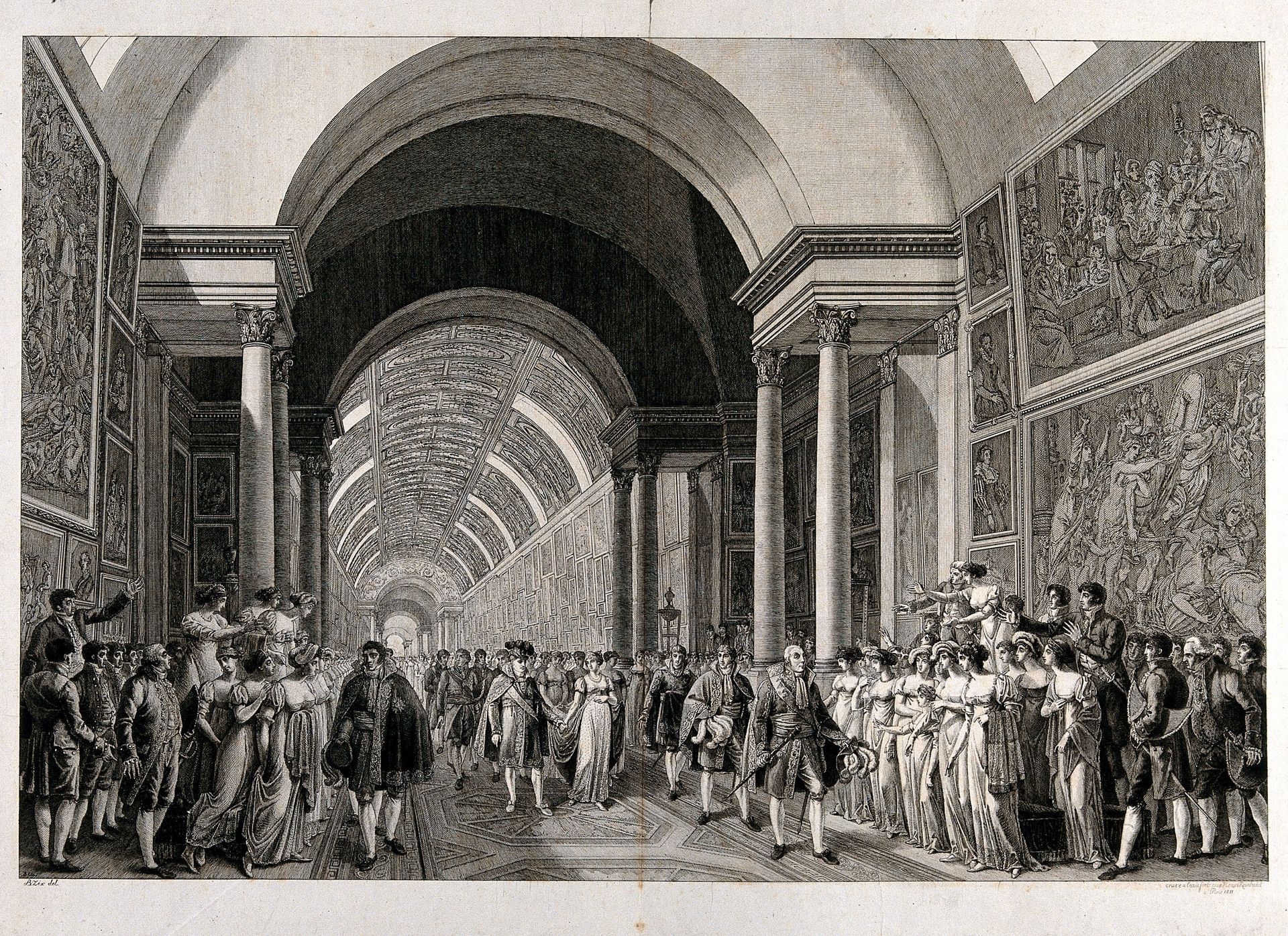
Heinrich Reinhold created this drawing which depicts Napoleon Bonaparte leading a festive procession through the galleries of the Louvre. The era of Napoleon was marked by significant social and political upheaval following the French Revolution. Here, the procession becomes a carefully staged performance of power. It reflects how Napoleon used art and architecture to shape his public image and legitimize his rule. The Louvre, transformed from a royal palace into a public museum, served as a backdrop for this carefully crafted display, where the acquisition and exhibition of art became a tool of statecraft, reinforcing notions of French cultural superiority. Look at the expressions of the figures. The drawing also evokes a sense of collective identity and national pride. Yet, it is important to remember that this image is also a product of its time, reflecting the gender and class hierarchies of early 19th-century French society, visible in the dress and deportment of the figures. Reinhold’s artwork serves as a potent reminder of the intricate relationship between art, power, and identity in shaping our understanding of history.
A Festive Procession Led by Napoleon Bonaparte Through the Galleries of the Louvre
1811

Artwork details
- Medium
- print, etching, engraving
- Copyright
- Public domain
Tags
Comments
Share your thoughts
About this artwork
Heinrich Reinhold created this drawing which depicts Napoleon Bonaparte leading a festive procession through the galleries of the Louvre. The era of Napoleon was marked by significant social and political upheaval following the French Revolution. Here, the procession becomes a carefully staged performance of power. It reflects how Napoleon used art and architecture to shape his public image and legitimize his rule. The Louvre, transformed from a royal palace into a public museum, served as a backdrop for this carefully crafted display, where the acquisition and exhibition of art became a tool of statecraft, reinforcing notions of French cultural superiority. Look at the expressions of the figures. The drawing also evokes a sense of collective identity and national pride. Yet, it is important to remember that this image is also a product of its time, reflecting the gender and class hierarchies of early 19th-century French society, visible in the dress and deportment of the figures. Reinhold’s artwork serves as a potent reminder of the intricate relationship between art, power, and identity in shaping our understanding of history.
Comments
Share your thoughts