About this artwork
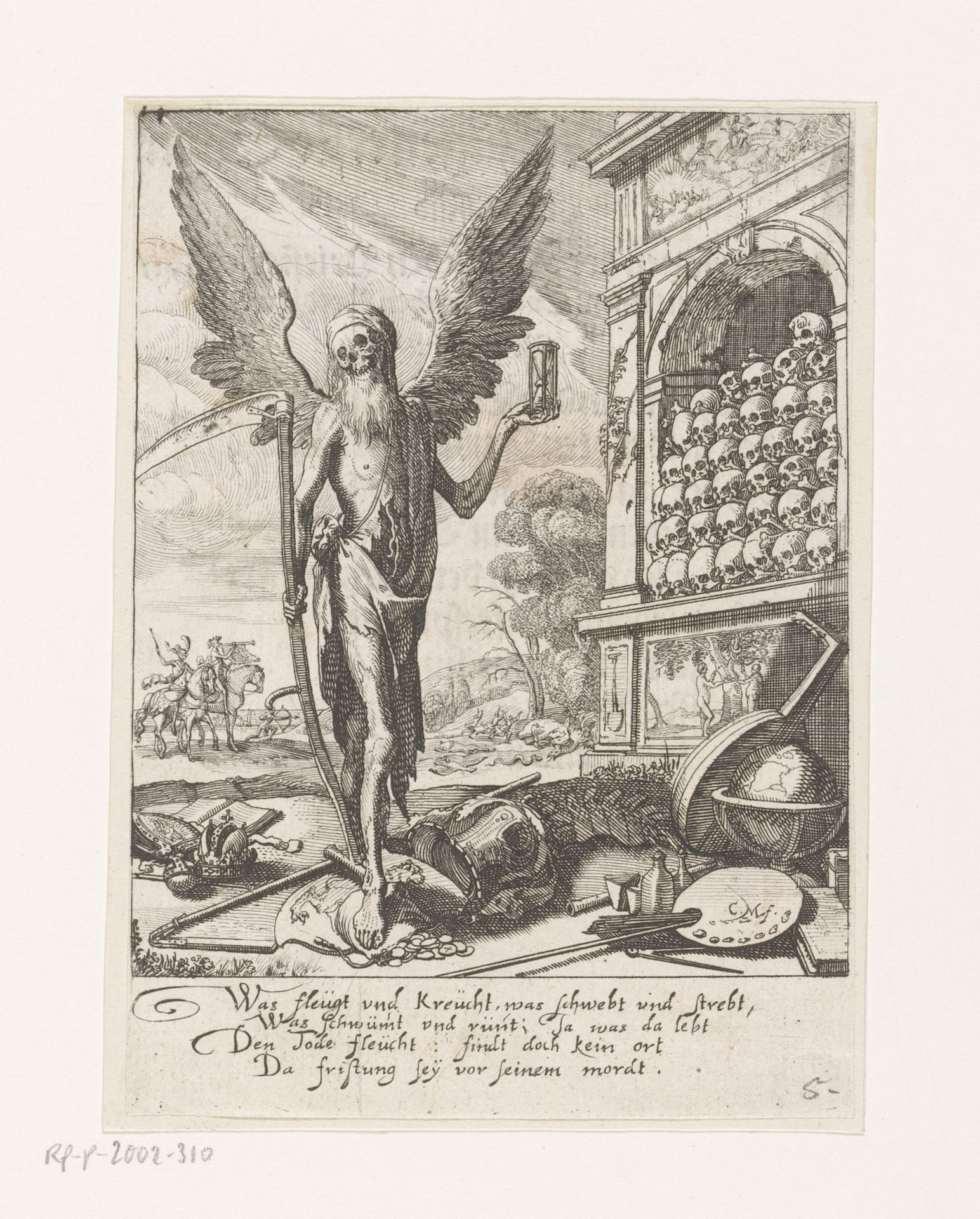
Conrad Meyer etched this image of the Triumph of Death, a grim dance of mortality, sometime in the 17th century. Here, Death isn't a skeleton but a winged, almost human figure, holding an hourglass, a symbol of fleeting time, while a scythe rests on its shoulder. This recalls ancient portrayals of Chronos, the personification of time, often depicted with similar attributes. Death's triumph is underscored by the memento mori—the skulls—stacked high in a classical archway. The hourglass reminds us of the vanitas tradition in painting, with earthly achievements rendered as temporary objects. Consider the persistence of these symbols: the hourglass appears in countless depictions of saints, allegories, and moralizing scenes. It evolves, yet retains its core meaning. Just as the serpent in the Garden of Eden represents temptation across cultures, so too does the hourglass speak to our collective anxiety about the ephemeral nature of existence. The image invites us to confront our own mortality.

Artwork details
- Dimensions
- height 129 mm, width 90 mm
- Location
- Rijksmuseum
- Copyright
- Rijks Museum: Open Domain
Comments
Share your thoughts
About this artwork
Conrad Meyer etched this image of the Triumph of Death, a grim dance of mortality, sometime in the 17th century. Here, Death isn't a skeleton but a winged, almost human figure, holding an hourglass, a symbol of fleeting time, while a scythe rests on its shoulder. This recalls ancient portrayals of Chronos, the personification of time, often depicted with similar attributes. Death's triumph is underscored by the memento mori—the skulls—stacked high in a classical archway. The hourglass reminds us of the vanitas tradition in painting, with earthly achievements rendered as temporary objects. Consider the persistence of these symbols: the hourglass appears in countless depictions of saints, allegories, and moralizing scenes. It evolves, yet retains its core meaning. Just as the serpent in the Garden of Eden represents temptation across cultures, so too does the hourglass speak to our collective anxiety about the ephemeral nature of existence. The image invites us to confront our own mortality.
Comments
Share your thoughts