About this artwork
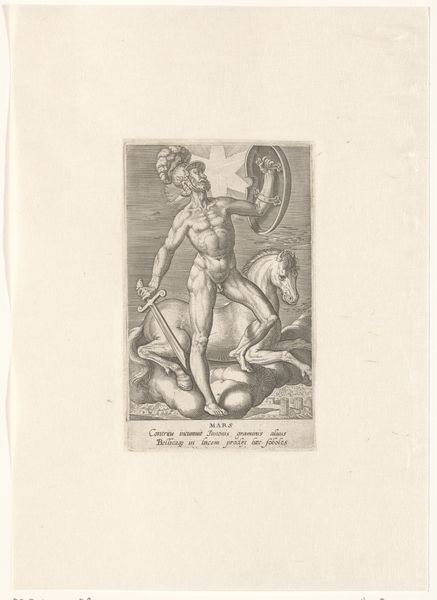
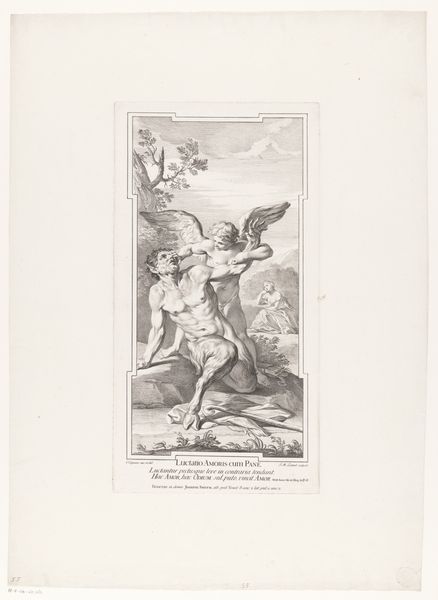
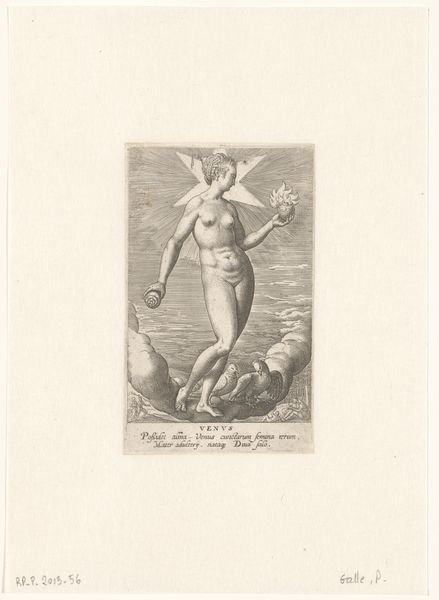
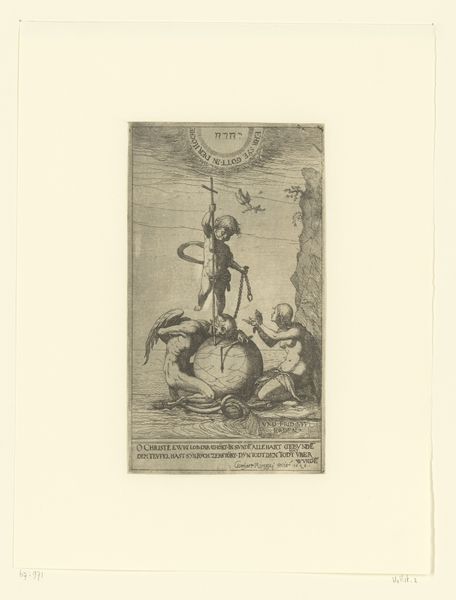
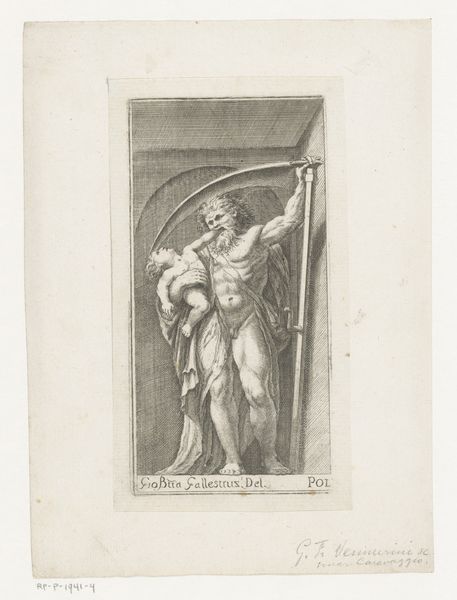
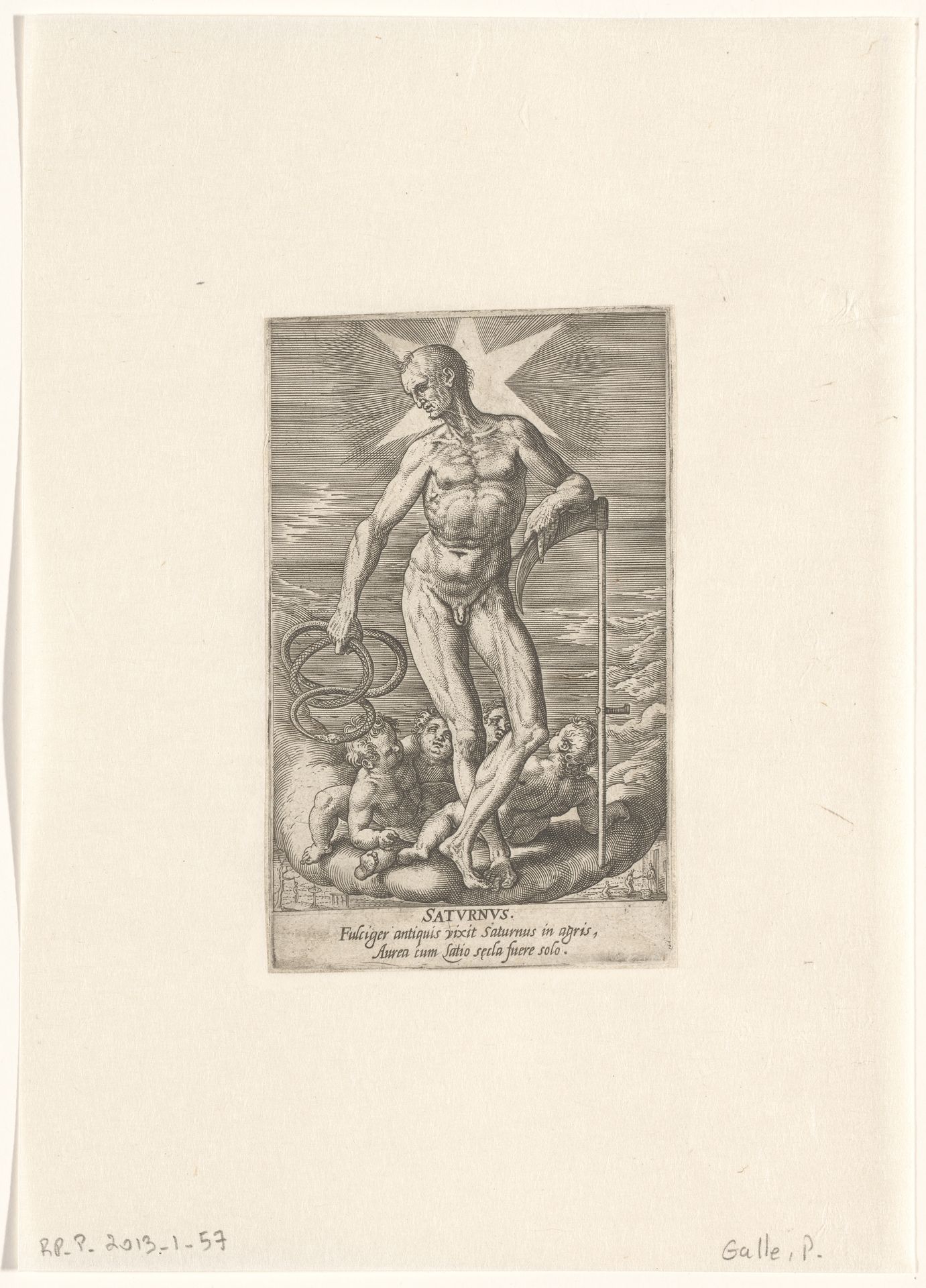
Philips Galle created this engraving of Saturnus, using metal plates, ink, and paper. The intricate process involves etching lines into a metal plate, inking it, and then pressing it onto paper to create the image. The fine lines and details give the print a distinct texture, with the stark contrast between light and shadow emphasizing the god’s muscular form and the writhing figures beneath him. Engraving was a crucial technology in the 16th century. It allowed for the mass production of images, and facilitated the spread of ideas, but it also required skilled labor and a well-organized workshop. Galle's prints would have been part of a larger economy of image-making, tied to the burgeoning print industry in Europe. By focusing on the material and the making, we can see how this print connects to broader social and economic trends of the time.

Artwork details
- Medium
- print, engraving
- Dimensions
- height 131 mm, width 81 mm
- Location
- Rijksmuseum
- Copyright
- Rijks Museum: Open Domain
Tags
Comments
Share your thoughts
About this artwork
Philips Galle created this engraving of Saturnus, using metal plates, ink, and paper. The intricate process involves etching lines into a metal plate, inking it, and then pressing it onto paper to create the image. The fine lines and details give the print a distinct texture, with the stark contrast between light and shadow emphasizing the god’s muscular form and the writhing figures beneath him. Engraving was a crucial technology in the 16th century. It allowed for the mass production of images, and facilitated the spread of ideas, but it also required skilled labor and a well-organized workshop. Galle's prints would have been part of a larger economy of image-making, tied to the burgeoning print industry in Europe. By focusing on the material and the making, we can see how this print connects to broader social and economic trends of the time.
Comments
Share your thoughts