About this artwork
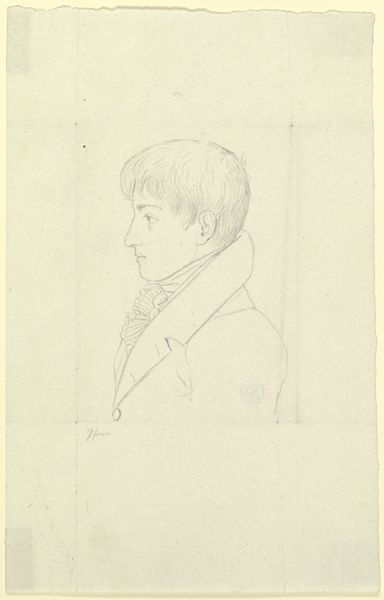
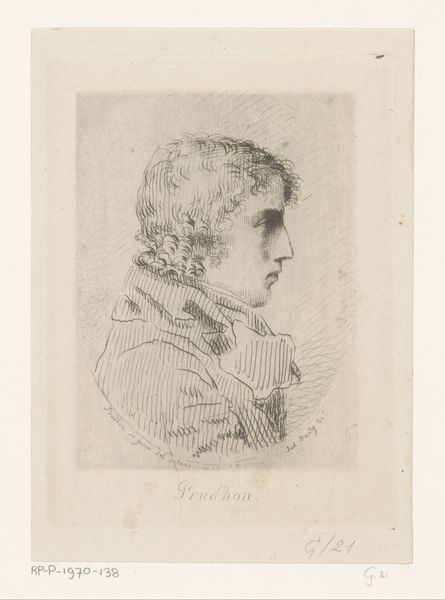
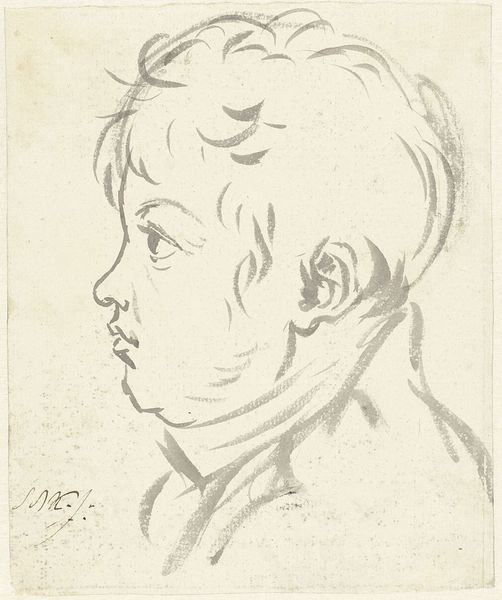
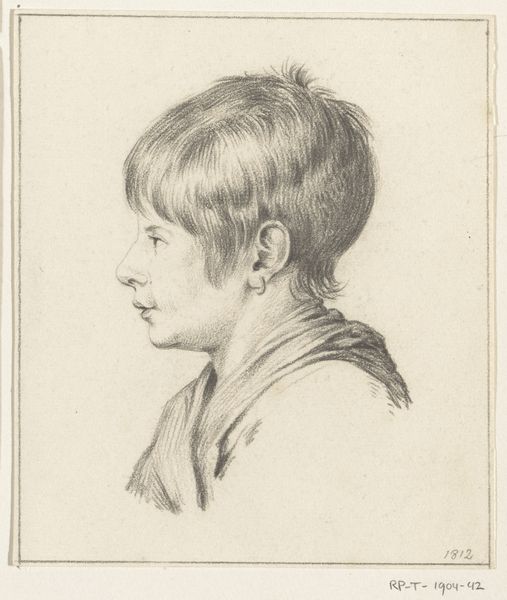
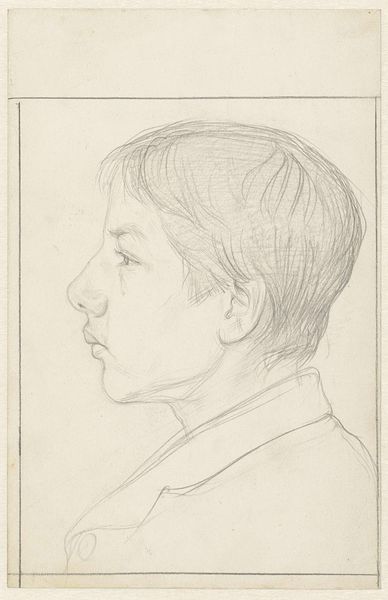
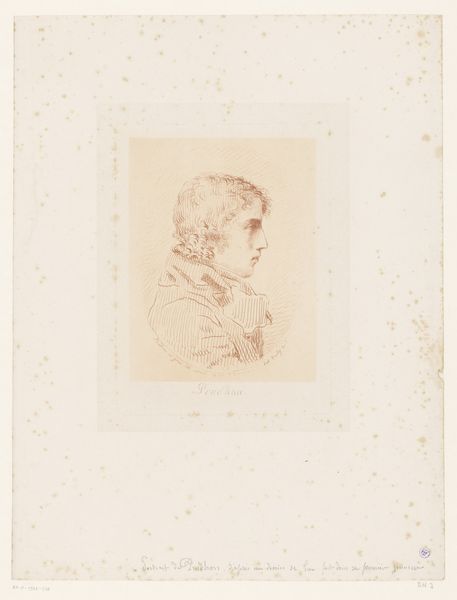
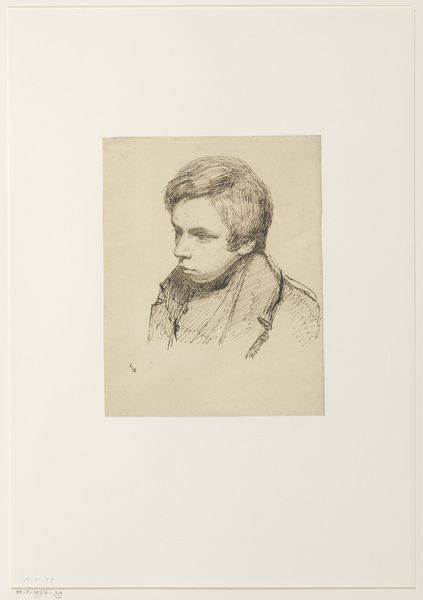
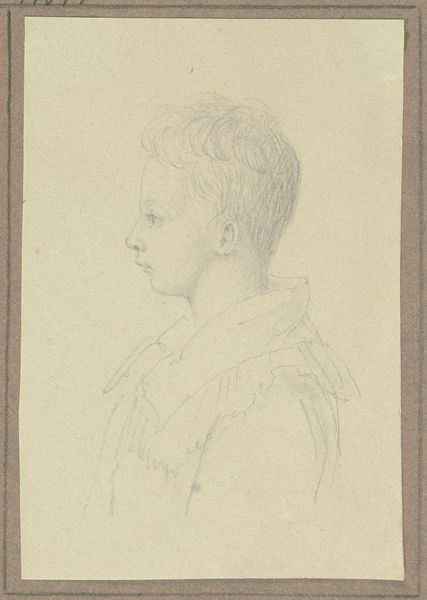
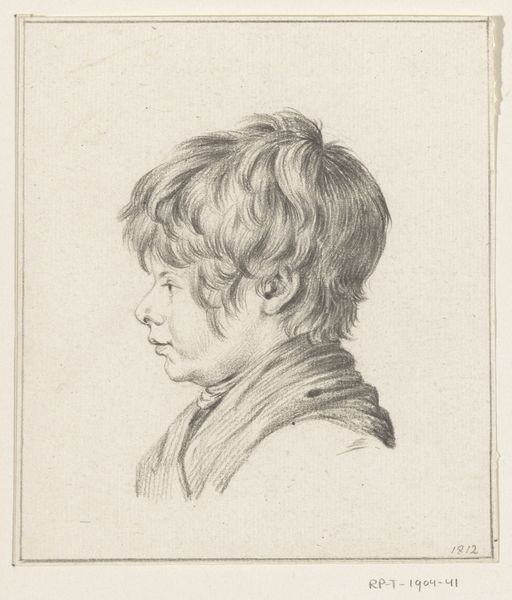
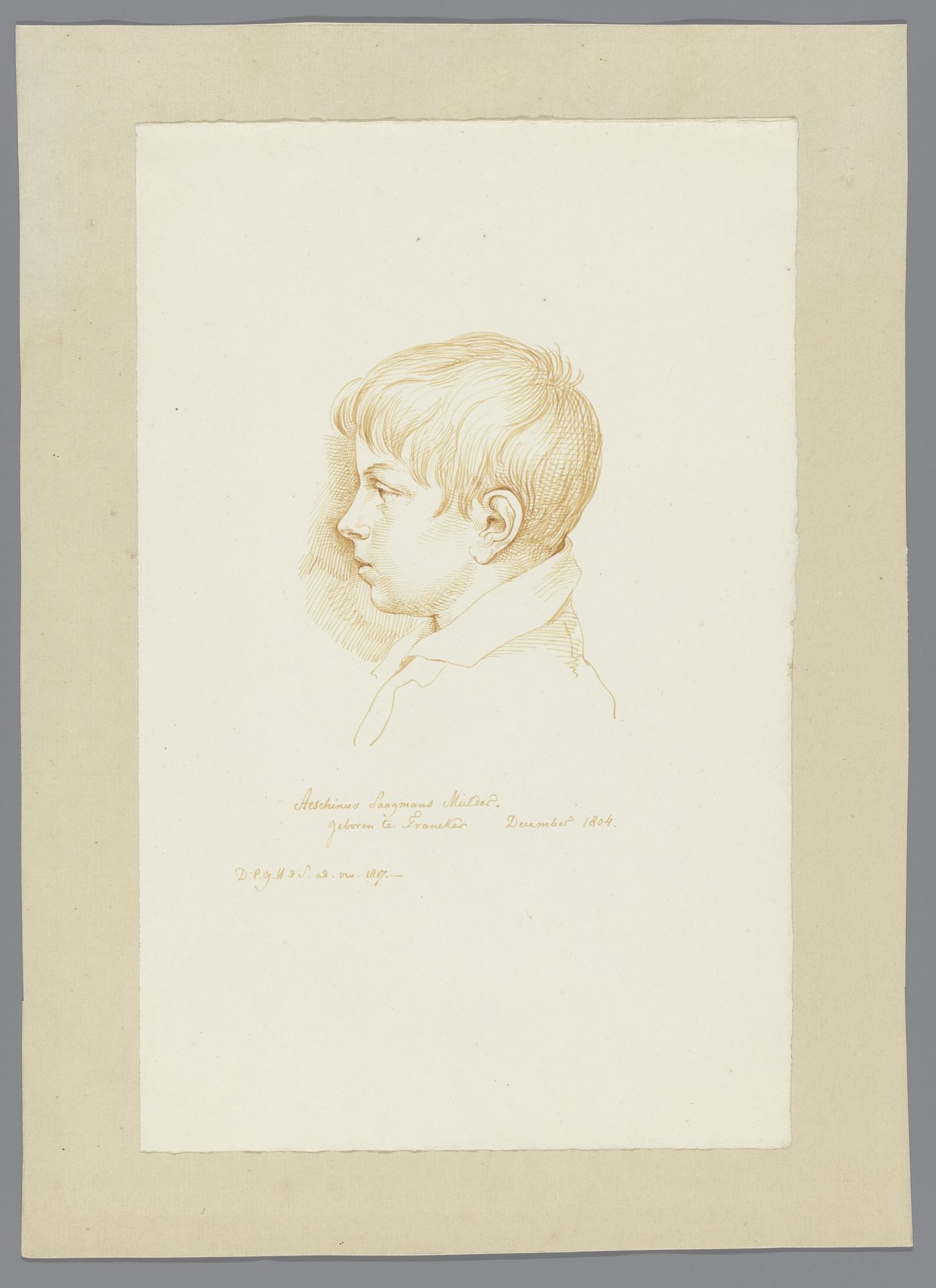
David-Pierre Giottino Humbert de Superville made this portrait of Aeschinus Saagmans Mulder using pen in brown ink in December 1818. Superville was a Dutch artist with a strong interest in the relationship between art and science. This drawing, housed at the Rijksmuseum, reflects the period's fascination with physiognomy, the idea that one's character could be read in their facial features. During the late 18th and early 19th centuries, it was thought that the face could reveal inner truths, aligning with the era’s obsession with categorizing and understanding human nature. Notice the careful attention to the boy’s profile. This isn’t just a record of appearance; it attempts to capture an essence, a personality. The Rijksmuseum itself, as a national institution, plays a role in shaping how we understand Dutch identity and history. A portrait like this, displayed within its walls, gains new layers of meaning, becoming not just an individual likeness but a cultural artifact. To understand this work better, consider exploring 19th-century texts on physiognomy and the history of the Rijksmuseum. Art, after all, exists within specific social and institutional contexts, offering unique insights into the world that created it.
Portret van Aeschinus Saagmans Mulder 1817

David-Pierre Giottino Humbert de Superville
1770 - 1849Location
RijksmuseumArtwork details
- Medium
- drawing, paper, pencil
- Dimensions
- height 330 mm, width 210 mm
- Location
- Rijksmuseum
- Copyright
- Rijks Museum: Open Domain
Tags
portrait
drawing
neoclacissism
figuration
paper
form
romanticism
pencil
line
realism
Comments
No comments
About this artwork
David-Pierre Giottino Humbert de Superville made this portrait of Aeschinus Saagmans Mulder using pen in brown ink in December 1818. Superville was a Dutch artist with a strong interest in the relationship between art and science. This drawing, housed at the Rijksmuseum, reflects the period's fascination with physiognomy, the idea that one's character could be read in their facial features. During the late 18th and early 19th centuries, it was thought that the face could reveal inner truths, aligning with the era’s obsession with categorizing and understanding human nature. Notice the careful attention to the boy’s profile. This isn’t just a record of appearance; it attempts to capture an essence, a personality. The Rijksmuseum itself, as a national institution, plays a role in shaping how we understand Dutch identity and history. A portrait like this, displayed within its walls, gains new layers of meaning, becoming not just an individual likeness but a cultural artifact. To understand this work better, consider exploring 19th-century texts on physiognomy and the history of the Rijksmuseum. Art, after all, exists within specific social and institutional contexts, offering unique insights into the world that created it.
Comments
No comments