About this artwork
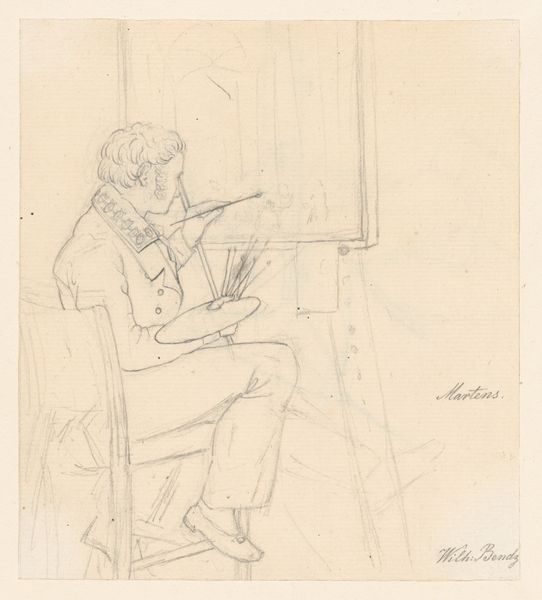
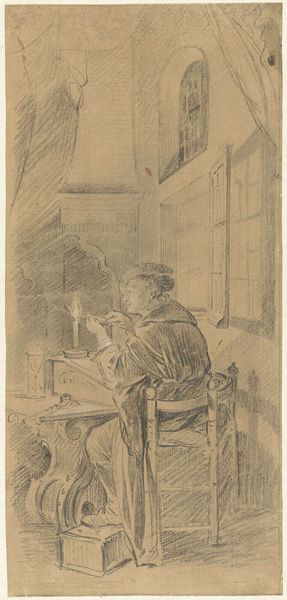
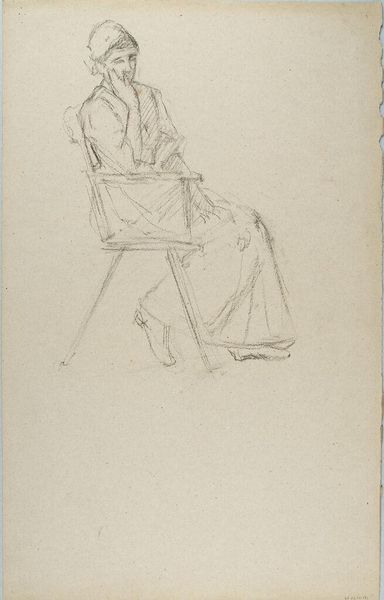
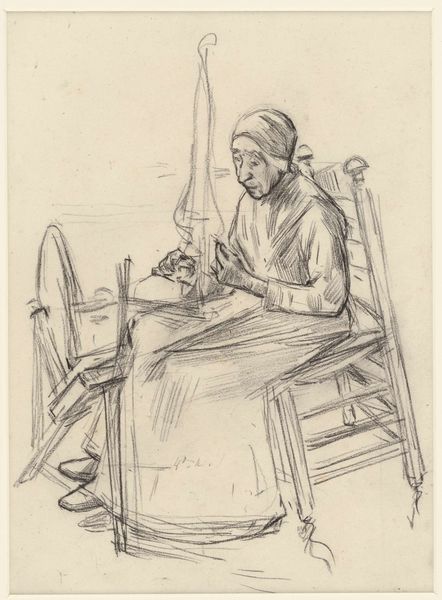
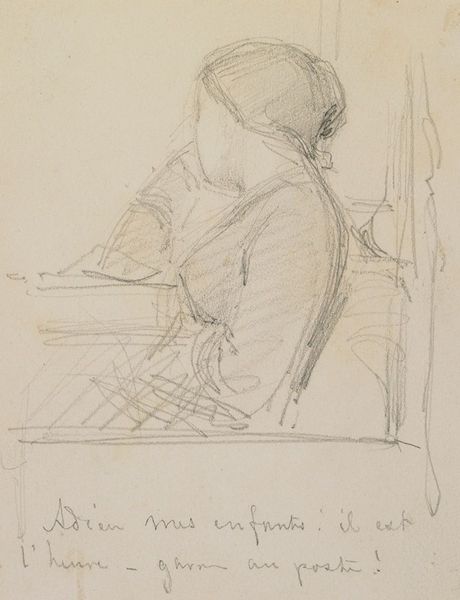
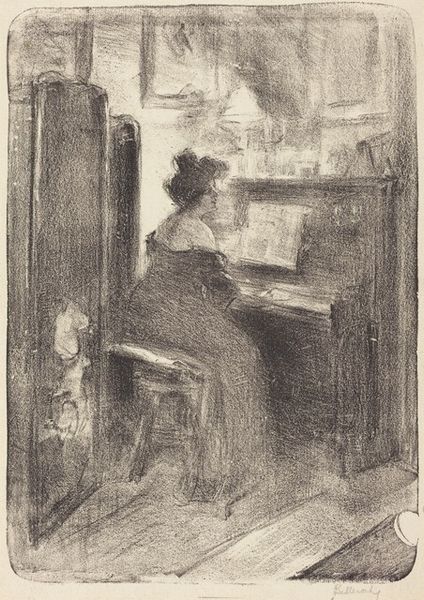
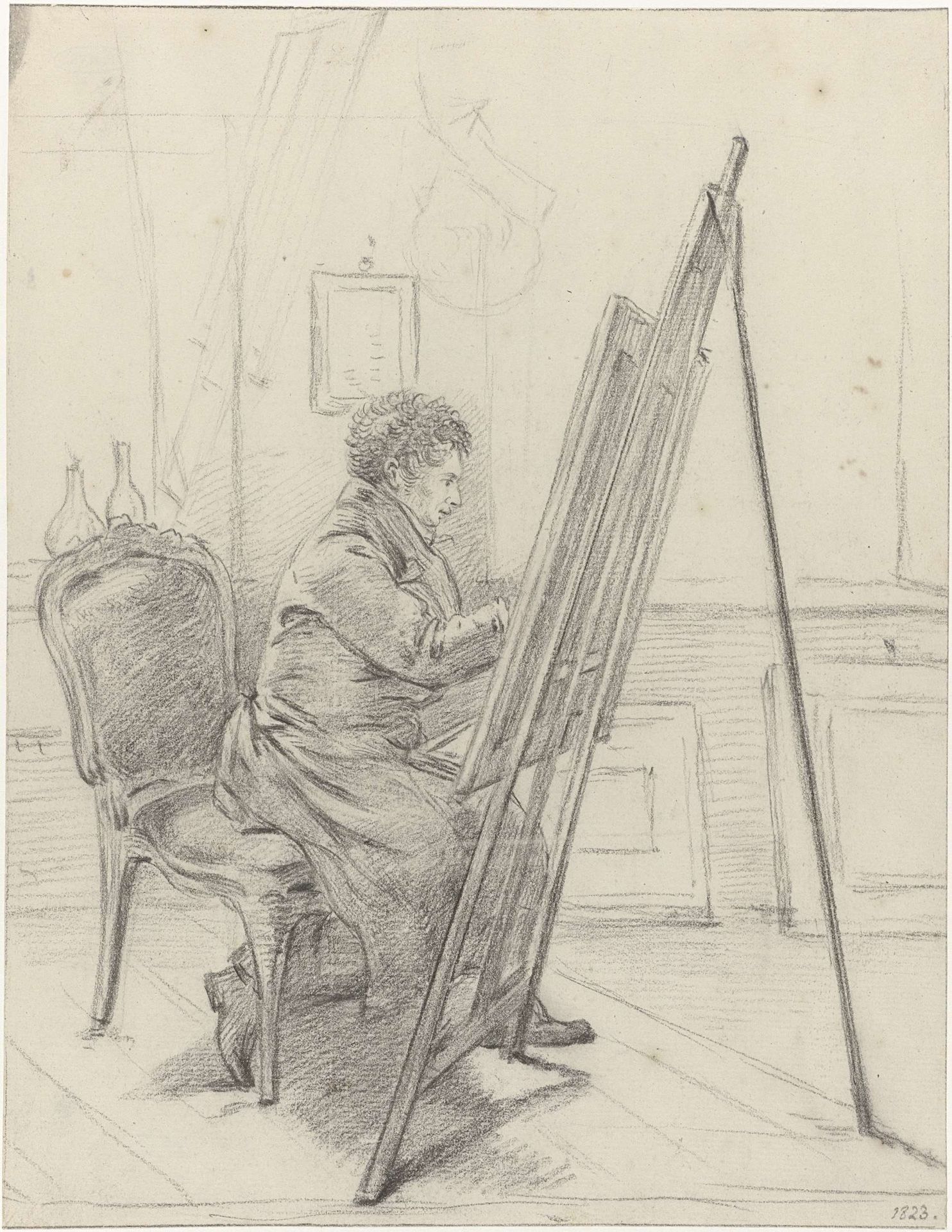
Jean Bernard’s portrait, made in 1823, captures Gerrit Jan Michaëlis at work in his studio. The drawing’s creation involved a simple yet effective process: graphite on paper. The character of the graphite pencil defines the image. Thin, precise lines sketch the contours of Michaëlis and his surroundings, while heavier shading adds depth and volume. This technique, relying on subtle gradations of tone, evokes the atmosphere of the artist's workspace. We see the tools of his trade: the easel, the framed canvases stacked against the wall. The materiality of the drawing speaks to the artistic practice of the time, where sketching was fundamental to the creative process. By focusing on the artist in his environment, Bernard elevates the everyday act of making art. It's a scene of labor, skill, and the quiet dedication required to produce art. This emphasis reminds us that art is not just about the final product, but also the process and the artist's engagement with their materials.
Portret van Gerrit Jan Michaëlis, zittend voor ezel in zijn atelier
1823

Jean Bernard
1765 - 1833Location
RijksmuseumArtwork details
- Medium
- drawing, pencil
- Dimensions
- height 291 mm, width 226 mm
- Location
- Rijksmuseum
- Copyright
- Rijks Museum: Open Domain
Tags
Comments
Share your thoughts
About this artwork
Jean Bernard’s portrait, made in 1823, captures Gerrit Jan Michaëlis at work in his studio. The drawing’s creation involved a simple yet effective process: graphite on paper. The character of the graphite pencil defines the image. Thin, precise lines sketch the contours of Michaëlis and his surroundings, while heavier shading adds depth and volume. This technique, relying on subtle gradations of tone, evokes the atmosphere of the artist's workspace. We see the tools of his trade: the easel, the framed canvases stacked against the wall. The materiality of the drawing speaks to the artistic practice of the time, where sketching was fundamental to the creative process. By focusing on the artist in his environment, Bernard elevates the everyday act of making art. It's a scene of labor, skill, and the quiet dedication required to produce art. This emphasis reminds us that art is not just about the final product, but also the process and the artist's engagement with their materials.
Comments
Share your thoughts