About this artwork
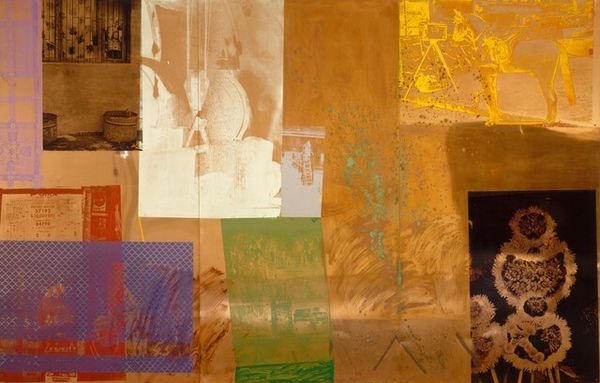
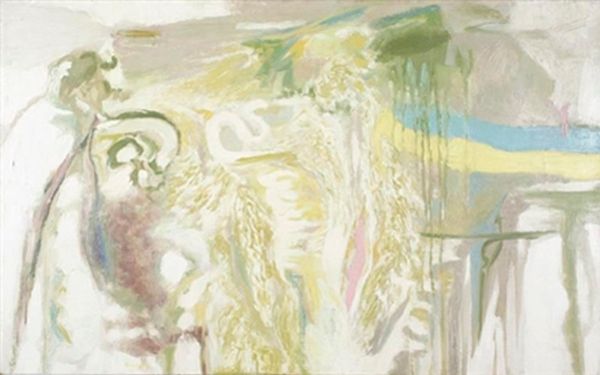
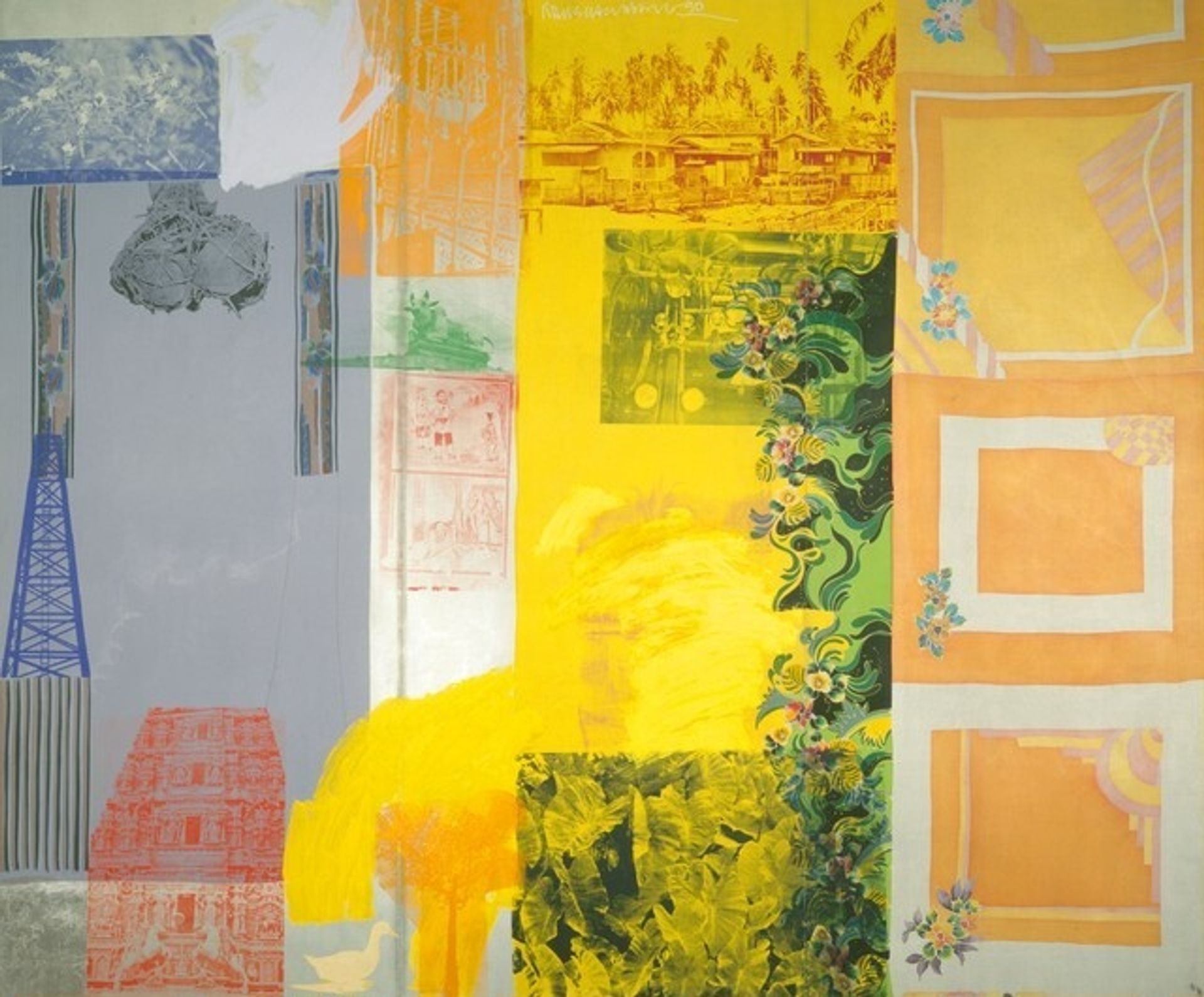
Robert Rauschenberg made this large-scale painting, Malaysian Flower Cave/ROCI MALAYSIA, with screen-printing, collage, and paint. It's like Rauschenberg is building a world with fragments. The way he layers images— architectural motifs, landscapes, and decorative borders – creates a sense of depth and movement, almost like flipping through channels on an old TV. The colors, muted yellows and grays, give it a dreamlike, almost nostalgic quality. I’m really drawn to the section with the cascading yellow paint, where the color seems to bleed into the other images. It reminds me that art-making is a process of constant change and adaptation. Rauschenberg’s approach is similar to what I’m trying to do with my own paintings, embracing chance and letting the materials speak for themselves. It also reminds me a little of Sigmar Polke, in the way he combines high and low art, found images and personal expression, to create a complex, layered experience. The work invites us to keep looking, keep questioning, and find our own way through the maze.
Malaysian Flower Cave/ROCI MALAYSIA
1990


Artwork details
- Dimensions
- overall: 306.8 x 367.7 cm (120 13/16 x 144 3/4 in.)
- Copyright
- National Gallery of Art: CC0 1.0
Tags
Comments
Share your thoughts
About this artwork
Robert Rauschenberg made this large-scale painting, Malaysian Flower Cave/ROCI MALAYSIA, with screen-printing, collage, and paint. It's like Rauschenberg is building a world with fragments. The way he layers images— architectural motifs, landscapes, and decorative borders – creates a sense of depth and movement, almost like flipping through channels on an old TV. The colors, muted yellows and grays, give it a dreamlike, almost nostalgic quality. I’m really drawn to the section with the cascading yellow paint, where the color seems to bleed into the other images. It reminds me that art-making is a process of constant change and adaptation. Rauschenberg’s approach is similar to what I’m trying to do with my own paintings, embracing chance and letting the materials speak for themselves. It also reminds me a little of Sigmar Polke, in the way he combines high and low art, found images and personal expression, to create a complex, layered experience. The work invites us to keep looking, keep questioning, and find our own way through the maze.
Comments
Share your thoughts