About this artwork
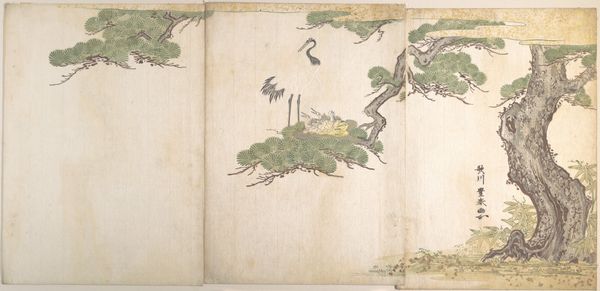
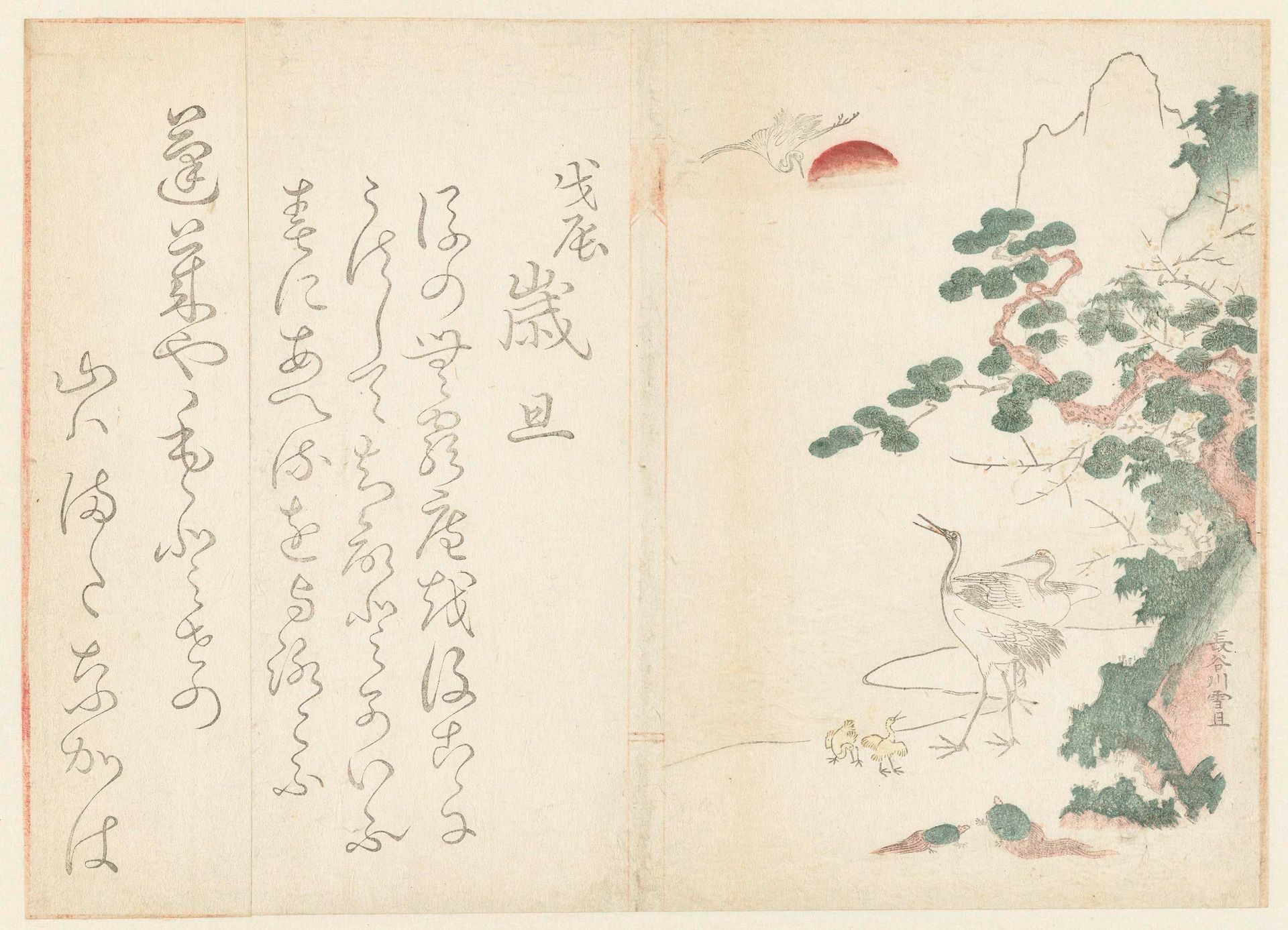
Hasegawa Settan created this print, "A Family of Cranes," sometime before his death in 1843. The image contains a wealth of symbols, most prominently the crane itself. In Japanese and East Asian art, the crane is a profound symbol, representing longevity, happiness, and marital fidelity. Often depicted with pine trees and the rising sun, as we see here, it reinforces themes of long life and good fortune. Look at the positioning of the cranes: the adult looking after its young, a universal symbol of parental care. The inclusion of this familial element adds layers of meaning—evoking a sense of continuity and legacy. Think of other instances where the crane appears in art and folklore—across cultures, birds often embody the soul or serve as messengers between worlds. Their presence taps into deep-seated human emotions, a psychological resonance passed down through generations. It is a powerful reminder of how symbols persist, evolve, and resurface, echoing through time.

Artwork details
- Medium
- drawing, paper, watercolor, ink
- Dimensions
- height 184 mm, width 256 mm
- Copyright
- Rijks Museum: Open Domain
Tags
Comments
Share your thoughts
About this artwork
Hasegawa Settan created this print, "A Family of Cranes," sometime before his death in 1843. The image contains a wealth of symbols, most prominently the crane itself. In Japanese and East Asian art, the crane is a profound symbol, representing longevity, happiness, and marital fidelity. Often depicted with pine trees and the rising sun, as we see here, it reinforces themes of long life and good fortune. Look at the positioning of the cranes: the adult looking after its young, a universal symbol of parental care. The inclusion of this familial element adds layers of meaning—evoking a sense of continuity and legacy. Think of other instances where the crane appears in art and folklore—across cultures, birds often embody the soul or serve as messengers between worlds. Their presence taps into deep-seated human emotions, a psychological resonance passed down through generations. It is a powerful reminder of how symbols persist, evolve, and resurface, echoing through time.
Comments
Share your thoughts