About this artwork
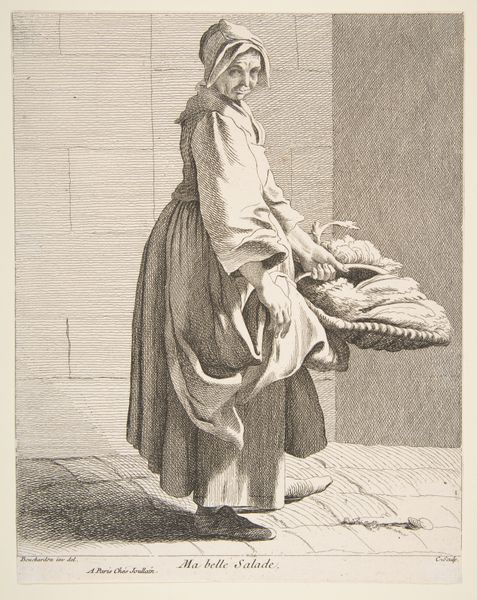
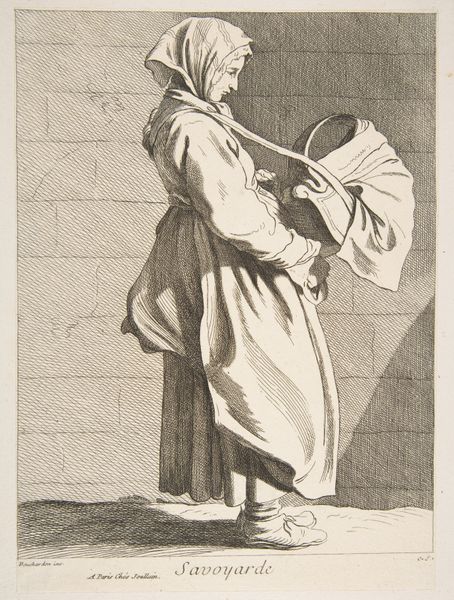
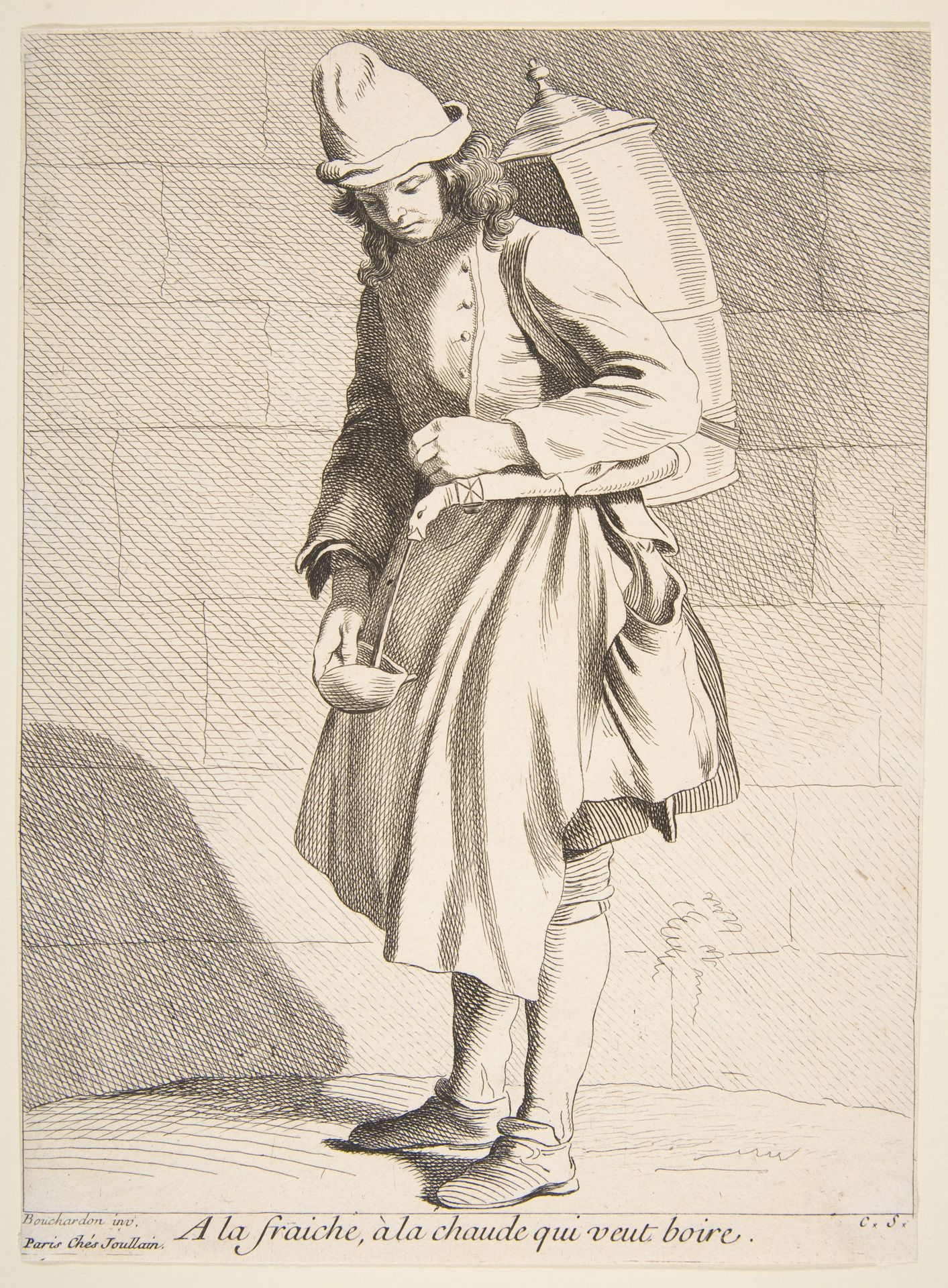
This print, ‘Drinks Vendor,’ was made by Anne Claude Philippe Caylus, probably in the mid-18th century. It's rendered in a graphic technique called etching, which involves using acid to bite lines into a metal plate. Ink is then pressed into these lines to create an image. Look closely, and you'll see how Caylus has used the etched line to describe a person who is very much a part of the streetscape – a vendor who carries his wares on his back, offering drinks “hot or cold,” according to the caption. Prints like this were produced in multiples, almost like a form of social media. Caylus's choice of etching – a relatively inexpensive process – made it possible to distribute this image widely. It reflects the burgeoning world of commerce, where even basic needs like a refreshing drink became commodities, sold by individuals working hard to make a living. So, the next time you buy a bottle of water, remember this vendor, and the long history of labor and enterprise that connects us all.
Drinks Vendor
1737

Anne Claude Philippe Caylus
1692 - 1765
The Metropolitan Museum of Art
Metropolitan Museum of Art, New York, NYArtwork details
- Medium
- drawing, print, engraving
- Dimensions
- Sheet: 9 5/16 × 6 13/16 in. (23.7 × 17.3 cm) Image: 9 in. × 6 3/4 in. (22.8 × 17.1 cm)
- Location
- Metropolitan Museum of Art, New York, NY
- Copyright
- Public Domain
Tags
Comments
Share your thoughts
About this artwork
This print, ‘Drinks Vendor,’ was made by Anne Claude Philippe Caylus, probably in the mid-18th century. It's rendered in a graphic technique called etching, which involves using acid to bite lines into a metal plate. Ink is then pressed into these lines to create an image. Look closely, and you'll see how Caylus has used the etched line to describe a person who is very much a part of the streetscape – a vendor who carries his wares on his back, offering drinks “hot or cold,” according to the caption. Prints like this were produced in multiples, almost like a form of social media. Caylus's choice of etching – a relatively inexpensive process – made it possible to distribute this image widely. It reflects the burgeoning world of commerce, where even basic needs like a refreshing drink became commodities, sold by individuals working hard to make a living. So, the next time you buy a bottle of water, remember this vendor, and the long history of labor and enterprise that connects us all.
Comments
Share your thoughts