About this artwork
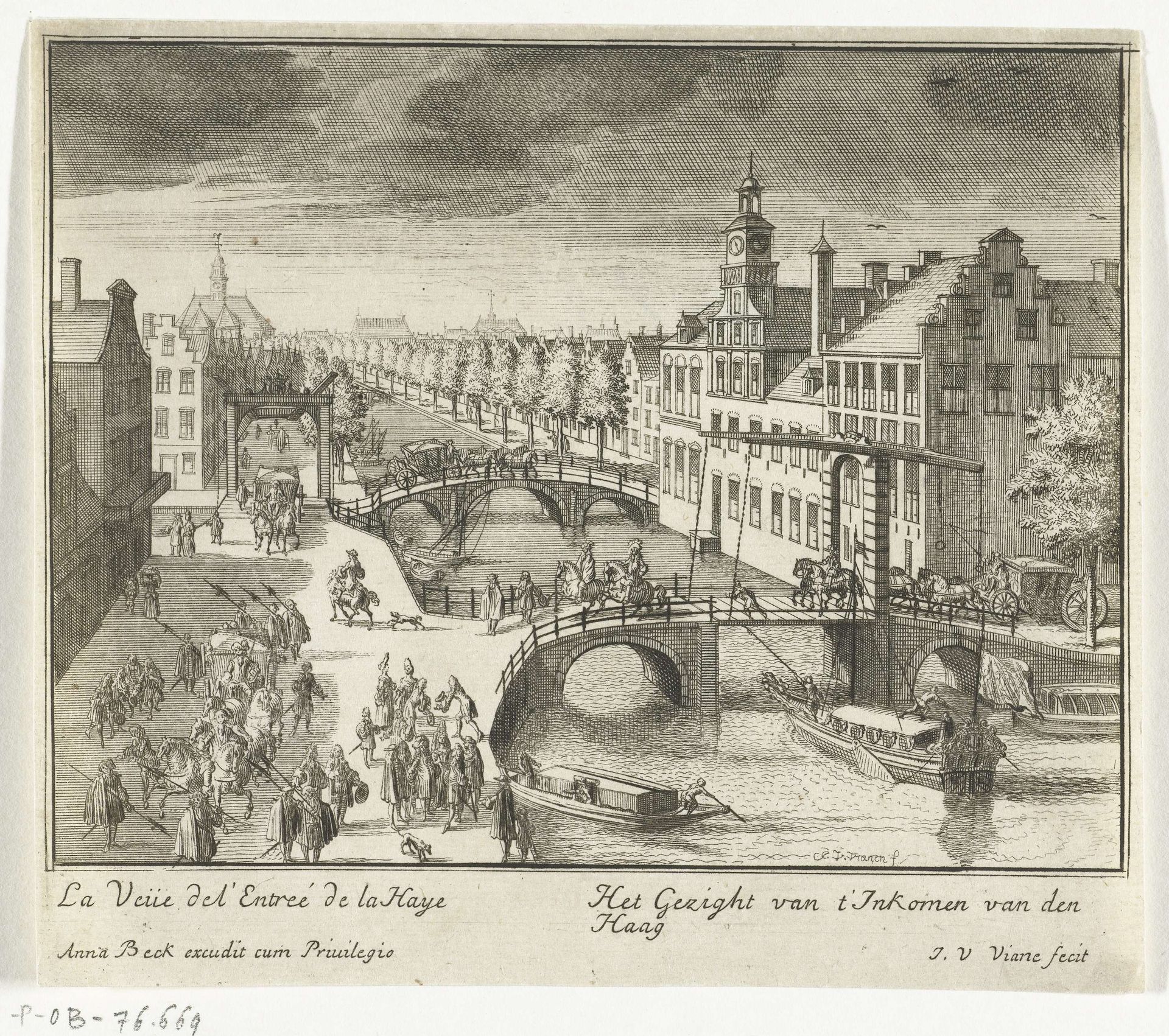
Jan van Vianen created this print in 1697, capturing a scene at the entrance of The Hague. Dominating the foreground are figures with spears, a classical symbol of civic power, reminiscent of Roman legions guarding city entrances. This motif of armed figures as city guardians echoes through history. Consider the ancient Greek city-states, where armed citizens were seen as protectors of democracy. In Vianen’s print, however, these figures take on a more formal, ceremonial role, reflecting the structured society of the Dutch Republic. This image engages us on a subconscious level; the orderly arrangement of figures and buildings conveys a sense of security and controlled power. Yet, the presence of armed men also hints at potential tensions. Such displays of power often reflect underlying anxieties about maintaining social order. This tension between order and the threat of disorder is a recurring theme in art, engaging our collective memory of societal power dynamics. It reminds us that symbols can shift, reflecting both continuity and change in the human condition.
Gezicht bij het binnenkomen van Den Haag, 1697 1697

Jan van Vianen
1660 - 1726Location
RijksmuseumArtwork details
- Medium
- print, engraving
- Dimensions
- height 138 mm, width 157 mm
- Location
- Rijksmuseum
- Copyright
- Rijks Museum: Open Domain
Tags
dutch-golden-age
landscape
cityscape
engraving
Comments
No comments
About this artwork
Jan van Vianen created this print in 1697, capturing a scene at the entrance of The Hague. Dominating the foreground are figures with spears, a classical symbol of civic power, reminiscent of Roman legions guarding city entrances. This motif of armed figures as city guardians echoes through history. Consider the ancient Greek city-states, where armed citizens were seen as protectors of democracy. In Vianen’s print, however, these figures take on a more formal, ceremonial role, reflecting the structured society of the Dutch Republic. This image engages us on a subconscious level; the orderly arrangement of figures and buildings conveys a sense of security and controlled power. Yet, the presence of armed men also hints at potential tensions. Such displays of power often reflect underlying anxieties about maintaining social order. This tension between order and the threat of disorder is a recurring theme in art, engaging our collective memory of societal power dynamics. It reminds us that symbols can shift, reflecting both continuity and change in the human condition.
Comments
No comments