About this artwork
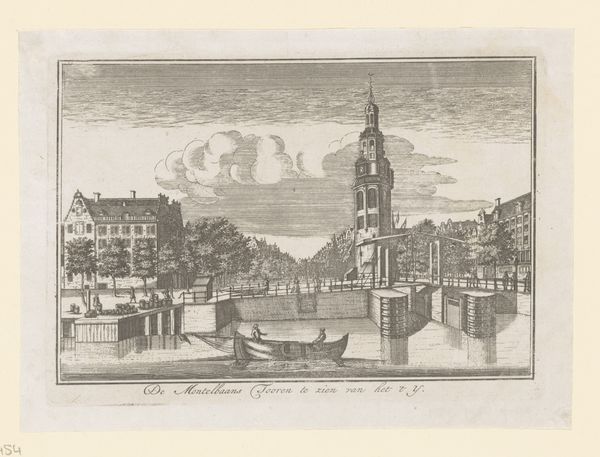
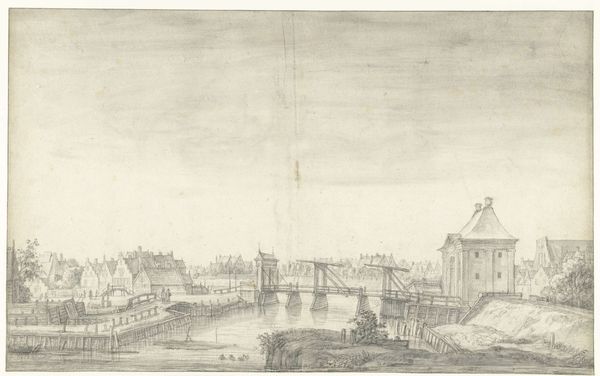
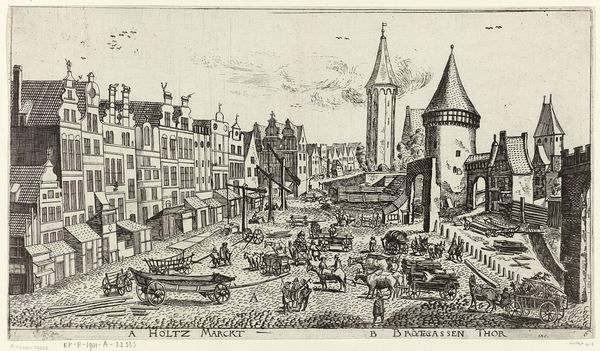
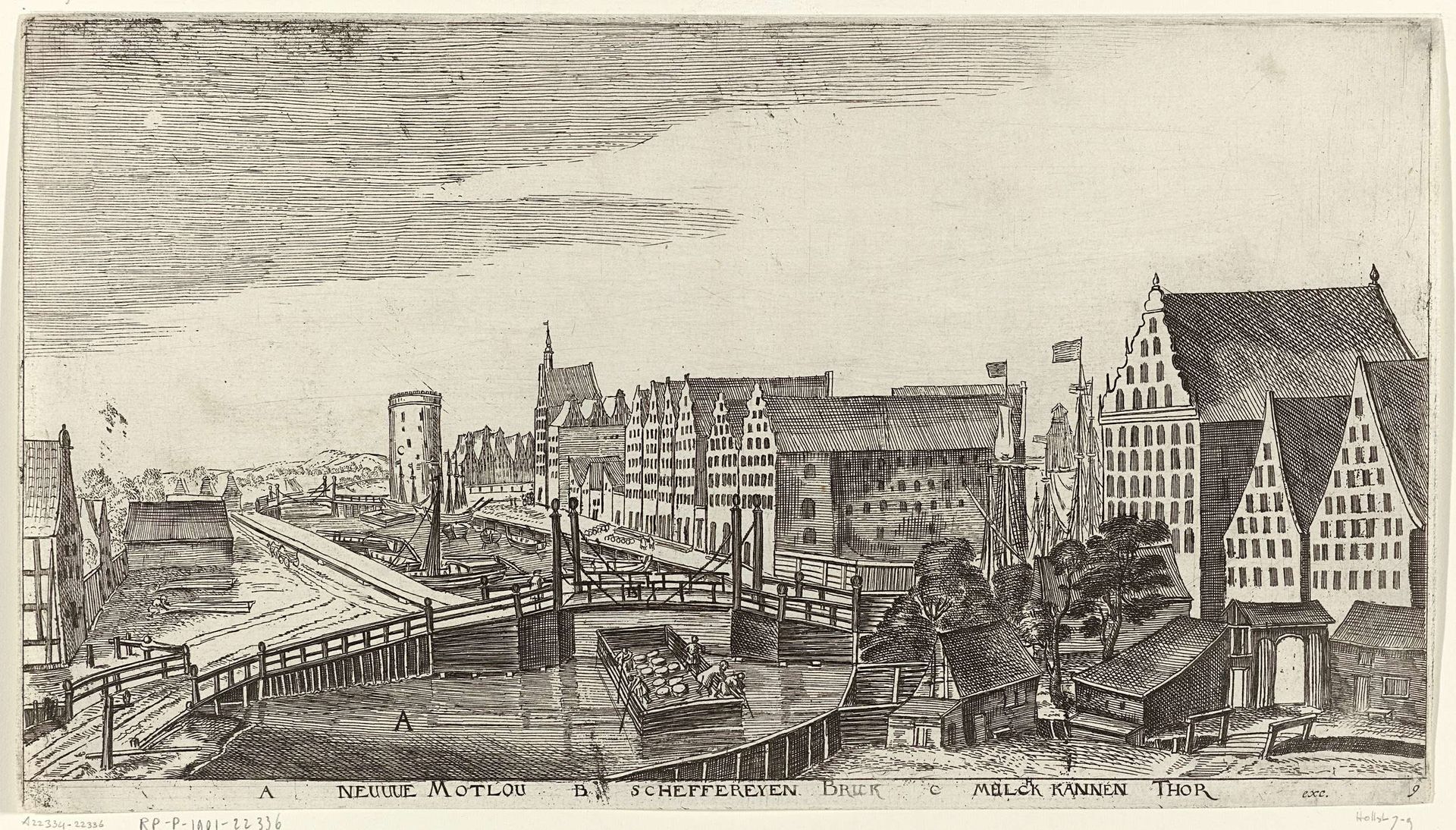
Aegidius Dickmann created this print of Danzig from the New Mottlau, featuring the Milk Can Tower, around the early 17th century. During this period, Danzig was a hub of trade and cultural exchange. Dickmann's print offers a glimpse into the city's thriving port and bustling waterways. The detailed depiction of the architecture speaks to a time of economic prosperity and civic pride. Consider the cultural identity embedded in this cityscape: Danzig, with its mix of German, Polish, and other European influences, was a melting pot. This print not only documents the physical landscape, but also implies social structures and daily life. How did the city's inhabitants experience and navigate this urban environment? Through Dickmann's detailed etching, we are invited to reflect on the narratives and histories that shape our understanding of place and identity.
Gezicht op Danzig vanaf de Nieuwe Mottlau, met in de verte de Melkkan-toren
1625

Aegidius Dickmann
1591Location
RijksmuseumArtwork details
- Medium
- print, engraving
- Dimensions
- height 175 mm, width 311 mm
- Location
- Rijksmuseum
- Copyright
- Rijks Museum: Open Domain
Tags
Comments
Share your thoughts
About this artwork
Aegidius Dickmann created this print of Danzig from the New Mottlau, featuring the Milk Can Tower, around the early 17th century. During this period, Danzig was a hub of trade and cultural exchange. Dickmann's print offers a glimpse into the city's thriving port and bustling waterways. The detailed depiction of the architecture speaks to a time of economic prosperity and civic pride. Consider the cultural identity embedded in this cityscape: Danzig, with its mix of German, Polish, and other European influences, was a melting pot. This print not only documents the physical landscape, but also implies social structures and daily life. How did the city's inhabitants experience and navigate this urban environment? Through Dickmann's detailed etching, we are invited to reflect on the narratives and histories that shape our understanding of place and identity.
Comments
Share your thoughts