drawing, paper, pencil
#
drawing
#
comic strip sketch
#
art-nouveau
#
quirky sketch
#
landscape
#
paper
#
personal sketchbook
#
idea generation sketch
#
sketchwork
#
geometric
#
pen-ink sketch
#
pencil
#
sketchbook drawing
#
storyboard and sketchbook work
#
sketchbook art
#
initial sketch
Copyright: Rijks Museum: Open Domain
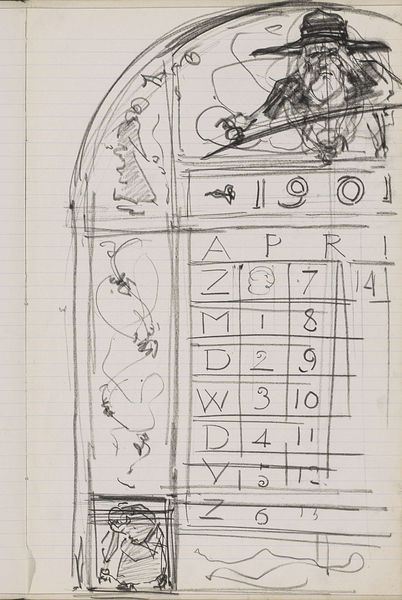
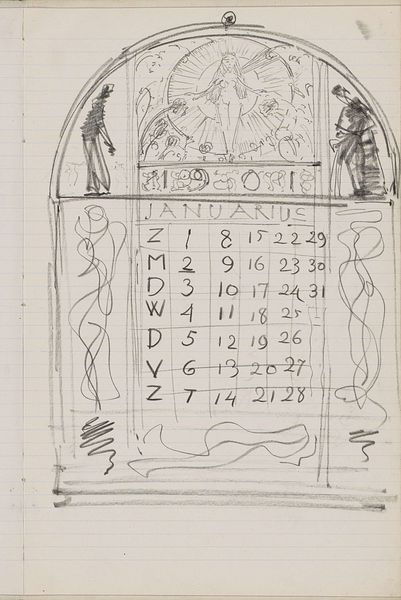
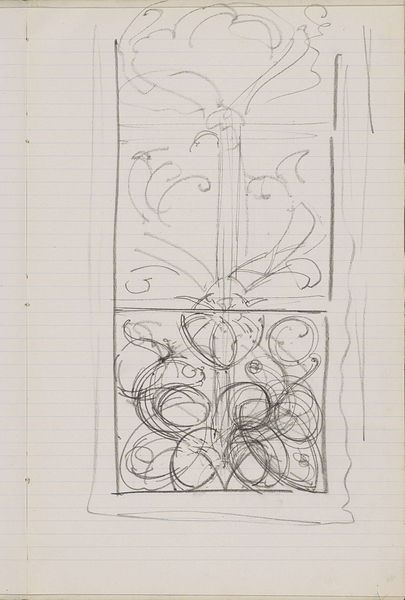
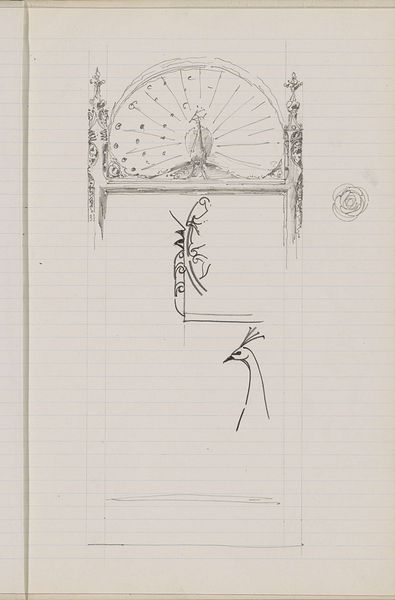
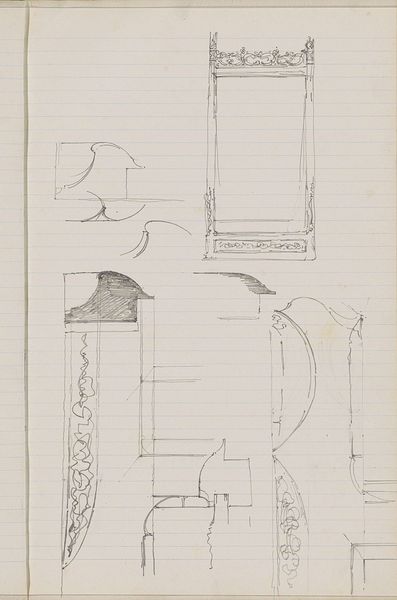
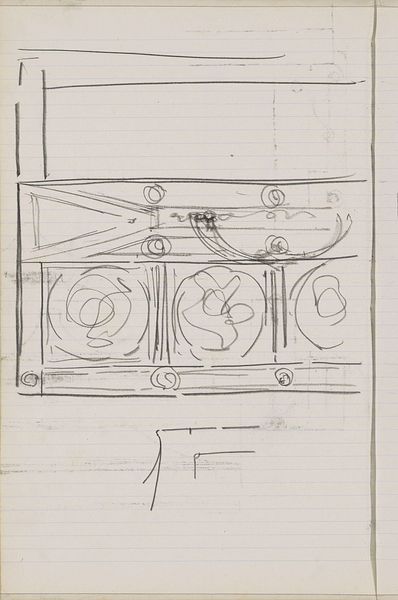
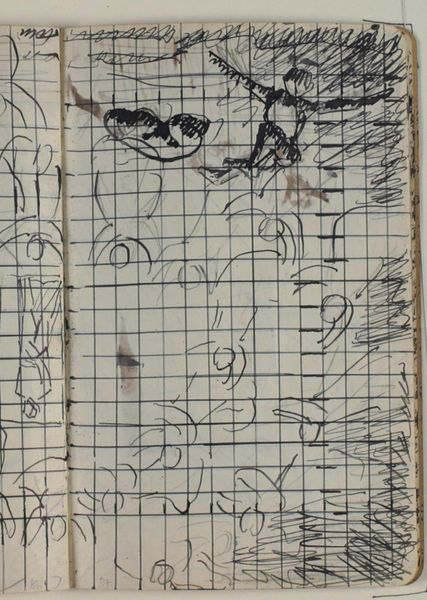
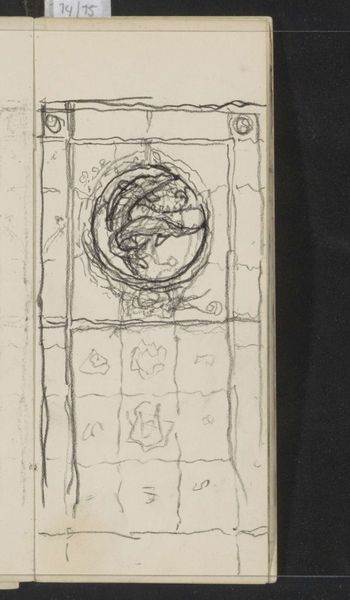
Curator: My gut reaction? This thing has major Edward Gorey vibes, right? Like, delightfully dark. Editor: You've landed on something. What we have here is “Ontwerp voor een kalender,” or Design for a Calendar, dating from around 1901 by Gerrit Willem Dijsselhof. It's a pencil and ink drawing on paper. Curator: It’s rough, like straight from the sketchbook. Look at those almost ghoulish figures flanking the calendar grid. There's an intentional playfulness amid the somewhat macabre theme. Editor: Absolutely, the visual language employed situates the work firmly within the Art Nouveau movement, but Dijsselhof was more than just an ornamentalist. If you examine the piece closely, you’ll note a tension. In the early 20th century, the rise of industrial society brought a need for systematic planning, represented by the regimented calendar itself. Yet, this is juxtaposed against organic and somewhat surreal elements, like those distorted figures on either side, thus challenging conventional societal boundaries. Curator: Well, and beyond societal, personal. I feel like a page torn out of somebody's head. There's a weird energy between those formal elements and these strange subconscious wisps. What even *are* those flowing shapes? It feels intensely personal, you know? Like an anxiety dream trying to masquerade as home decor. Editor: Dreams are critical here. This work resonates within broader artistic dialogues exploring themes of existential angst in times of significant change. Dijsselhof reflects these societal currents via personal reflection, grappling with rapidly transforming social, cultural, and philosophical frameworks. The question arises: Is this piece actually grappling with existential tension amid a changing world, or is that tension introduced by an over-reading through contemporary eyes? Curator: Good question! Still, it sticks with you. Makes you think about what you schedule and why. Like, am I just filling the grid or living, you know? It feels weirdly modern. Editor: Exactly, its exploration of planning, creativity, and the tensions between them gives the sketch lasting resonance. Curator: I'll say. Even a century later, it’s provoking thoughts about what really occupies our days.
Comments
No comments
Be the first to comment and join the conversation on the ultimate creative platform.
 Collect
 React
React Comment
More like this