About this artwork
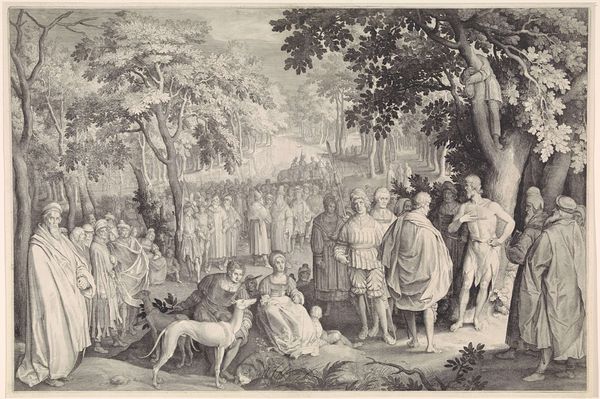
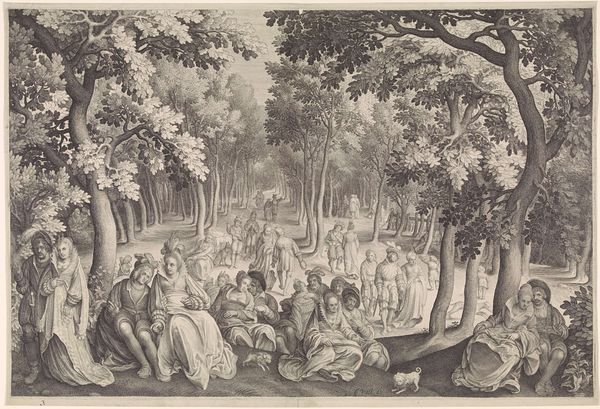
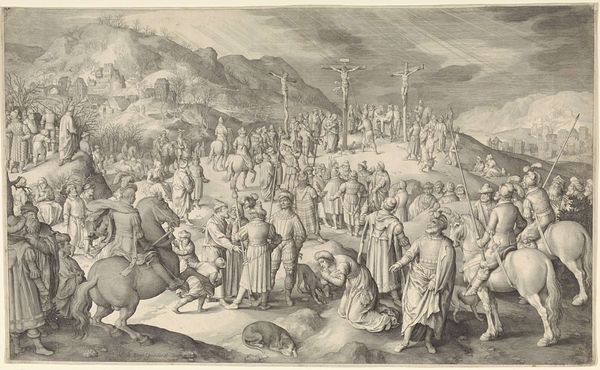
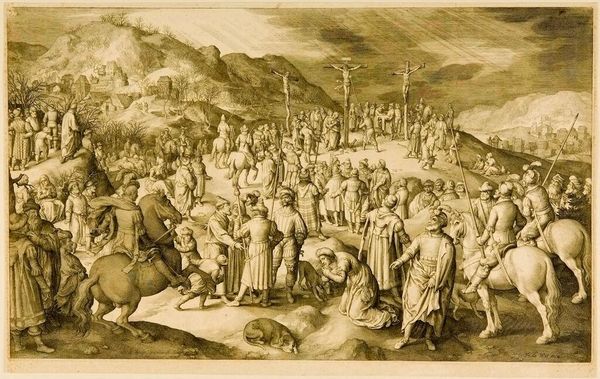
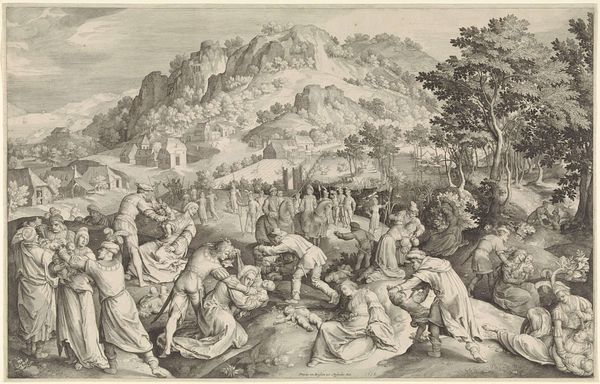
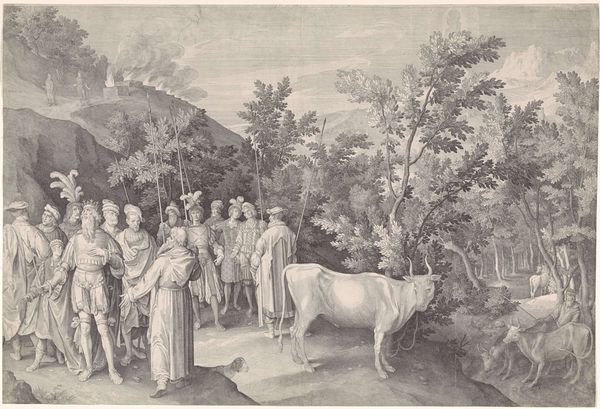
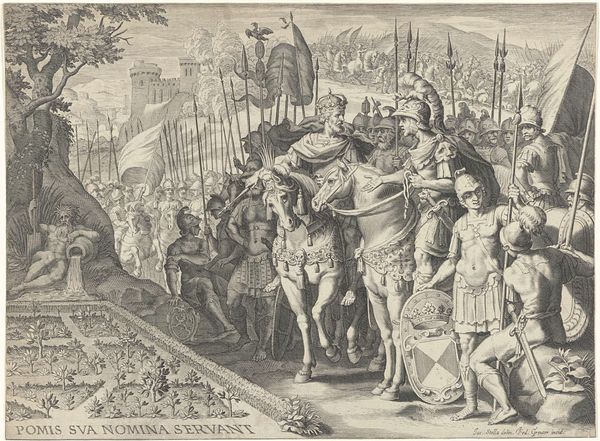
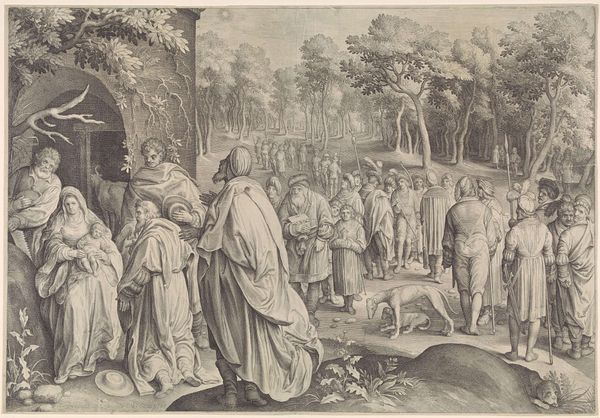
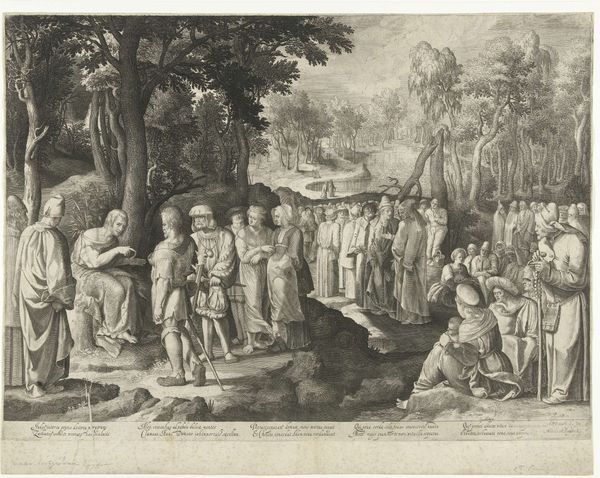
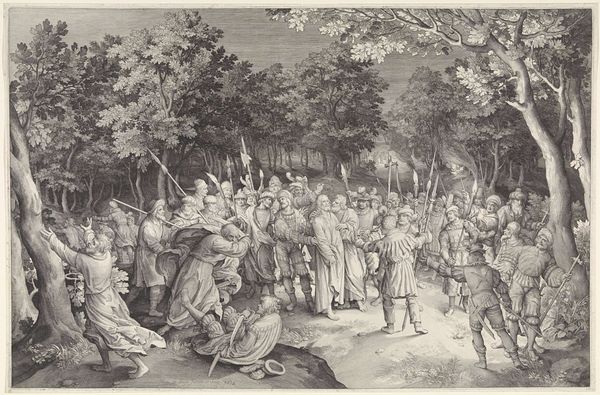
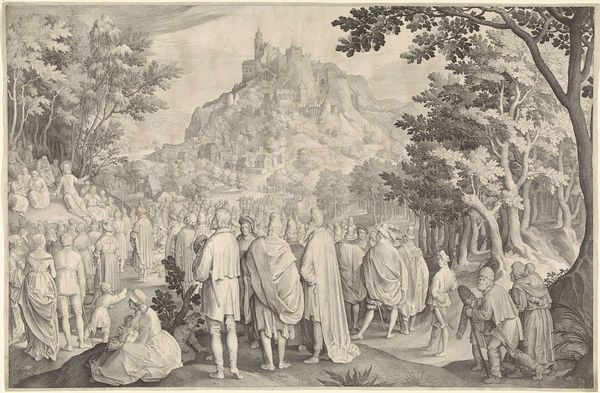
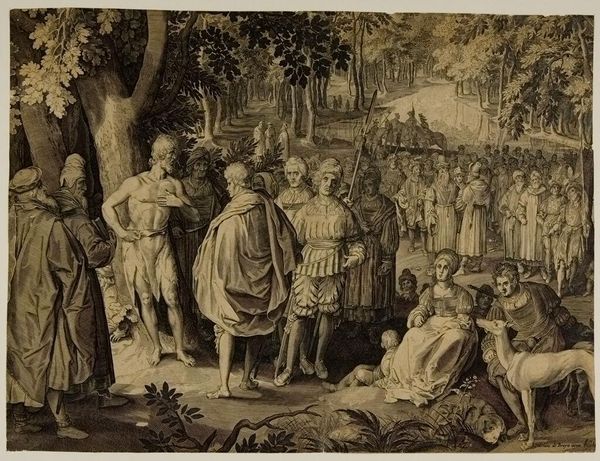
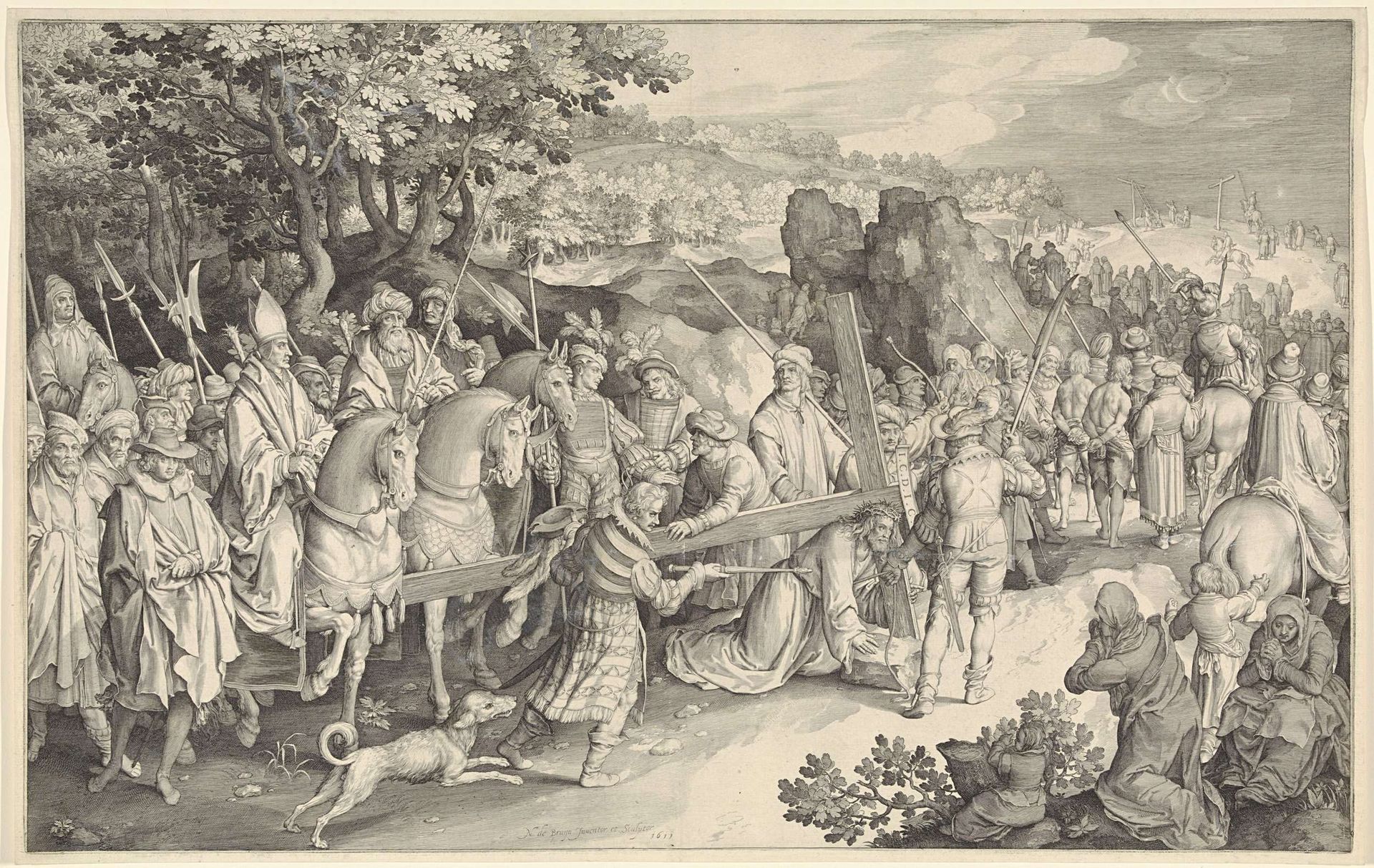
Nicolaes de Bruyn created this engraving, "Kruisdraging," sometime between 1571 and 1656. The monochromatic rendering immediately focuses our attention on the scene’s detailed composition and use of line. The procession, winding through the landscape, evokes a sense of movement, almost as though we're walking alongside the figures. De Bruyn masterfully uses the engraving technique to play with light and shadow, adding depth and texture. Look at the modulation of the lines which define the figures’ garments, creating a palpable sense of volume. It also guides our eyes through the composition, from the foreground figures to the distant landscape, subtly underscoring the theme of a spiritual journey. The artist’s intentional use of linear perspective and spatial arrangement invite us to consider the historical and cultural context of the work, a meditation on faith, suffering, and redemption. De Bruyn uses the language of form to communicate profound spiritual themes, and we're left to ponder the intersection of art, belief, and human experience.

Artwork details
- Medium
- drawing, print, ink, engraving
- Dimensions
- width 675 mm, height 424 mm
- Location
- Rijksmuseum
- Copyright
- Rijks Museum: Open Domain
Tags
drawing
narrative-art
pen drawing
mannerism
figuration
ink
history-painting
engraving
Comments
Be the first to share your thoughts about this work.
About this artwork
Nicolaes de Bruyn created this engraving, "Kruisdraging," sometime between 1571 and 1656. The monochromatic rendering immediately focuses our attention on the scene’s detailed composition and use of line. The procession, winding through the landscape, evokes a sense of movement, almost as though we're walking alongside the figures. De Bruyn masterfully uses the engraving technique to play with light and shadow, adding depth and texture. Look at the modulation of the lines which define the figures’ garments, creating a palpable sense of volume. It also guides our eyes through the composition, from the foreground figures to the distant landscape, subtly underscoring the theme of a spiritual journey. The artist’s intentional use of linear perspective and spatial arrangement invite us to consider the historical and cultural context of the work, a meditation on faith, suffering, and redemption. De Bruyn uses the language of form to communicate profound spiritual themes, and we're left to ponder the intersection of art, belief, and human experience.
Comments
Be the first to share your thoughts about this work.