About this artwork
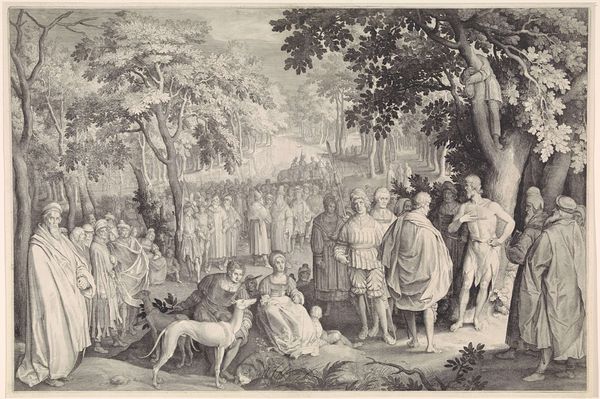
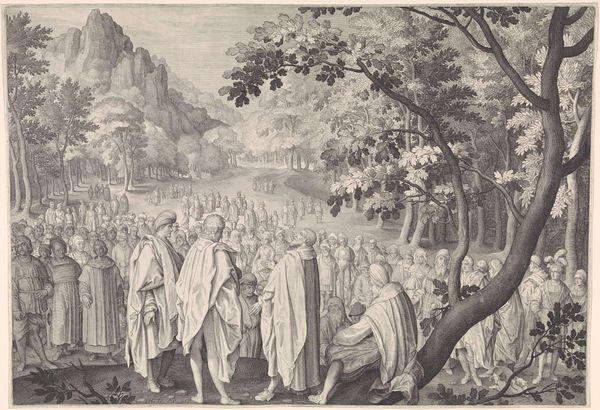
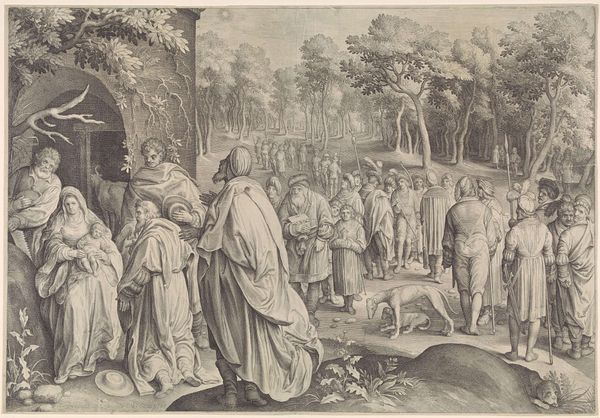
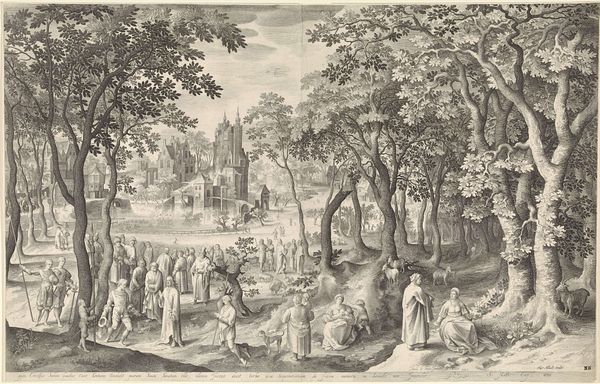
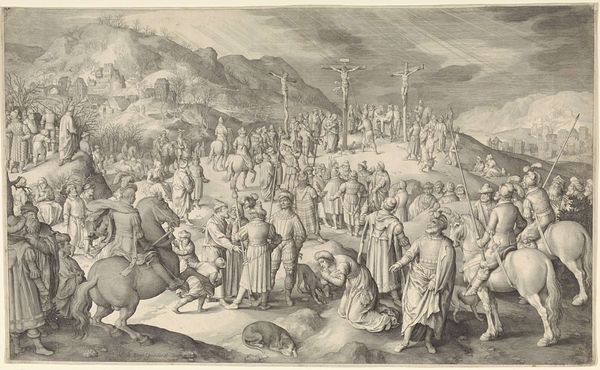
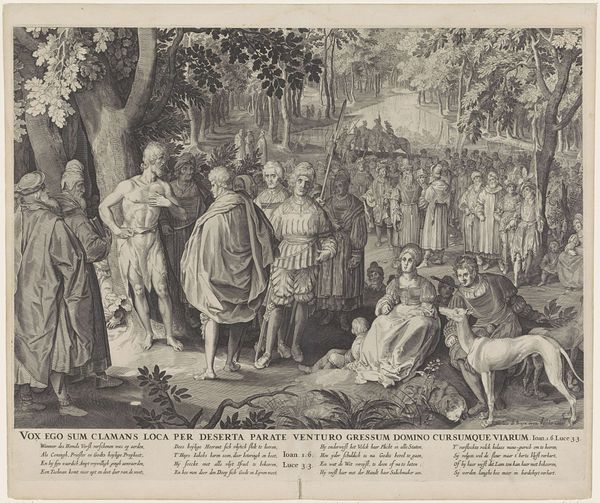
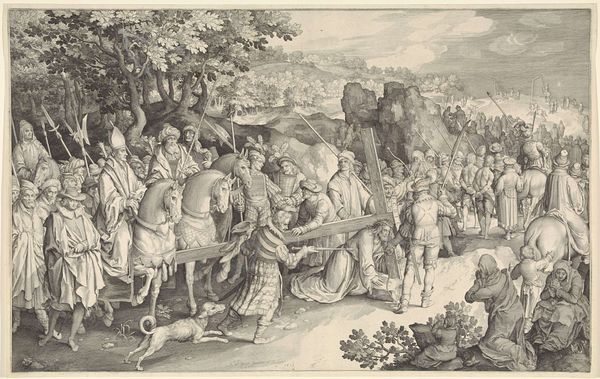
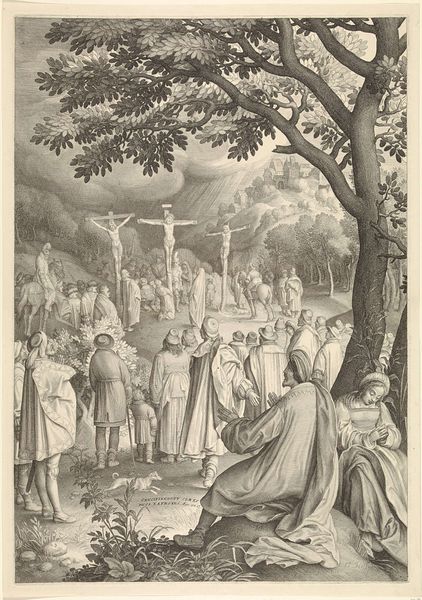
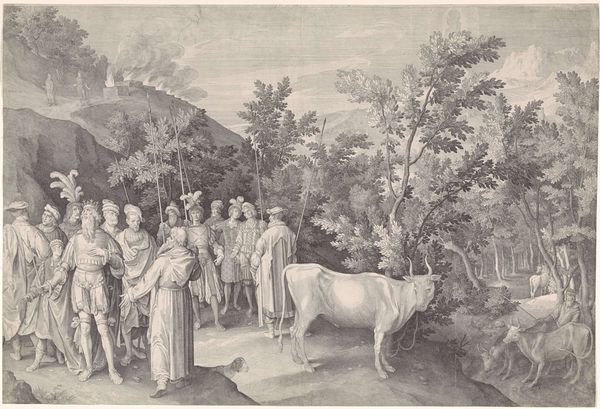
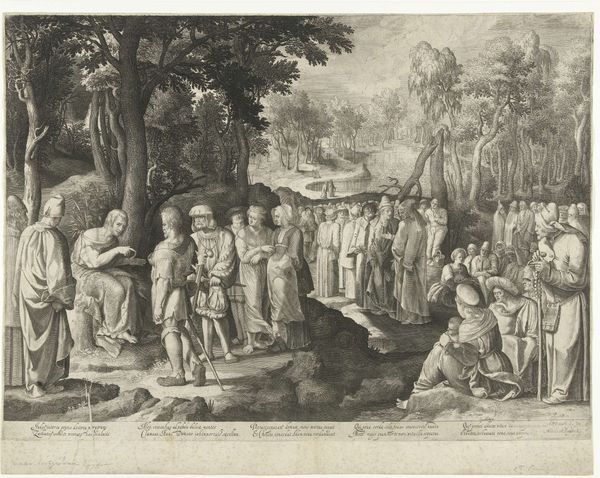
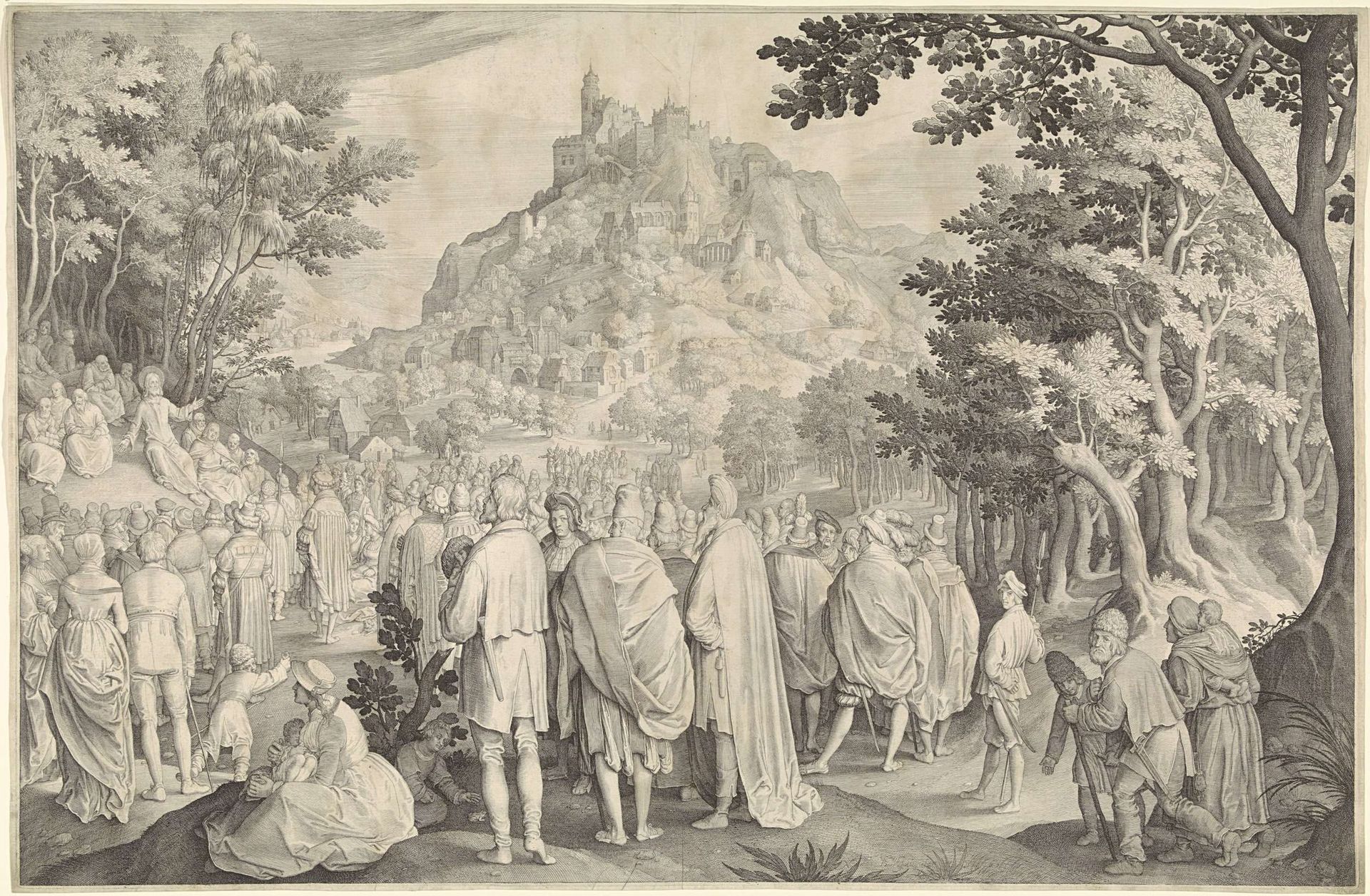
Nicolaes de Bruyn etched this rendering of the Sermon on the Mount, a pivotal scene from the Gospel of Matthew. Here, the radiant figure of Christ is shown delivering his teachings on a verdant hillside to a diverse crowd of listeners. The motif of the mountain is particularly potent. Mountains have long symbolized divine encounters. Think of Mount Sinai, where Moses received the Ten Commandments. In classical antiquity, high places were associated with the gods. This visual echoes through time. In earlier works the motif of the mountain was used to suggest the site of pagan temples. The artist has skillfully transposed this onto the biblical narrative. The crowd's varied reactions capture a range of human emotions—from reverence to contemplation. This speaks to the power of the image to tap into our collective memory, engaging viewers on a subconscious level. The symbolism of the mountain as a sacred space remains. It transcends cultural boundaries and evolves with new meanings. It serves as a testament to its enduring emotional and psychological resonance.

Artwork details
- Medium
- drawing, pen
- Dimensions
- width 684 mm, height 448 mm
- Location
- Rijksmuseum
- Copyright
- Rijks Museum: Open Domain
Tags
drawing
pen drawing
landscape
figuration
11_renaissance
pen
history-painting
northern-renaissance
Comments
Be the first to share your thoughts about this work.
About this artwork
Nicolaes de Bruyn etched this rendering of the Sermon on the Mount, a pivotal scene from the Gospel of Matthew. Here, the radiant figure of Christ is shown delivering his teachings on a verdant hillside to a diverse crowd of listeners. The motif of the mountain is particularly potent. Mountains have long symbolized divine encounters. Think of Mount Sinai, where Moses received the Ten Commandments. In classical antiquity, high places were associated with the gods. This visual echoes through time. In earlier works the motif of the mountain was used to suggest the site of pagan temples. The artist has skillfully transposed this onto the biblical narrative. The crowd's varied reactions capture a range of human emotions—from reverence to contemplation. This speaks to the power of the image to tap into our collective memory, engaging viewers on a subconscious level. The symbolism of the mountain as a sacred space remains. It transcends cultural boundaries and evolves with new meanings. It serves as a testament to its enduring emotional and psychological resonance.
Comments
Be the first to share your thoughts about this work.