1701
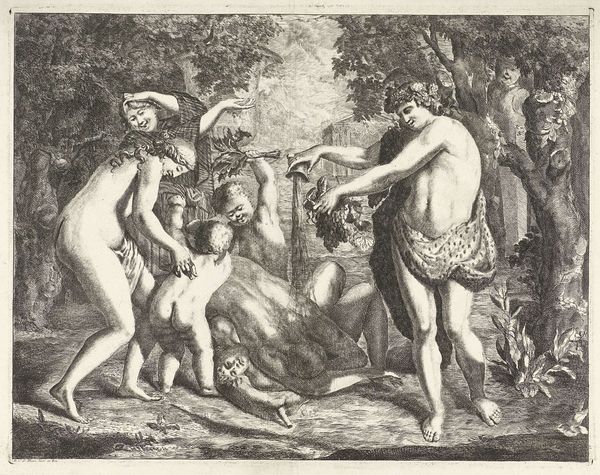
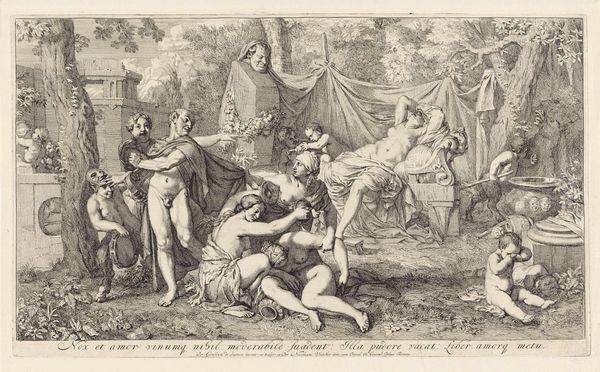
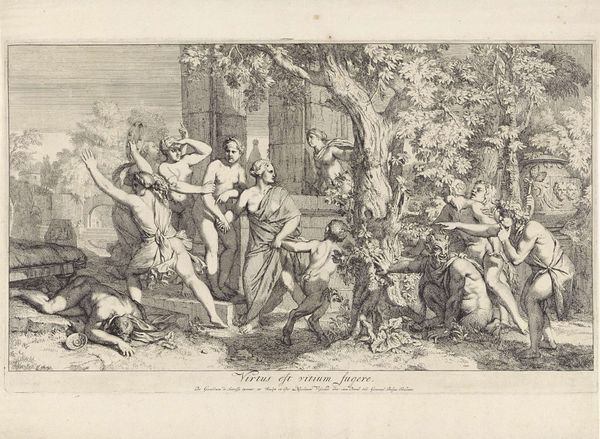
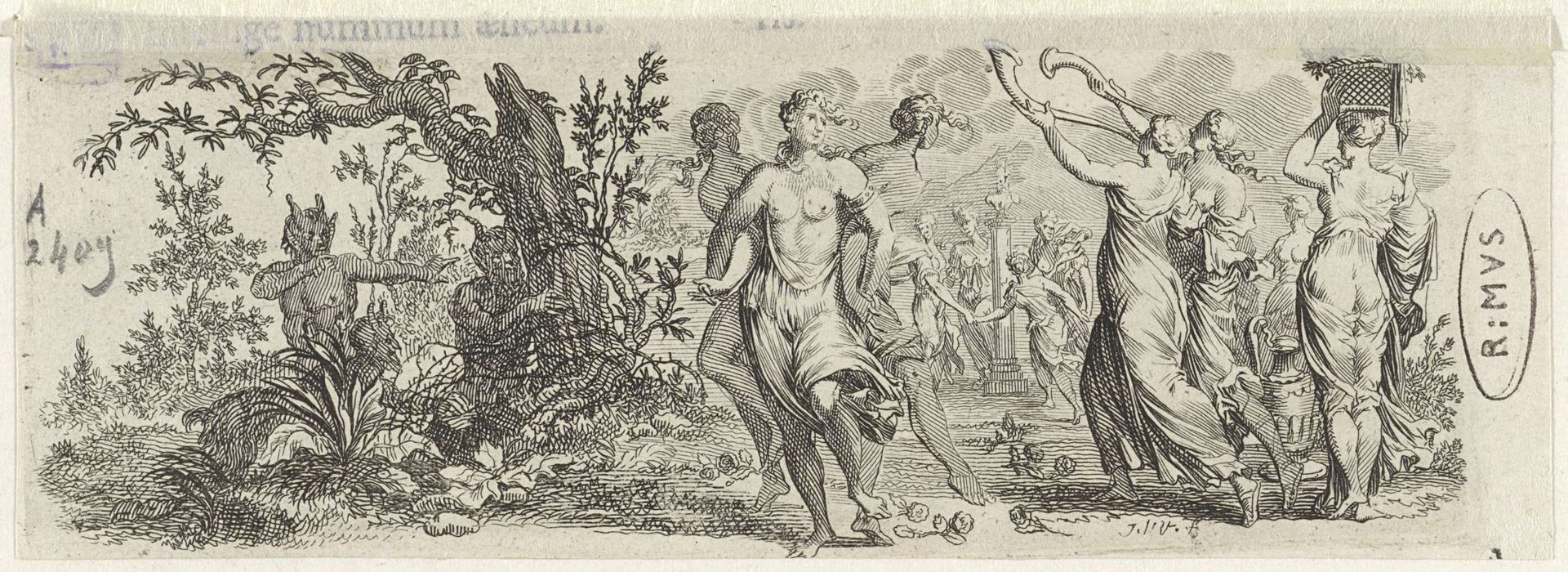
Dansende nimfen door saters bespied

Jan van Vianen
1660 - 1726Location
RijksmuseumListen to curator's interpretation
Curatorial notes
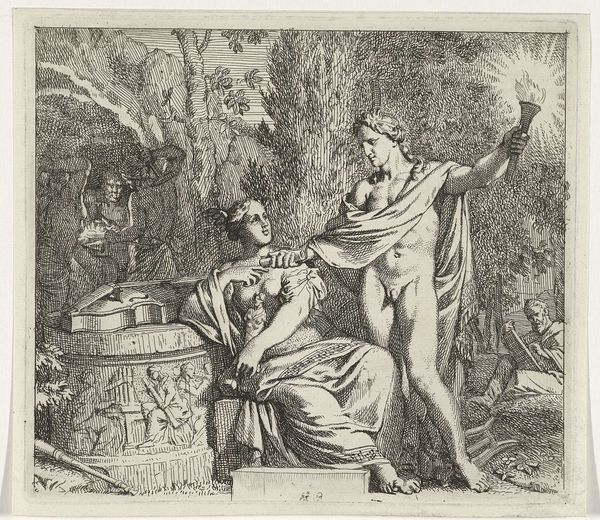
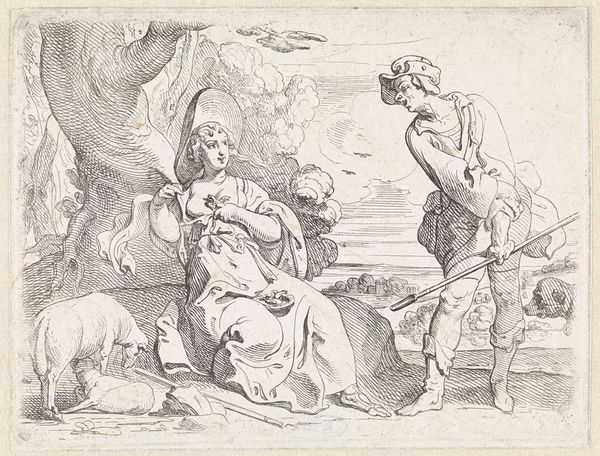
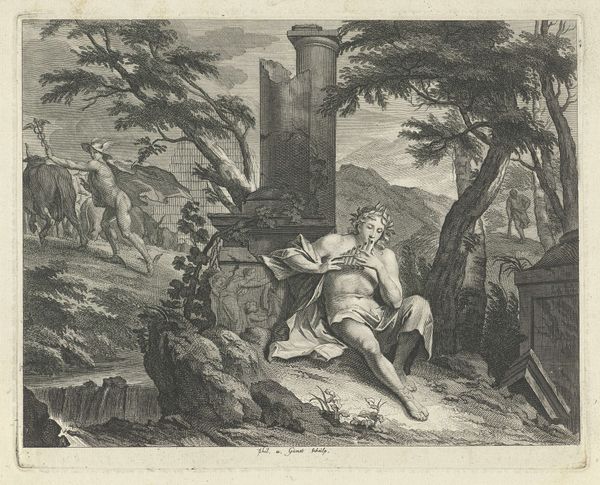
Jan van Vianen created this etching, "Dancing Nymphs Spied Upon By Satyrs," in the Netherlands, sometime between 1670 and 1726. The scene depicts a group of nymphs dancing and making music in a classical landscape, observed by satyrs lurking among the trees. This juxtaposition of the ideal and the earthly, or the sacred and profane, reflects the cultural tensions of the Dutch Golden Age. The Netherlands was a major economic power, driven by mercantile capitalism, which supported an unprecedented flourishing of the arts. However, its art academies were influenced by classical ideals of beauty and harmony which contrasted with the increasingly modern, mercantile reality of Dutch society. This image can be interpreted as a reflection on these tensions, questioning the role of art itself, and the institutions that supported it, in a rapidly changing society. To fully appreciate this work, we can look at other examples of Dutch Golden Age art, combined with analyses of Dutch social and economic history to reveal the complex interplay between artistic production, societal values, and institutional frameworks.