About this artwork
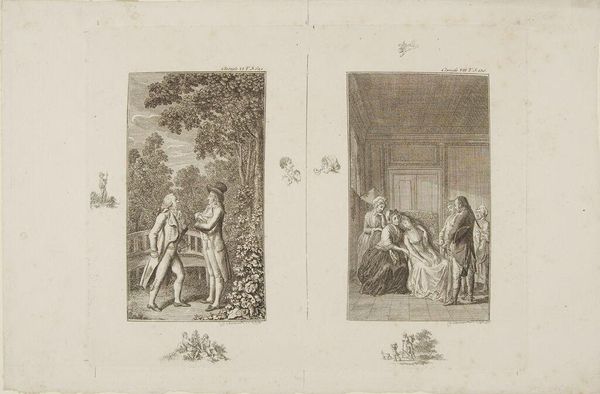
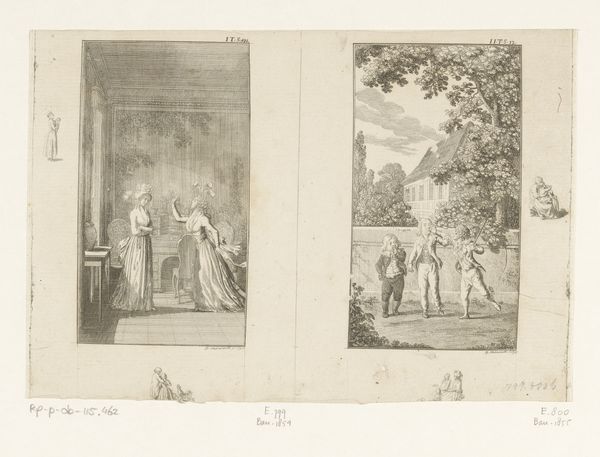
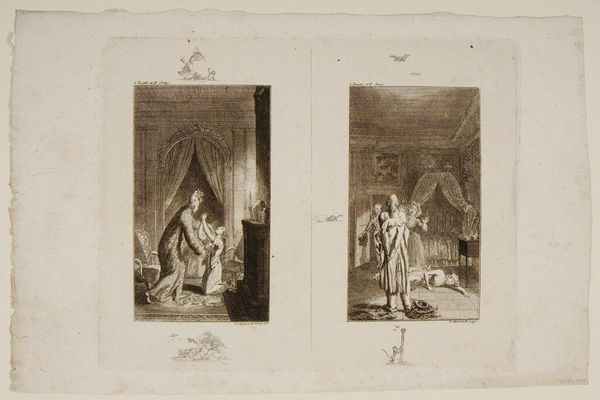
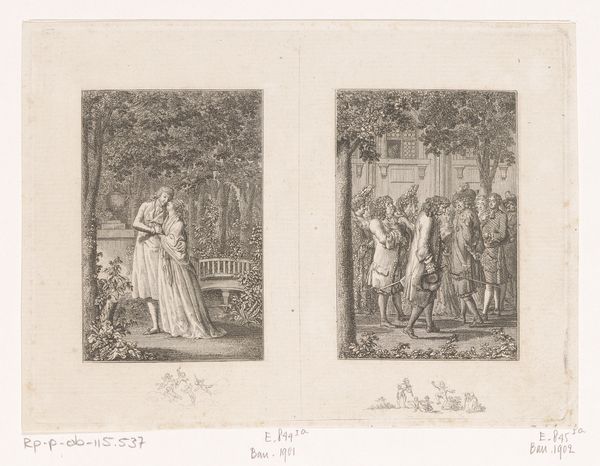
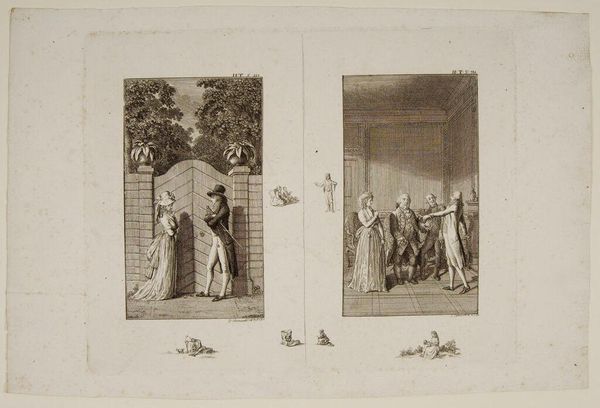
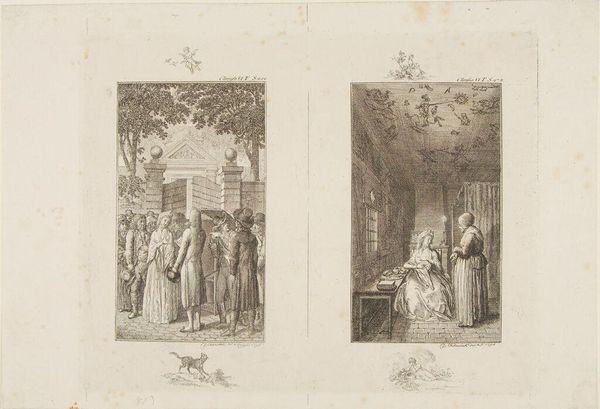
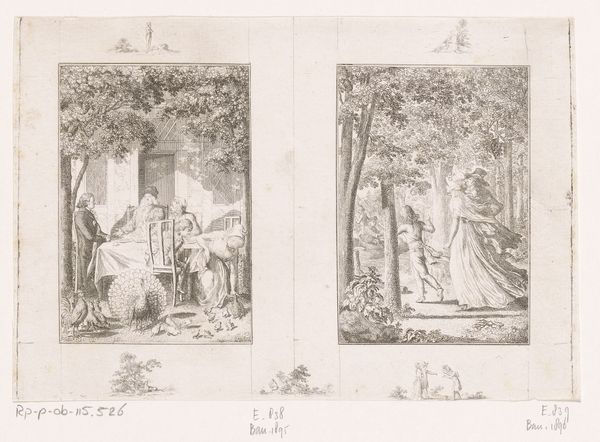
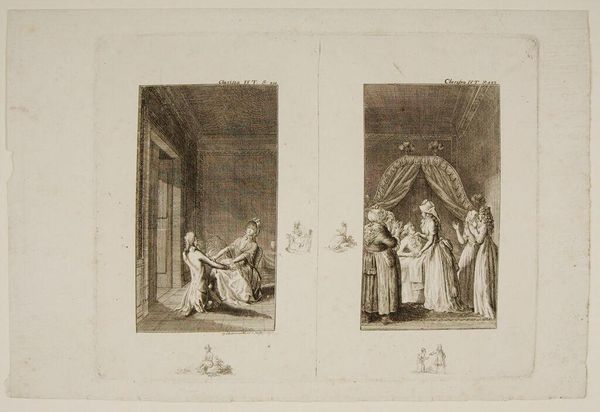
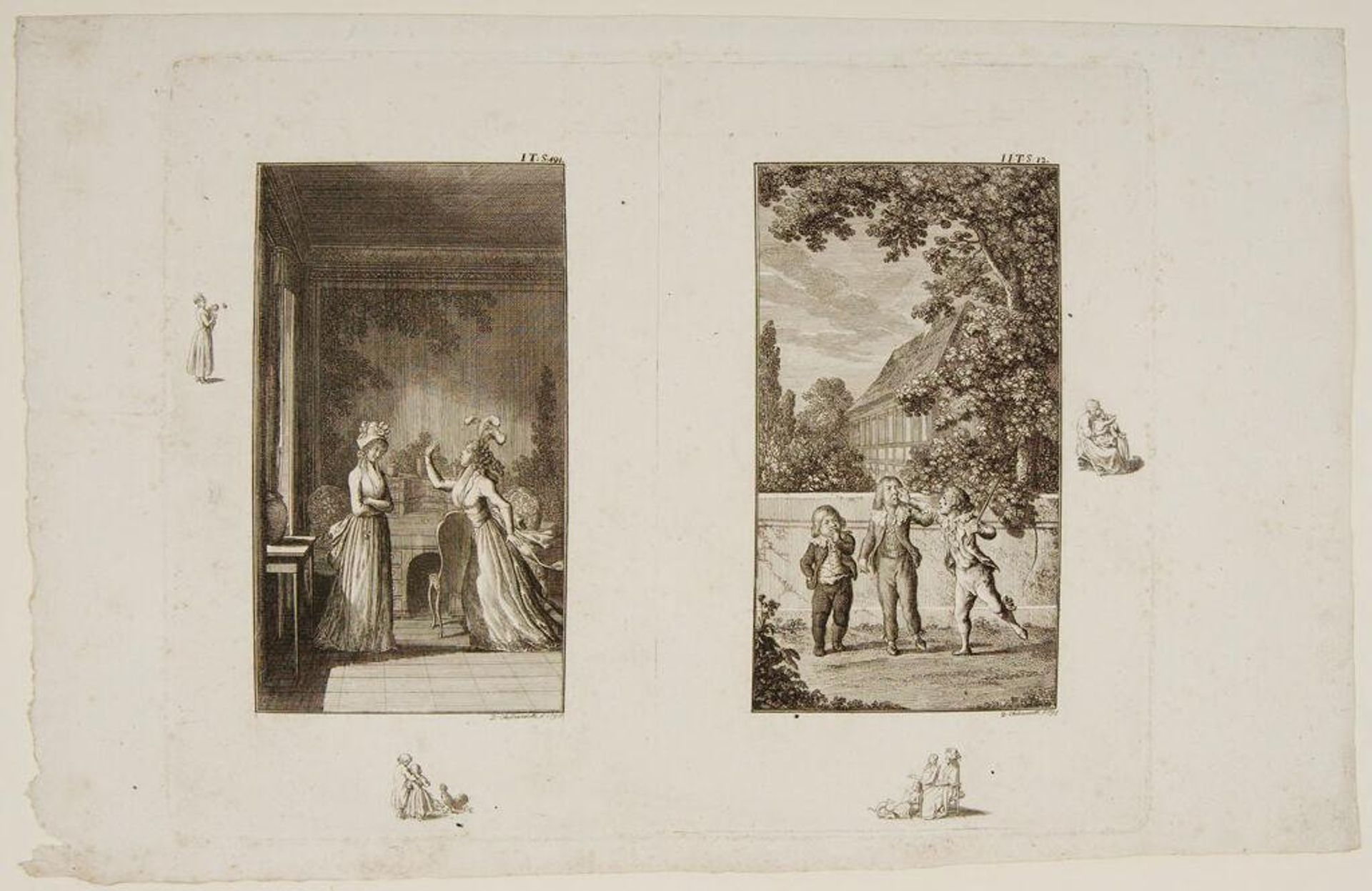
Curator: This is Daniel Nikolaus Chodowiecki's "Two Scenes from 'Clarissa'," housed here at the Harvard Art Museums. It presents two distinct narrative moments side-by-side. Editor: I'm immediately struck by the contrast. The scene on the left feels so constrained and fraught, while the right is full of youthful energy and freedom. Curator: Precisely. Chodowiecki, working in the 18th century, used this printmaking technique to illustrate Samuel Richardson's novel, Clarissa, making it accessible to a wider audience. Think of it as early visual media. Editor: It makes me think about the limitations placed on women during that period, the domestic sphere versus the public one, and how class dictated experiences of freedom and oppression. Curator: Absolutely. The composition highlights those tensions, doesn't it? The artist's work provided social commentary that’s still relevant today. Editor: Indeed, these glimpses into the past encourage reflections on our present societal structures and ongoing struggles for equality.
Two Scenes from "Clarissa"
1795


Artwork details
- Dimensions
- Image (Left): 12 Ã 6.5 cm (4 3/4 Ã 2 9/16 in.) Image (Right): 12 Ã 6.5 cm (4 3/4 Ã 2 9/16 in.) Plate: 17 Ã 21.5 cm (6 11/16 Ã 8 7/16 in.) Sheet: 18.2 Ã 29.4 cm (7 3/16 Ã 11 9/16 in.)
- Location
- Harvard Art Museums
- Copyright
- CC0 1.0
Comments
Share your thoughts
About this artwork
Curator: This is Daniel Nikolaus Chodowiecki's "Two Scenes from 'Clarissa'," housed here at the Harvard Art Museums. It presents two distinct narrative moments side-by-side. Editor: I'm immediately struck by the contrast. The scene on the left feels so constrained and fraught, while the right is full of youthful energy and freedom. Curator: Precisely. Chodowiecki, working in the 18th century, used this printmaking technique to illustrate Samuel Richardson's novel, Clarissa, making it accessible to a wider audience. Think of it as early visual media. Editor: It makes me think about the limitations placed on women during that period, the domestic sphere versus the public one, and how class dictated experiences of freedom and oppression. Curator: Absolutely. The composition highlights those tensions, doesn't it? The artist's work provided social commentary that’s still relevant today. Editor: Indeed, these glimpses into the past encourage reflections on our present societal structures and ongoing struggles for equality.
Comments
Share your thoughts